

7 Steps to Properly Wrap Hands for Muay Thai Beginners
Last Updated: November 4, 2026
Quick Summary
Wrap Muay Thai hand wraps by anchoring the short tail around your wrist two or three times, circling the knuckles four to five times, looping the thumb once, and threading between your fingers. Finish with two or three wrist circles and tuck the end under a previous layer. Keep every layer flat and check that your fingers do not tingle.
- A standard adult hand wrap is 180 inches long, while kids use 120 inches.
- Competition rules commonly cap wraps at 6 meters long and 5 centimeters wide.
- Wrap the knuckles four to five times to build padding, keeping the wrap flat.
- If fingers tingle or turn pale, the wrap is likely too tight at the wrist.
- Wash wraps in cold water, air dry flat, and never put elastic wraps in a hot dryer.
Table of Contents
- What You Need Before You Start Wrapping
- Muay Thai Hand Wraps Length: Choosing the Right Size and Material
- Step-by-Step Hand Wrapping for Muay Thai Beginners
- How to Check Circulation, Comfort, and Range of Motion
- Common Hand Wrapping Mistakes for Beginners
- How to Wash and Care for Hand Wraps
- Troubleshooting: Fixing Bunched or Slipping Wraps
- Get Your Hand Wraps and Train with Confidence
- Frequently Asked Questions
What You Need Before You Start Wrapping
A standard adult hand wrap is 180 inches long, and that length is the first thing to get right before you touch your knuckles. Get the size and material wrong and every wrap after that fights you. Beginners often buy the longest, thickest wrap on the shelf and then wonder why it bunches.
Here is what you actually need:
- One pair of hand wraps, 180 inches for adults, 120 inches for kids
- A flat surface to lay the wrap out
- Clean, dry hands with short nails
- A few minutes of patience for the first attempt
Muay Thai hand wraps are long cotton or elastic strips you wind around the wrist, knuckles, and fingers to support joints and cushion impact. They sit under your gloves, not instead of them.
If you are still deciding whether traditional wraps are right for you, our guide to alternatives to traditional boxing hand wraps covers the other options before you commit.
Muay Thai Hand Wraps Length: Choosing the Right Size and Material
The right wrap length is not about being tough or advanced. It is about having enough material to cover your wrist, knuckles, and fingers without so much leftover that you are forced to bunch the tail under your glove. Many adults use 180-inch wraps, while 120-inch wraps are often chosen for children and adults with very small hands. Competition rules commonly cap wraps at 6 meters long and 5 centimeters wide, per Muay Thai equipment standards, so a 180-inch wrap sits comfortably inside that limit.
Length and material work together. A long cotton wrap gives you more layers for knuckle padding but can feel bulky inside a tight Muay Thai glove. A shorter elastic wrap molds to the hand and takes up less space, but it offers less cushioning over the knuckles. Here is how the common options compare:
- 180-inch cotton wraps are the safest first buy for adults. They breathe well, hold a firm shape, and give you enough length for four to five knuckle layers plus a secure wrist lock.
- 120-inch cotton wraps suit children and adults with small hands. They are also a good choice if you find yourself running out of room inside the glove with a longer wrap.
- Elastic and Mexican-style wraps stretch and mold to the hand, which many practitioners prefer for home training and bag work. They grip well and take up less space, but they can feel less protective over the knuckles if you wrap them too thin.
- Semi-elastic blends sit between the two. They offer some stretch for fit and some structure for padding, which makes them a common all-purpose choice for beginners.
Watch out: A wrap that is too long for your hand forces you to fold or bunch the tail, and that bunching creates pressure points inside the glove. If you consistently have more than a few inches of tail left after the wrist lock, size down or switch to a more elastic material that compresses under the glove.
Step-by-Step Hand Wrapping for Muay Thai Beginners
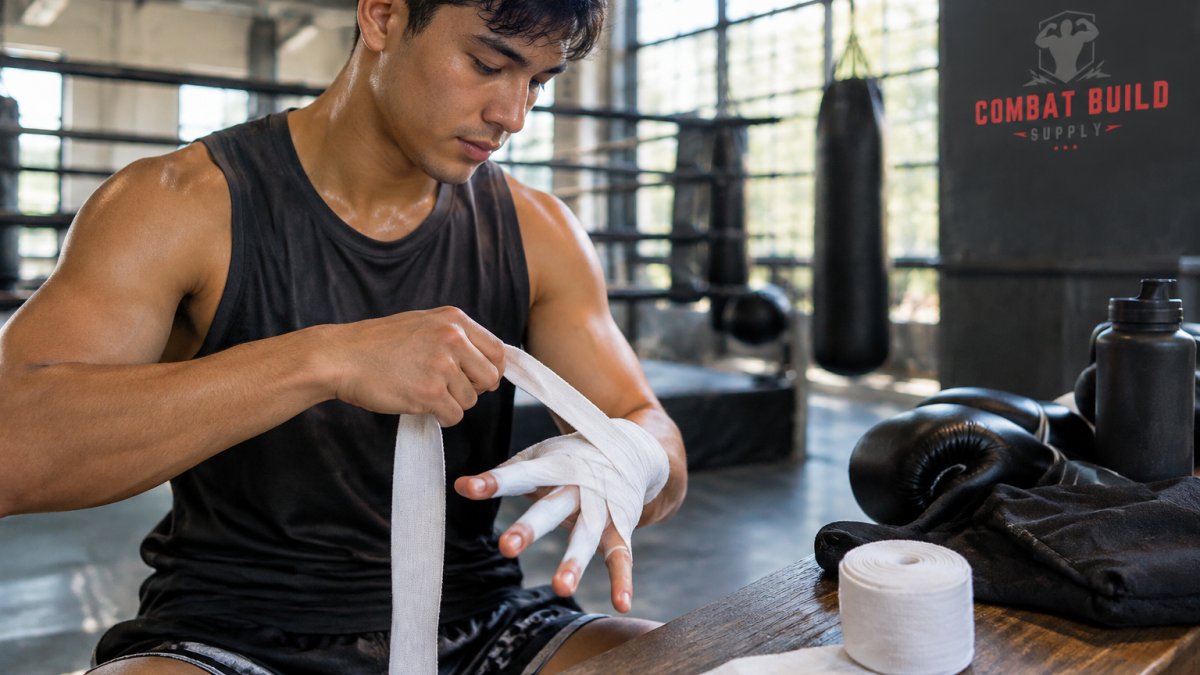
Follow these four steps in order. Each one builds on the last, so do not skip ahead.
Step 1: Anchor the Wrap at Your Wrist
Slide your thumb through the loop and point your fingers toward the ceiling. Wrap the short tail around your wrist two or three times, snug but not tight. This anchor holds everything else in place.
Step 2: Wrap the Back of Your Hand and Knuckles
Guide the wrap across the back of your hand toward your pinky. Circle around the knuckles four to five times to build padding, a standard taught in hand wrap tutorials. Keep the wrap flat, never twisted.
Step 3: Secure the Thumb and Thread Between Fingers
Loop around your thumb once to secure it, then thread the wrap between your index and middle fingers. Cross over the back of the hand and repeat between the ring and pinky fingers. Some fighters skip the thumb loop for comfort, a point raised in Muay Thai community discussions.
Step 4: Add Knuckle Padding and Finish the Wrist
Fold the excess into a small pad over your knuckles for extra protection. Finish with two or three tight circles around the wrist to lock it down. Tuck the end under a previous layer.
Here is the four-step wrapping sequence in order, with the key action for each step.
| Step | What to do | Key detail |
|---|---|---|
| Step 1 | Anchor the wrap at your wrist | Wrap short tail around wrist two or three times |
| Step 2 | Wrap back of hand and knuckles | Circle knuckles four to five times, keep wrap flat |
| Step 3 | Secure thumb and thread between fingers | Loop thumb once, thread between index/middle and ring/pinky |
| Step 4 | Add knuckle padding and finish wrist | Fold excess into knuckle pad, finish with two or three wrist circles |
How to Check Circulation, Comfort, and Range of Motion
Test the wrap before you put gloves on. Make a fist, spread your fingers, and roll your wrist in circles. If your fingers tingle or turn pale, the wrap is likely too tight. Loosen the wrist layers first, then recheck.
A good wrap feels snug and supportive, never restrictive. You should be able to move your hand freely with no bunching at the palm. If the wrap slips after a minute of movement, the anchor was too loose.
Common Hand Wrapping Mistakes for Beginners
The biggest mistake is wrapping too tight at the wrist, which cuts circulation and numbs your hand mid-session. The second is skipping the knuckle layers, leaving your hands exposed to impact. The third is leaving twists and wrinkles, which cause bunching and blisters.
A common mistake is rushing the first wrap. Slow down, keep every layer flat, and check the fit before training. If you want to protect your hands beyond the wrap, our guide to preventing common martial arts training injuries covers the wider picture.
How to Wash and Care for Hand Wraps
Wash your wraps after every few sessions, since sweat builds up inside gloves. Use cold water and a gentle cycle, then air dry them flat. Never put elastic wraps in a hot dryer, since heat breaks down the stretch.
Keep a spare pair so you always have a clean set ready. For the full routine, our guide on how to clean martial arts gear properly covers wraps, gloves, and shin guards together.
Troubleshooting: Fixing Bunched or Slipping Wraps
Most wrap failures come down to one of four causes: a loose anchor, a twisted layer, the wrong material for your hand, or a worn closure. Use this checklist to diagnose the problem before you unwind the whole wrap.
Bunching at the palm or knuckles. Run your thumb across each layer as you wrap. If you feel a ridge, the wrap twisted somewhere below it. Unroll back to the twist, lay the wrap flat, and continue. Bunching also happens when you pull the wrap sideways instead of keeping it perpendicular to the limb you are covering. Keep each turn flat and parallel to the one before it.
Slipping at the wrist. A slipping wrap almost always starts with a loose anchor. Redo the first two or three wrist turns with firmer tension, and make sure the thumb loop sits close to the wrist bone rather than up on the hand. If the anchor still slips, the wrap may be too short for your hand size, which forces you to stretch the last layers thin.
Loose closure or a tab that will not hold. Check the velcro tab before you wrap. Lint, dried sweat, and fabric softener residue all weaken the hook-and-loop grip. Clean the tab with a damp cloth and let it dry fully. If the tab is worn smooth or the stitching is fraying, replace the wraps. No amount of re-wrapping fixes a dead closure.
Bunching inside the glove. If the wrap feels fine on your bare hand but bunches once your glove is on, the wrap is probably too thick or too long for that glove. Try fewer knuckle layers, a shorter wrap, or a more elastic material that compresses instead of folding.
Slipping mid-session. Sweat is the usual culprit. Cotton wraps absorb sweat and can loosen as they get damp, while elastic wraps tend to hold their grip. Keep a spare pair in your bag and swap at the first sign of looseness rather than trying to re-tighten a damp wrap over a sweaty hand.
Watch out: If a wrap slips only on one hand, compare the two wraps side by side. A stretched-out wrap, a worn tab, or a missing thumb loop on one side is easy to miss until you look for it.
Get Your Hand Wraps and Train with Confidence
Wrapping your hands well is a skill you build in a few sessions, and the right gear makes it easier. Combat Build Supply offers high-quality training equipment designed to perform consistently across sessions. Every order ships free, and defective or non-functioning items are eligible for a 100% refund. Our support team is available by live chat, email, or phone if you need help choosing a size.
Ready to gear up? Start with our combat sports gear for beginners guide, then add punching bag gloves for heavy bag work once your hands are wrapped. Get started with Combat Build Supply and train with gear you can trust.
Frequently Asked Questions
How do I know if my hand wraps are too tight?
Check for numbness, tingling, or cold fingers within a minute of wrapping. You should be able to make a full fist and spread your fingers without the wrap digging in. If your fingertips turn white or purple, unwrap and start again with less tension. The wrap should feel snug but not restrictive, and your wrist should still move freely. Test by clenching and unclenching your fist several times; if you feel a pulse or loss of sensation, rewrap.
What is the difference between boxing and Muay Thai hand wraps?
Muay Thai hand wraps are typically longer (180 inches for adults) and often made of slightly elastic cotton to allow for clinching and grappling. Boxing wraps tend to be shorter (120-170 inches) and less elastic, focusing on rigid wrist support. For Muay Thai training, choose wraps that provide knuckle padding and wrist stability without limiting hand mobility for clinch and grip techniques.
Can improper hand wrapping lead to wrist injuries?
Yes. Wrapping too loosely allows the wrist to collapse under impact, straining ligaments. Wrapping too tightly restricts blood flow and can cause nerve compression. Avoid wrapping only the knuckles and ignoring the wrist; a proper wrap anchors the wrist first. Also, never wrap over an existing injury without consulting a coach or medical professional. Consistent improper technique can lead to chronic wrist pain, so practice the step-by-step method and check circulation after each wrap.
How long should hand wraps be for Muay Thai?
Standard adult Muay Thai hand wraps are 180 inches long. Children typically use 120-inch wraps. 180 inches is a common size for training. If you have larger hands or want extra knuckle padding, a 180-inch wrap provides enough material for 4-5 knuckle layers and a secure wrist finish.


