

Alternatives to Traditional Boxing Hand Wraps
Table of Contents
- Why Boxers Look Beyond Traditional Hand Wraps
- Gel Boxing Hand Wraps: Speed and Padding Combined
- Boxing Inner Gloves as a Standalone Option
- Boxing Hand Wraps vs Inner Gloves: Which Protects Better
- Boxing Without Hand Wraps: When and Why
- Quick Wraps, Crepe Wraps, and Other Specialty Options
- How to Choose the Right Alternative for Your Training
- Frequently Asked Questions
Last Updated: October 7, 2026
Why Boxers Look Beyond Traditional Hand Wraps
Traditional hand wraps have been the standard for decades: affordable, reusable, and customizable. But they take time to apply, require practice to wrap evenly, and can shift during intense sessions.
Fighters explore alternatives to traditional boxing hand wraps for practical reasons: faster setup between rounds, built-in padding that skips layering, and better wrist stabilization or impact absorption for their training style.
Neither option is universally superior. The right choice matches your training intensity, available time, and type of work.
This guide breaks down the main alternatives to traditional boxing hand wraps: what each does, who benefits, and its honest limitations.
Gel Boxing Hand Wraps: Speed and Padding Combined
Gel boxing hand wraps deliver built-in padding without the wrapping process: traditional wrap material infused with gel padding at the knuckles and back of the hand.
You slip them on like a compression sleeve, adjust, and you're ready. For fighters training multiple times daily or with limited setup time, this cuts preparation from five minutes to thirty seconds.
Gel wraps offer moderate wrist support through elastic panels and absorb impact reasonably well for pad work and heavy bag training, though less stabilization than a properly wrapped hand.
The trade-off shows during intense sessions: gel padding compresses over time and doesn't reset between rounds.
Gel wraps suit moderate-intensity training, pad work, technical drills, and light sparring. They're less ideal for competitive fighters or frequent heavy bag work: convenience comes at the cost of protective consistency.
Boxing Inner Gloves as a Standalone Option
Inner gloves (hand pads or under-gloves) are padded gloves worn inside your boxing gloves, resembling thin MMA-style gloves with extra knuckle and back-of-hand padding.
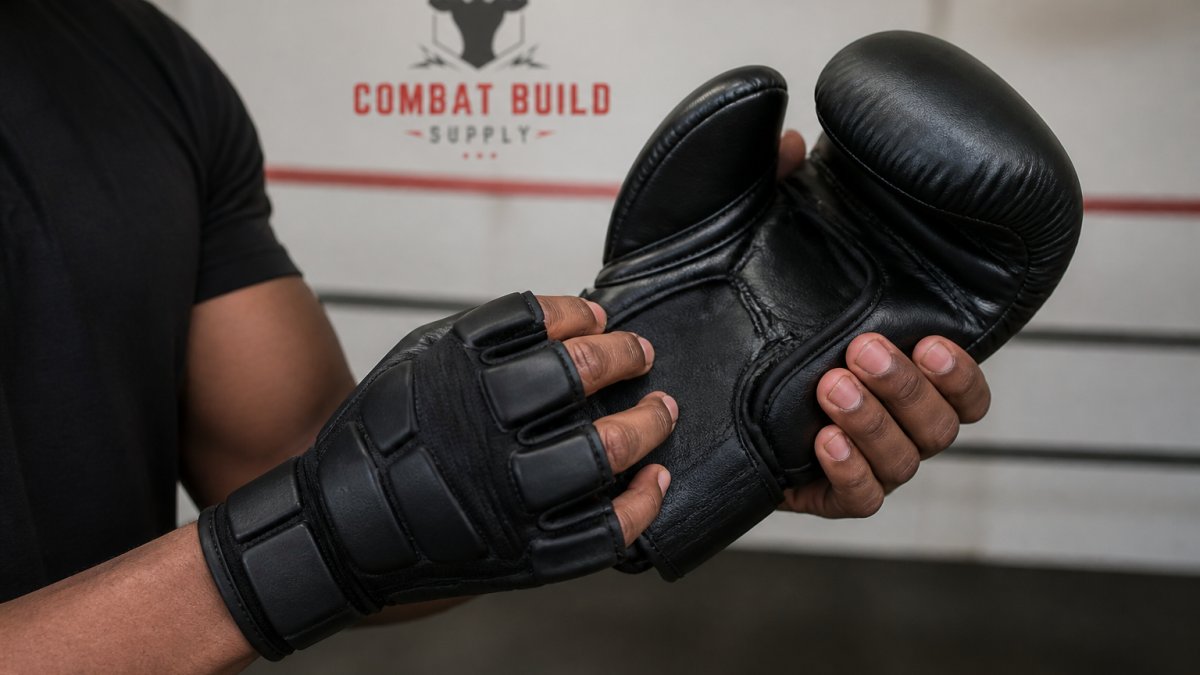
They're not a replacement for hand wraps but a different layer. Some fighters wear them with traditional wraps; others use them alone, relying on the glove's internal padding plus the inner glove padding.
Using inner gloves solo eliminates wrapping: pull them on, put your boxing gloves over them, and train. The padding stays consistent because it's designed to work inside a glove that provides external structure.
Sizing and Fit: The Step Most Guides Skip
Inner gloves are sized by hand circumference (S-XL, sometimes numeric inches). Measure around the widest part of your dominant hand, just below the knuckles. A snug fit matters more than with traditional wraps because there's no tension adjustment once the glove is on; if it slides, the padding shifts off your knuckles.
Fighters often buy inner gloves in their bare-hand glove size and find them too loose. When in doubt, size down, then confirm the boxing glove still closes cleanly over the top.
Glove Compatibility
Inner gloves add roughly a quarter- to half-inch of thickness across the knuckles and back of the hand, which must fit inside your boxing glove without pinching fingers or preventing a closed fist.
- Lace-up training gloves (16 oz and up): Usually the easiest pairing. The larger internal volume accommodates an inner glove with room to spare.
- Hook-and-loop gloves (12-14 oz): Often work, but snug models can feel tight across the knuckles once the inner glove is added.
- Bag gloves and competition-style gloves: Frequently too tight. Many are cut close to the hand by design, and an inner glove can make them unwearable.
Test the pairing: put the inner glove on, slide it into the boxing glove, close your fist, and throw slow punches. Pressure points on the knuckles or a glove that won't fully close mean the combination is wrong.
Wrist Support: What You Actually Get
Inner gloves alone offer less wrist support than traditional wraps; stability depends on glove tightness and reinforced wrist panels. That's usually sufficient for technical work and controlled sparring, but many fighters feel the difference on heavy bag work or high-impact drills.
If wrist support is the priority, layer a light traditional or short elastic wrap under the inner glove, keeping the pull-on convenience while restoring wrist compression.
Care and Replacement
Inner gloves sit against bare skin and absorb sweat, so they need more care than traditional wraps. Hand-wash fabric-and-gel models in cool water with mild detergent and air-dry away from direct heat; machine washing and drying break down the gel padding and wrist elastic fastest.
Replace inner gloves when the gel stays compressed after a session, the wrist panel loses stretch, or seams separate at the knuckle line. Expect six to twelve months of regular training before the padding flattens, sooner with frequent training and poor drying.
Competition Suitability
Inner gloves are a training tool. In sanctioned bouts, hand wrapping is governed by the sanctioning body's rules on approved materials and wrap limits, so a padded inner glove fine in the gym may not be permitted on fight night. Check your event's rules before assuming your setup carries over.
Boxing Hand Wraps vs Inner Gloves: Which Protects Better
The question isn't which protects better in absolute terms, but which matches your training needs and hand structure.
Traditional hand wraps excel at customizable compression and wrist support: wrap tighter or looser based on how your hand feels, add layers over the knuckles for heavy bag work, and adjust wrist tension to your needs.
Inner gloves offer consistency and convenience: uniform padding every session, no wrapping technique required. They suit boxers with smaller hands or environments needing quick glove changes, like circuit training and group classes.
The protection difference is measurable but not dramatic for most training. Both handle pad work, heavy bag training, and moderate sparring adequately.
Research from the American Academy of Orthopaedic Surgeons emphasizes that consistent hand support matters more than the specific method.
Boxing Without Hand Wraps: When and Why
Some fighters train without hand wraps or inner gloves, relying solely on their boxing gloves' padding, particularly for speed work or technique drills.
The logic: for light work like shadowboxing, technical pad combinations, and controlled partner drills, the glove's internal padding is adequate since your hands aren't taking heavy impact.
It saves time and reduces hand fatigue, and some fighters say it helps them feel the glove's structure better, improving hand positioning and punch mechanics during technique-focused sessions.
The risk is real: without wraps or inner gloves, your hands have minimal compression.
Boxing without hand wraps works only as a deliberate choice for controlled sessions, not a long-term solution. Combat Build Supply recommends it only when you're confident you'll maintain light intensity throughout.
Quick Wraps, Crepe Wraps, and Other Specialty Options
Beyond gel wraps and inner gloves, several specialty options exist, each solving a narrower problem with a trade-off worth knowing before you buy.
Quick Wraps (Speed Wraps)
Quick wraps are pre-formed wraps with elastic closures: slide your hand in, tighten, and you're done in seconds, which is why they appear in circuit classes and group training.
The trade-off is fit: fixed sizes mean the closure must land right on your wrist or the wrap shifts during pad work and the knuckle padding drifts off target. They also offer less customization, since you can't add layers or loosen tension mid-session.
Crepe Wraps
Crepe wraps are traditional wraps made from crepe fabric instead of gauze or cotton. The weave adds stretch and a softer feel, conforming differently than stiff cotton. Some prefer the feel; others find the extra give means less firm wrist compression.
Neoprene Hand Wraps
Neoprene hand wraps add compression and heat retention, valued for warmth and a locked-in feel during cold-weather or early-morning sessions. They run warmer, can feel restrictive, and hold odor more stubbornly than cotton.
Mexican-Style and Elastic Wraps
Mexican-style wraps use a cotton-and-elastic blend that stretches more than standard cotton, letting you pull tighter for a firmer feel and more wrist support from a shorter length. Elastic wraps behave similarly. The catch: over-tightening is easier and restricts circulation and hand mobility.
Material and Length Quick Reference
| Type | Stretch | Typical Length | Best For |
|---|---|---|---|
| Cotton (traditional) | Low | 120-180 in | Firm, customizable support |
| Mexican-style / elastic | Moderate | 120-180 in | Tighter wrap, more wrist support per inch |
| Crepe | Moderate | 120-180 in | Softer feel, conforming fit |
| Neoprene | Moderate | Varies | Warmth and compression |
| Quick wrap | Fixed | Sized to hand | Fast setup, group training |
Care, Hygiene, and Replacement
All these options sit against skin and collect sweat, so care matters as much as material. Hand-wash in cool water with mild detergent and air-dry flat or hanging, away from direct heat. Never machine dry elastic or neoprene wraps, since heat breaks down the stretch.
Replace wraps when fabric stays stretched after washing, hook-and-loop closures stop gripping, or thin spots appear over the knuckles. Expect three to six months per set with regular training, sooner if you train daily without rotating. Rotating two or three sets and letting each dry fully extends their life and cuts odor.
Competition Rules
Specialty wraps are training conveniences first. In sanctioned bouts, the sanctioning body governs approved materials, wrap length, and placement, so quick wraps, neoprene, and other non-standard options may not be permitted on fight night. If you compete, confirm what your event allows.
None is dramatically superior to traditional wraps or inner gloves; they're variations that work better for certain individuals and training schedules.
How to Choose the Right Alternative for Your Training
With limited setup time and moderate intensity, gel wraps or inner gloves work best.
At high intensity or with multiple daily sessions, traditional hand wraps remain most effective: fresh compression each session and customizable support outweigh convenience.
Test before committing: borrow inner gloves or gel wraps and train a few sessions before buying.
Consider glove compatibility: inner gloves need enough internal space, gel wraps work with any glove, and traditional wraps work universally.
Selection Criteria:
| Training Profile | Best Option | Why |
|---|---|---|
| High intensity, competitive | Traditional wraps | Customizable support, fresh compression each session |
| Moderate intensity, time-limited | Gel wraps or inner gloves | Fast setup, adequate protection for pad work |
| Technical drills only | Gel wraps or no wraps | Lower impact, convenience prioritized |
| Multiple daily sessions | Inner gloves + traditional wraps | Consistency for quick changes between sessions |
| Small hands or tight gloves | Traditional wraps or gel wraps | Inner gloves may fit poorly |
Choosing hand protection means matching your training intensity and schedule to the method that supports it consistently.
At Combat Build Supply, our premium equipment and responsive support ensure reliable gear for whatever approach you choose, so you can focus on technique and progress.
Frequently Asked Questions
Is it okay to box without hand wraps?
Boxing without hand wraps increases injury risk to your hands, wrists, and knuckles during heavy bag work or sparring. Your hands contain 27 small bones that need support and cushioning. While some light bag drills or pad work can be done unwrapped for short periods, consistent training without wraps or alternatives can lead to fractures, sprains, or chronic hand pain. Hand protection is essential for long-term training health.
Are gel boxing wraps as good as traditional hand wraps?
Gel boxing hand wraps offer faster application and pre-positioned padding, making them convenient for training. However, traditional wraps provide more customizable tension and wrist support when wrapped correctly. Gel wraps work well for casual training and sparring, but many competitive fighters prefer traditional wraps for their superior wrist stabilization and adjustability. Your choice depends on whether you prioritize speed or maximum support.
Can you use inner gloves instead of hand wraps?
Boxing inner gloves can replace traditional wraps for light to moderate training, offering padding and basic hand protection. However, they provide less wrist support than hand wraps, especially during heavy bag work or intense sparring. Many fighters use inner gloves as a supplement to wraps rather than a complete replacement. For serious training, combining inner gloves with hand wraps offers the best protection.
What's the difference between quick wraps and traditional hand wraps?
Quick wraps are pre-formed wraps with elastic straps that slip on like gloves, eliminating the wrapping process. Traditional wraps require manual wrapping around your hand and wrist, taking 2-3 minutes but offering customizable tension and support. Quick wraps prioritize convenience and are ideal for home training or when time is limited, while traditional wraps give you more control over fit and wrist stabilization during competition or heavy sparring.


