

Best Punching Bag Gloves for Heavy Bag Work
Table of Contents
- What Makes Punching Bag Gloves Different
- Heavy Bag Gloves vs Sparring Gloves: Key Differences
- Choosing the Right Boxing Glove Ounces for Heavy Bag Training
- Essential Features: Padding, Wrist Support, and Durability
- Hand Wraps for Heavy Bag Training: Why They Matter
- Sizing, Fit, and Selection by Training Intensity
- Care, Maintenance, and Long-Term Value
- Common Mistakes When Buying Heavy Bag Gloves
- Frequently Asked Questions
Last Updated: October 9, 2026
What Makes Punching Bag Gloves Different
Punching bag gloves are engineered specifically for heavy bag work, and they differ fundamentally from sparring or competition gloves in their construction and protective strategy. Choosing the right punching bag gloves means understanding these core differences first.
Heavy bag gloves prioritize hand and wrist protection during repetitive, high-impact strikes against an immovable object. The padding is denser and more localized to the knuckle area, where impact force concentrates during bag work. Unlike sparring gloves, which distribute padding more evenly to protect an opponent's face, bag gloves channel protection directly where your hand needs it most.
The wrist support in punching bag gloves is also more rigid. When you're throwing powerful combinations into a heavy bag, your wrist absorbs tremendous force. Bag gloves feature reinforced wrist closures and stiffer internal support structures to stabilize the joint and prevent hyperextension during intense training sessions.
Heavy Bag Gloves vs Sparring Gloves: Key Differences
The distinction between heavy bag gloves and sparring gloves matters because using the wrong type can compromise your safety or wear out your equipment prematurely. Heavy bag gloves are built for durability and protection during solo training, while sparring gloves prioritize mobility and opponent safety.
Heavy bag gloves typically feature firmer, more concentrated padding in the knuckle zone. Sparring gloves distribute padding more evenly across the entire striking surface. This difference exists because a heavy bag can't absorb impact the way a sparring partner's defensive movements can, the bag transfers force directly back through your hand.
Wrist support diverges significantly as well. Heavy bag gloves include thicker wrist wraps and internal stays that limit wrist flexibility. Sparring gloves allow more wrist mobility so fighters can adjust their hand position during exchanges.
Weight distribution also differs. Heavy bag gloves tend to be slightly heavier overall because they pack more protective material into the striking surface. Sparring gloves are lighter to allow faster hand speed and reaction time.
Choosing the Right Boxing Glove Ounces for Heavy Bag Training
Glove weight, measured in ounces, directly impacts your training intensity, hand speed, and injury prevention. Understanding how ounce selection affects your performance is critical before you commit to a pair.
Lighter gloves (8-10 ounces) allow faster hand speed and build striking velocity quickly. However, they offer less padding protection and can increase hand fatigue during extended sessions.
Mid-range gloves (12-14 ounces) represent the sweet spot for most heavy bag training. They balance hand speed with adequate protection, allowing you to maintain form while building power safely. These are ideal for consistent, high-volume training without excessive hand stress.
Heavier gloves (16 ounces and above) maximize protection and build shoulder and arm strength through added resistance. They're excellent for conditioning work and developing explosive power, but they slow hand speed and require more energy expenditure.
Your body weight influences the right choice. Lighter athletes (under 150 pounds) typically benefit from 12-ounce gloves, while heavier athletes (over 200 pounds) often need 14-16 ounces to absorb their natural striking force safely.
Essential Features: Padding, Wrist Support, and Durability
Impact Protection and Padding
The quality of padding separates effective heavy bag gloves from equipment that fails under sustained use. Firm padding absorbs impact without compressing excessively, protecting your hands during thousands of strikes.
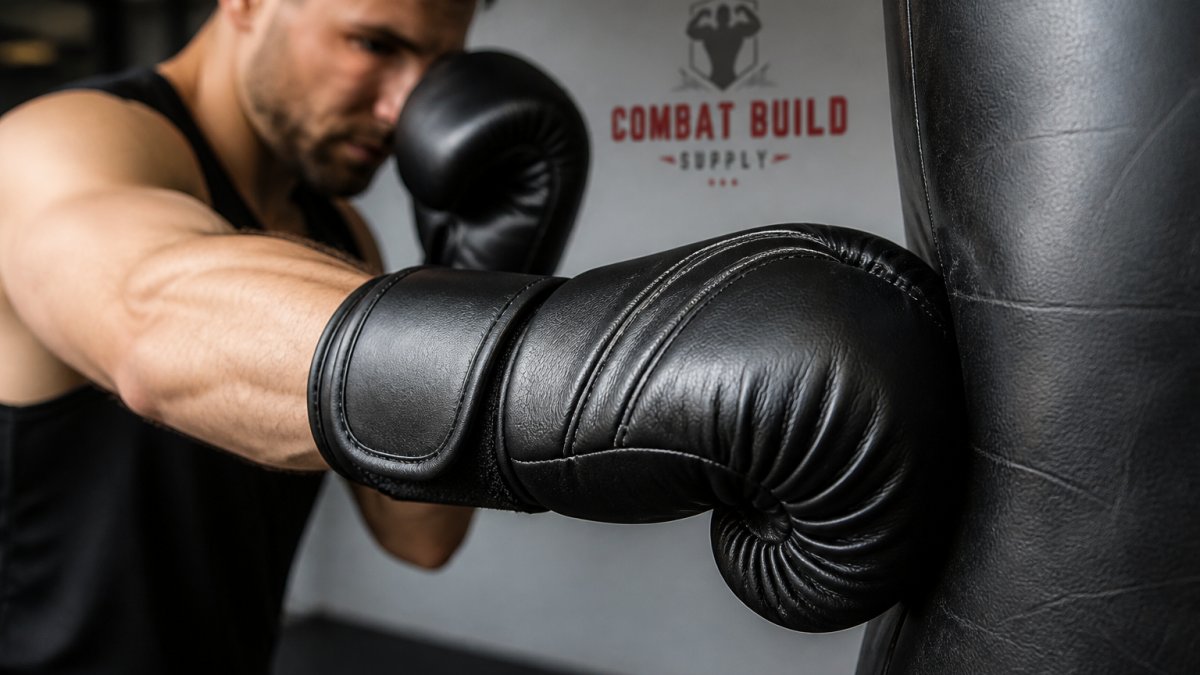
Look for multi-layer padding systems that combine high-density foam in the striking zone with softer foam underneath for shock absorption. Single-layer gloves compress unevenly and lose protection faster. The best heavy bag gloves use padding that maintains its shape after thousands of impacts, preventing the "dead spot" effect where the center of the glove becomes thin and offers minimal protection.
Padding density affects both protection and comfort. Overly soft padding feels comfortable initially but compresses within weeks of heavy training. Firm padding feels stiff at first but maintains its protective properties longer. You want padding that's firm enough to protect but not so rigid it causes hand strain.
Wrist Stability and Support
Wrist injuries are common in heavy bag training when gloves lack proper support. The wrist closure system, whether hook-and-loop, lace-up, or hybrid, determines how effectively the glove stabilizes your wrist joint during impact.
Hook-and-loop closures offer quick adjustment and are easiest to put on and remove. They work well for training where you're adjusting glove fit frequently. However, they can loosen during intense sessions if the fastening area isn't wide enough.
Lace-up systems provide superior wrist stability because they distribute pressure evenly across the entire wrist. They take longer to put on but lock your wrist in place more securely. Many serious heavy bag trainers prefer lace-ups for maximum support during power work.
Hybrid systems combine hook-and-loop with internal stays or neoprene wrapping for both convenience and stability. These balance quick adjustment with solid wrist support, making them versatile for varying training intensities.
Build Quality and Durability
Heavy bag glove construction determines how long they'll perform before needing replacement. Quality construction also affects how well they protect your hands throughout their lifespan.
Stitching quality matters significantly. Gloves with reinforced stitching at stress points, where the padding connects to the outer material and where the wrist closure attaches, last substantially longer. Look for double or triple stitching in these areas rather than single-thread construction.
The outer material affects both durability and comfort. Genuine leather offers superior durability and develops a natural feel over time, but it requires more maintenance. Synthetic leather is easier to clean and more affordable, though it typically doesn't last as long as genuine leather. Many quality heavy bag gloves use a leather-synthetic blend that balances durability with practicality.
Internal construction matters as much as external material. Gloves with reinforced palm areas and structured wrist supports maintain their shape longer than those with minimal internal framework. The best heavy bag gloves use multiple material layers that work together to distribute impact stress rather than concentrating it in one area.
Hand Wraps for Heavy Bag Training: Why They Matter
Hand wraps serve a purpose that gloves alone cannot fulfill. They provide an additional layer of protection for the bones, tendons, and joints in your hand and wrist that gloves don't fully cover.
Wrapping your hands before putting on gloves creates a stable base that prevents excessive wrist movement inside the glove. This reduces the risk of sprains and strains during heavy impact work. Hand wraps also compress the small bones in your hand, reducing the stress each individual bone absorbs during strikes.
The wrapping technique matters. Proper wrapping covers the knuckles, wraps around the wrist multiple times, and secures the thumb area. Loose wraps provide minimal benefit; tight wraps that restrict circulation aren't helpful either. The goal is snug compression that stabilizes without cutting off blood flow.
Most serious heavy bag trainers use hand wraps for every session, even with high-quality gloves. They extend the lifespan of your hands by distributing impact force more effectively and preventing cumulative stress injuries that develop over months of training.
Sizing, Fit, and Selection by Training Intensity
Getting the right fit prevents blisters, reduces hand fatigue, and ensures the glove's protective features actually work as designed. Proper sizing depends on both your hand dimensions and your training style.
Hand size determines your base glove size. Most manufacturers offer sizing guides based on hand length or circumference. A glove that's too large allows your hand to move inside it, which reduces protection and increases blister risk. A glove that's too tight restricts blood flow and causes hand cramping during longer sessions.
Training intensity influences ounce selection within your size range. If you're doing speed work and technical drills, choose the lighter end of your size range. If you're focused on power development and conditioning, go heavier.
Consider your training frequency too. If you're training five or six days per week, having two pairs of gloves allows them to dry between sessions, extending their lifespan. High-frequency trainers often benefit from slightly heavier gloves to reduce the impact stress on any single pair.
Care, Maintenance, and Long-Term Value
How you maintain your heavy bag gloves directly affects how long they perform effectively. Proper care extends their useful life and preserves the protective properties that keep your hands safe.
Moisture management is critical. Sweat inside gloves promotes bacteria growth, causes odors, and breaks down the padding faster. After every session, remove the gloves and let them air dry completely.
Hand wraps should be washed regularly since they absorb most of the sweat during training. Unwrap them after each session, let them dry, and wash them weekly.
The outer material needs occasional cleaning. Wipe down synthetic leather with a damp cloth after training. Genuine leather gloves benefit from leather conditioner every few months to prevent cracking and maintain flexibility.
Store gloves in a cool, dry location away from direct sunlight. Heat and UV exposure degrade both the outer material and the internal padding. A ventilated gear bag works better than a sealed container.
Quality heavy bag gloves represent a significant investment, but proper maintenance means they'll protect your hands effectively for years of training.
Common Mistakes When Buying Heavy Bag Gloves
Most fighters make predictable errors when selecting heavy bag gloves, and these mistakes often lead to equipment that doesn't perform as expected or wears out prematurely.
Choosing gloves based purely on price is the most common mistake. Cheaper gloves use thinner padding, weaker stitching, and lower-quality materials that fail quickly under heavy use.
Buying gloves without trying them on is another frequent error. Online shopping is convenient, but glove fit varies significantly between brands and models.
Selecting the wrong ounce weight for your training style wastes money on equipment that doesn't match your needs.
Ignoring wrist support needs is surprisingly common among newer fighters. Gloves that lack proper wrist support feel lighter and faster initially, but they lead to wrist injuries that sideline your training for weeks.
Neglecting maintenance accelerates equipment failure. Gloves that sit in damp bags develop odor, bacteria, and material breakdown that ruins them within months. Proper drying and occasional cleaning add years to your gloves' useful life.
Choosing the right heavy bag gloves requires understanding the specific demands of heavy bag training and matching those demands to glove features that actually deliver protection. With free shipping on every order and our 100% refund guarantee for defective items, you can train with confidence knowing your equipment is backed by our commitment to quality. Sign Up Now!
Frequently Asked Questions
How many ounces should heavy bag gloves be?
Heavy bag glove weight depends on your body weight and training intensity. Lighter athletes (under 150 lbs) typically use 10-12 ounce gloves for speed and power development. Medium-weight athletes (150-200 lbs) benefit from 14-16 ounce gloves, which provide better impact protection during sustained bag work. Heavier athletes (over 200 lbs) often choose 16-18 ounce gloves to reduce hand and wrist strain. Higher ounce gloves also slow your hand speed, making them useful for technique refinement.
Are heavy bag gloves different from sparring gloves?
Yes. Heavy bag gloves prioritize impact protection and durability with firmer padding concentrated on the knuckles and palm. Sparring gloves emphasize cushioning across the entire hand to minimize injury risk to both fighters. Heavy bag gloves typically have stiffer wrist support and are built to withstand thousands of repetitive strikes. Sparring gloves prioritize comfort and breathability for extended partner work. Using the wrong glove type can reduce effectiveness and increase injury risk.
Do you need hand wraps under heavy bag gloves?
Hand wraps are highly recommended for heavy bag training. They provide compression that stabilizes your wrist, prevents excessive hand movement inside the glove, and distributes impact across a larger surface area. Wraps reduce the stress on small hand bones and joints during high-volume training. Even with excellent wrist support in your gloves, wraps add an extra layer of protection, especially during intense sessions or when training multiple times per week. Most serious practitioners use both wraps and gloves together.
How should heavy bag gloves fit?
Heavy bag gloves should fit snugly around your hand with minimal movement inside the glove. Your fingers should reach the end of the glove without excess space, and the palm should feel secure without pinching. The wrist closure should be tight enough to prevent your hand from sliding forward during strikes but not so tight it cuts off circulation. Test the fit by making a fist; your knuckles should feel supported but not compressed. A proper fit improves power transfer, reduces injury risk, and increases comfort during extended training sessions.


