

How to Maintain Martial Arts Equipment: 2026 Guide
Table of Contents
- Why Martial Arts Equipment Maintenance Matters
- The Best Way to Clean Boxing Gloves and Hand Wraps
- Martial Arts Gear Sanitizing Spray: What to Use and What to Avoid
- How to Dry, Deodorize, and Store Your Gear
- Inspecting Gear for Wear, Tear, and Safety Risks
- When to Replace Martial Arts Equipment (Repair vs. Replace)
- Building a Weekly and Monthly Maintenance Routine
- Frequently Asked Questions
Last Updated: September 15, 2026
Why Martial Arts Equipment Maintenance Matters
Martial arts equipment is the protective layer between your body and the forces you generate in training. A cracked glove shell or compressed shin guard pad doesn't just shorten gear life, it changes how force travels through your joints. The CDC reports that contact and combat sports participants face elevated rates of skin infections and musculoskeletal injury, and contaminated or worn gear contributes to both (the CDC).
Maintaining martial arts equipment 2026-style means a repeatable routine built around four jobs: clean after every session, dry completely, inspect monthly, and store where air moves. This guide from Combat Build Supply walks through each job in order, from cleaning boxing gloves to the point where replacement beats repair.
Sweat, dead skin cells, and warmth turn the inside of a glove into an ideal environment for microbial growth, and knuckle padding degrades quietly long before the outer shell shows damage. Most guides cover wiping gear down; fewer cover material-specific cleaners, seasonal storage, or the repair-versus-replace call. We cover all three.
The Best Way to Clean Boxing Gloves and Hand Wraps
The best way to clean boxing gloves is to wipe the exterior with a damp cloth and mild soap after every session, then clean the interior with a dedicated wipe or diluted disinfectant and let both dry fully before storage. Hand wraps need the opposite treatment: wash them in a mesh bag on a gentle cycle and air dry flat.
Here is the sequence, start to finish:
- Wipe the outer shell with a cloth dampened in mild soap and warm water; avoid soaking the leather or stitching.
- Clean the interior with a glove wipe or cloth lightly dampened with diluted disinfectant, never pour liquid inside.
- Loosen the wrist closure and open the glove mouth so air can circulate.
- Air dry at room temperature, away from direct sun and radiators.
- Wash hand wraps every one to two sessions in a mesh laundry bag, then air dry flat.
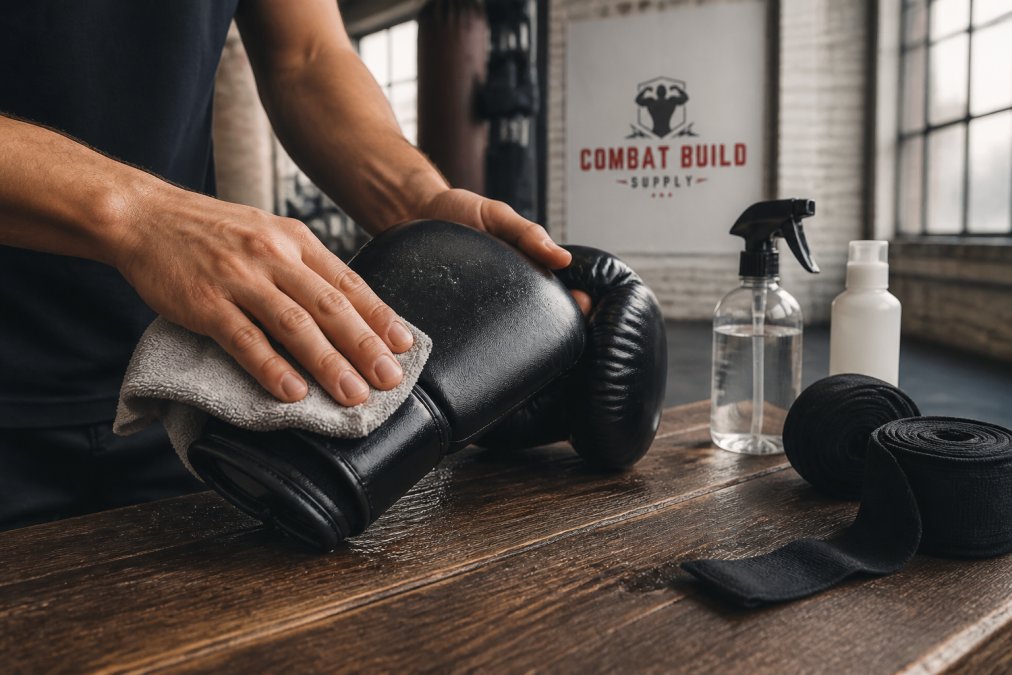
A common mistake is machine washing gloves or leaving them sealed in a gym bag overnight. Both accelerate material degradation and bacterial buildup. The Cleveland Clinic guidance on skin infections in athletes notes that shared or poorly cleaned equipment is a common transmission route for fungal and bacterial skin conditions, which is why post-workout cleaning matters more than a weekly deep clean.
Martial Arts Gear Sanitizing Spray: What to Use and What to Avoid
A martial arts gear sanitizing spray should be a disinfectant formulated for the material it touches, not a general household cleaner. The same active ingredient that kills microbes on a vinyl pad can strip its plasticizer, while an ingredient gentle on vinyl can desiccate genuine leather until it cracks at the flex points. Here's how the major material families behave.
Genuine leather (cowhide, goat skin, full-grain)
Leather holds natural oils that keep collagen fibers supple, and anything that strips them accelerates cracking. Use a pH-neutral leather cleaner or leather-safe wipe, then a light conditioner every few deep cleans.
- Safe: pH-neutral leather soap, dedicated leather wipes, diluted castile soap, saddle soap used sparingly.
- Avoid: isopropyl alcohol and alcohol-heavy sprays (they pull oils out and leave the surface chalky), bleach, ammonia, acetone, and full-strength citrus- or vinegar-based cleaners. Repeated alcohol exposure is the most common cause of hairline cracking along knuckle creases.
- Mechanism: alcohol and high-pH cleaners saponify the hide's fats and denature surface proteins, so leather loses elasticity and fails at flex points.
Synthetic leather (PU, PVC, vinyl, microfiber)
Synthetic leathers are polymer films, and different polymers tolerate different chemistry. PU (polyurethane), the most common glove shell material, is more chemically fragile than PVC.
- Safe on PU: diluted quaternary ammonium disinfectant, dedicated gear spray, mild dish soap in water, 70% isopropyl used briefly and wiped dry.
- Avoid on PU: prolonged alcohol soaking, acetone, MEK, and solvent-based cleaners, these dissolve the PU topcoat and leave a tacky, peeling surface. Bleach also yellows and embrittles PU.
- Safe on PVC/vinyl: most diluted disinfectants, including dilute bleach, since PVC is chemically tougher. Still avoid acetone and strong solvents.
- Mechanism: solvents attack the polymer chain and plasticizers that keep the film flexible; once plasticizer migrates out, the material stiffens and cracks under impact.
Foam padding (EVA, PE, memory foam)
Foam is the part you cannot see and the part that fails silently. EVA and polyethylene foams are closed-cell and resist moisture; open-cell and memory foams absorb liquid and hold it.
- Safe: surface wipe with a barely damp cloth, antimicrobial fabric spray applied to a cloth (never poured in), and full air drying.
- Avoid: bleach, ammonia, and any cleaner you would not want trapped against your skin for an hour, exactly what happens inside a glove. Solvents degrade foam cell structure and cause it to crumble.
- Mechanism: liquid entering open-cell foam cannot evaporate, becoming a permanent reservoir for bacteria and a catalyst for foam breakdown.
Fabric, mesh, and moisture-wicking textiles
- Safe: regular laundering with a mild detergent, oxygen-based (percarbonate) stain removers, and air drying.
- Avoid: fabric softener and dryer sheets, they coat the fibers and kill wicking performance, and chlorine bleach on elastane/spandex blends, which destroys the elastic fiber.
A practical compatibility rule
If the material isn't listed on the cleaner's label, test on a hidden area first, the inside of a wrist cuff or underside of a shin guard strap. Apply, wait five minutes, wipe dry, and check for color lift, tackiness, or dulling. A cleaner safe on vinyl can ruin leather, and leather conditioner leaves a greasy, odor-trapping residue on moisture-wicking fabric. Match the product to the material, every time.
EPA list of registered antimicrobial products and their approved use sites
How to Dry, Deodorize, and Store Your Gear
Air drying is the single most effective step in any maintenance routine, and the one most athletes rush. After cleaning, place gloves, shin guards, and headgear in a well-ventilated spot with openings facing up; a small fan speeds the process.
| Gear Type | Dry Method | Storage |
|---|---|---|
| Boxing gloves | Open cuff, room temp, fan | Vented bag compartment |
| Hand wraps | Air dry flat | Loose in mesh pocket |
| Shin guards | Hang or lay flat | Outside main bag |
| Headgear | Open straps, air dry | Hook, not compressed |
| Mouthguard | Air dry in vented case | Dedicated hard case |
Inspecting Gear for Wear, Tear, and Safety Risks
When to Replace Martial Arts Equipment (Repair vs. Replace)
| Condition | Repair or Replace | Why |
|---|---|---|
| Frayed stitching, intact padding | Repair | Re-stitch before it spreads |
| Compressed knuckle foam | Replace | Impact absorption is gone |
| Loose velcro strap | Repair if replaceable | Wrist support is compromised |
| Cracked synthetic shell | Replace | Structural failure under impact |
| Faded color, sound structure | Neither | Cosmetic only |
| Persistent odor after cleaning | Replace | Contamination is inside the foam |
Building a Weekly and Monthly Maintenance Routine
Long-term storage for seasonal and off-season athletes
A storage protocol that survives an off-season:
Eco-friendly maintenance that actually works
Frequently Asked Questions
How do you disinfect martial arts gear without damaging it?
Use a mild soap and warm water solution for surfaces, then wipe with a disinfectant spray labeled safe for the material. For synthetic leather, avoid bleach and alcohol-based cleaners that dry out the surface. For genuine leather, use a leather-specific cleaner. Always air dry away from direct heat. A martial arts gear sanitizing spray designed for training equipment lets you disinfect quickly between sessions without soaking the padding.
How often should I replace my boxing gloves and shin guards?
Replace boxing gloves when the padding compresses and you feel knuckle impact through the foam, typically after 12 to 18 months of heavy training. Shin guards need replacement when straps lose tension, stitching separates, or the shell cracks. Hand wraps should be replaced every 3 to 6 months. Check gear monthly for stitching integrity and padding compression so you know when to replace martial arts equipment before it fails mid-session.
What is the best way to prevent odors in martial arts equipment?
Odors come from bacterial buildup in moisture-trapped padding. The best way to clean boxing gloves and prevent odor is to wipe them down after every session, stuff them with moisture-wicking inserts or dry towels, and let them air dry completely before storage. Never leave damp gear in a closed bag. A deodorizing spray helps between deep cleans, but it does not replace regular washing of wraps and removable liners.
Can you machine wash martial arts protective gear?
Hand wraps, mouthguard cases, and some removable liners can go in a washing machine on a gentle cycle with cold water, then air dry. Boxing gloves, shin guards, headgear, and any gear with foam padding or genuine leather should never go in a machine. The agitation breaks down foam and stitching. For those items, hand wash the exterior with mild soap and a damp cloth, then air dry.
Gear that fails mid-session costs you training time you cannot get back. Combat Build Supply builds equipment for athletes who train hard and need it to hold up, backed by free shipping on every order, a 100% refund for defective or non-functioning items, and premium support by live chat, email, or phone when you have a setup question. Get started with Combat Build Supply and keep every session running the way it should.


