

How to Clean Sweat Resistant Gear: 2026 Guide
Table of Contents
- Why Your Sweat Resistant Gear Needs Special Care
- What You'll Need: Cleaning Supplies Checklist
- Step-by-Step: How to Clean Sweat Resistant Gear
- How to Remove Sweat Smell from Synthetic Fabric
- Best Natural Deodorizers for Combat Sports Equipment
- How to Disinfect Gym Gear at Home
- Common Mistakes That Ruin Technical Fabrics
- Frequently Asked Questions
Last Updated: September 5, 2026
Sweat resistant gear is engineered with durable water repellent (DWR) coatings and moisture-wicking synthetic fibers that require gentler care than standard cotton. Most guides treat this equipment like regular laundry, which strips the very technology that makes it perform. This guide explains how to clean sweat resistant gear without degrading those treatments, keeping your investment functional for years.
Why Your Sweat Resistant Gear Needs Special Care
The mistake most people make is reaching for the same detergent and hot water cycle they use on everyday clothes. Sweat resistant gear relies on a chemical finish and tightly woven synthetic fibers that break down quickly under harsh conditions. Heat is the primary enemy here; it melts the coating and causes the fabric to lose its water-repelling properties.
Over-washing accelerates degradation nearly as fast as under-washing. Rinsing gear in cool water immediately after training, then washing with a dedicated tech detergent every few sessions, extends the lifespan of the moisture-wicking treatment significantly.
What You'll Need: Cleaning Supplies Checklist
Before you start, gather the right tools. Using the wrong products is the fastest route to ruining a garment's performance coating.
- Detergent: An enzyme-based detergent, ideally one labeled for activewear or technical fabrics. Enzymes break down protein-based stains and sweat residue without harsh bleaches.
- Distilled white vinegar: A natural deodorizer that neutralizes odors and helps restore pH balance in the fabric.
- Baking soda: Forms a paste for spot-treating stubborn yellowing and armpit stains.
- Soft-bristled brush or old toothbrush: For gentle scrubbing without damaging the weave.
- Cool water: Essential for the rinse cycle and any pre-soak.
Step-by-Step: How to Clean Sweat Resistant Gear
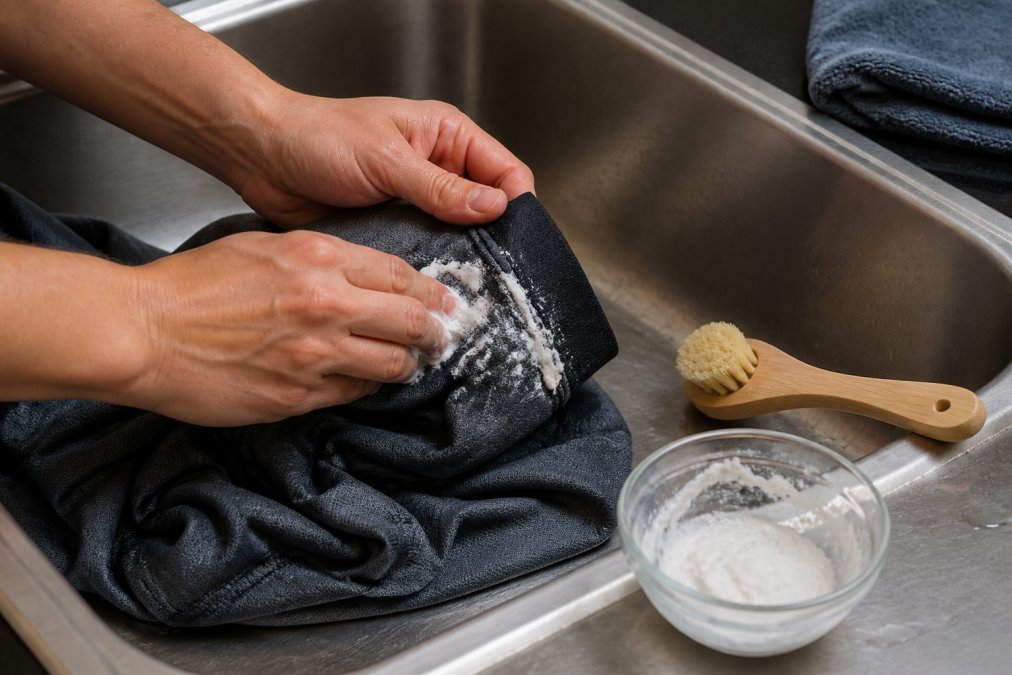
The most effective method for cleaning sweat resistant gear is a three-stage process: pre-treat, machine wash on a gentle cycle, and air dry. Skipping the pre-treatment step is why most people end up with lingering odors. Here is the routine we recommend.
Step 1: Pre-Treat Stains and Odors
Start by mixing a paste of baking soda and a small amount of water until it reaches a spreadable consistency. Apply this directly to armpit stains and any areas with visible sweat residue. Gently scrub the paste into the fabric using a soft-bristled brush, then allow it to sit for 15 to 20 minutes. This lifts the stain residue and begins the deodorizing process before the garment ever hits the wash cycle.
For a deeper odor issue, fill a sink with cool water and add one cup of distilled white vinegar. Submerge the gear and let it pre-soak for up to 30 minutes. The vinegar neutralizes odors and helps break down the mineral deposits that trap smells in synthetic fibers.
Step 2: Machine Wash on the Right Cycle
Once pre-treated, turn the garment inside out and place it in the washing machine. Select a cold water wash cycle, as hot water can set protein-based stains and damage the fabric's chemical finish. Use the enzyme-based detergent and skip fabric softeners entirely; they leave a residue that clogs the moisture-wicking pores and creates a barrier that traps bacteria.
Step 3: Air Dry to Protect Coatings
Never place sweat resistant gear in a machine dryer. The high heat is the single most destructive force for technical coatings and elastic fibers. Instead, lay the garment flat on a clean towel or hang it in a well-ventilated area out of direct sunlight. Air drying preserves the fabric barrier and the water-repelling finish, ensuring the gear continues to perform as intended.
How to Remove Sweat Smell from Synthetic Fabric
Persistent odor in synthetic fabric is a different problem than simple surface dirt. The smell comes from odor-causing bacteria that multiply inside the fibers, not just on the surface. A standard wash often fails to address this because the bacteria are protected deep within the weave.
Most guides treat all synthetics as one category, but that is a mistake. The fiber chemistry determines how aggressively you need to act. Here is how to break down the problem by material type.
Polyester and Nylon (Moisture-Wicking Base Layers)
These are the most common fibers in sweat resistant gear. They are hydrophobic, meaning they repel water, but they also have a high affinity for the non-polar oils in human sebum. That oily residue traps odor-causing bacteria against the fiber. A simple vinegar soak often fails here because vinegar is water-based and cannot penetrate the oil layer.
For these fabrics, the most effective approach is a two-part process:
- Pre-soak with a degreasing agent: Add one tablespoon of a mild, fragrance-free dish soap (like Seventh Generation Free & Clear) to a sink of cool water. The surfactants in dish soap break down the oily sebum layer that protects bacteria. Soak for 15 minutes.
- Follow with an enzyme detergent wash: After the degreasing soak, wash the garment in your machine with a detergent containing protease and amylase enzymes. These enzymes specifically target the protein and carbohydrate components of sweat, breaking them down into water-soluble pieces that rinse away. Look for detergents labeled "sport" or "activewear" (e.g., Nathan Sport-Wash or Hex Performance) that list these enzymes on the ingredient panel.
Spandex and Elastane (Compression and Stretch Panels)
Spandex is the weak link in any garment. It is a polyurethane-based fiber that degrades quickly when exposed to chlorine, high heat, and alkaline substances like baking soda. Odor binds to spandex differently because its surface is more porous than polyester.
For gear with high spandex content (check the tag, anything above 10% needs extra care), avoid baking soda pastes entirely. The abrasive texture and high pH can cause the spandex filaments to become brittle and snap, leading to the dreaded "fiber popping" where white threads protrude from the fabric surface.
Instead, use a cool water rinse with a few drops of tea tree oil (Melaleuca alternifolia). Tea tree oil is a natural antimicrobial that penetrates the porous spandex structure without raising the pH. Add 5 drops per gallon of water, soak for 10 minutes, then rinse thoroughly. Do not exceed 10 minutes, prolonged exposure to any oil can leave a residue that attracts new bacteria.
The Science of Water Temperature
Here is the mechanism most guides skip: sweat proteins denature (coagulate) at temperatures above 104°F. Once denatured, they bind irreversibly to synthetic fibers. This is why hot water is counterproductive, it literally bakes the protein into the weave. Cold water (below 60°F) keeps proteins soluble so detergents can lift them away.
However, cold water alone does not kill bacteria. It only suspends them. That is why the enzyme step is non-negotiable for synthetic gear. Enzymes are biological catalysts that work at low temperatures, breaking down the bacterial cell walls and the protein matrix they cling to.
For gear that sees heavy use, repeating this fiber-specific soak every few washes helps maintain freshness and prevents the buildup of odor-causing bacteria. The key is matching the cleaning agent to the fiber type, not treating all synthetics as one uniform material.
Best Natural Deodorizers for Combat Sports Equipment
For combat sports equipment like gloves and pads, you need options that kill bacteria without damaging the materials. Natural deodorizers are often the safest route because they avoid the harsh chemicals found in commercial disinfectants that can dry out leather or degrade synthetic shells.
Baking soda is the most versatile option. Sprinkling a light layer inside gloves and letting it sit overnight absorbs moisture and neutralizes odors. Distilled white vinegar, diluted with water in a spray bottle, can be misted inside equipment after training to deodorize and kill bacteria on contact. A third option is a simple solution of water and a few drops of tea tree oil, which has natural antimicrobial properties.
How to Disinfect Gym Gear at Home
Disinfecting your gear goes beyond simple cleaning, targeting the bacteria and fungi that cause skin infections and unpleasant smells. The method depends on the material.
But there is a critical distinction most guides miss: cleaning removes dirt, disinfecting kills pathogens. A vinegar spray cleans but does not reliably disinfect. For true disinfection, you need either heat, specific chemicals, or UV light.
Material-Specific Disinfection Protocols
Hard, Non-Porous Surfaces (Mouthguards, Plastic Handles, Weight Pins)
For these, use 70% isopropyl alcohol, not 91%. The 70% concentration is more effective because the water content slows evaporation, giving the alcohol more contact time to denature bacterial proteins (the CDC). Apply with a clean cloth and allow to air dry for a full 60 seconds. This is the minimum contact time for alcohol to kill Staphylococcus aureus and Streptococcus, the two most common bacteria found on gym equipment.
Leather and Synthetic Leather (Boxing Gloves, Heavy Bags)
Leather is porous and absorbs moisture, making it a breeding ground for bacteria. Do not use alcohol, it strips the natural oils and causes cracking. Instead, use a quaternary ammonium compound (quat) spray. Look for products like Lysol Laundry Sanitizer (which contains quats) diluted according to label instructions, or a dedicated sports equipment spray like Fight Gear Sanitizer. Quats are effective against a broad spectrum of bacteria and fungi without degrading leather.
Spray the interior of the glove, focusing on the palm and thumb area where sweat accumulates. Allow it to air dry for at least 10 minutes in a well-ventilated area. Then, insert a cedar shoe tree or a dedicated glove dryer (like the DryGuy) to wick residual moisture from the interior. The combination of chemical disinfection and mechanical moisture removal is what prevents bacterial recolonization.
Padded Synthetic Equipment (Shin Guards, Knee Pads, Helmets)
These are typically made of EVA foam covered with nylon or polyester. The foam interior is the problem, it absorbs sweat and is nearly impossible to fully dry. For these, use a UV-C sanitizing wand (like the PhoneSoap or a handheld UV-C device). UV-C light at 254 nm wavelength damages bacterial DNA, rendering them unable to reproduce (the FDA). Pass the wand over the interior padding for 30 seconds per square foot. This method is chemical-free and does not leave residue that can degrade foam adhesives.
If you do not have a UV-C wand, use a hydrogen peroxide spray (3% concentration, available at any drugstore). Hydrogen peroxide breaks down into water and oxygen, leaving no toxic residue. Spray the padding, allow it to foam (this indicates active disinfection), and let it dry completely. Do not use hydrogen peroxide on leather, it can cause discoloration.
The Drying Imperative
No disinfectant works if the gear stays damp. Bacteria reproduce exponentially in moist environments, a single bacterium can become millions in 8 hours (the CDC). The CDC recommends storing gear in a way that allows airflow. Do not store gloves in a sealed gym bag immediately after training. Instead, hang them open or use a boot dryer.
When to Disinfect vs. When to Clean
A practical rule: Clean after every use, disinfect weekly. Daily cleaning with a damp cloth removes surface sweat and debris. Weekly disinfection targets the bacterial buildup that causes infections like ringworm (tinea) and staph. If you train in a shared facility, disinfect after every session, communal mats and shared equipment are the primary transmission vectors for skin infections.
Common Mistakes That Ruin Technical Fabrics
Several habits can permanently damage sweat resistant gear, often without immediate signs.
- Using fabric softeners: These coat the fibers and destroy the moisture-wicking technology.
- Washing in hot water: Heat breaks down the chemical finish and causes yellowing.
- Machine drying: The high heat melts synthetic fibers and degrades elastic.
- Using chlorine bleach: Harsh chemicals break down the fabric's structure and leave a residue that attracts bacteria.
- Scrubbing too aggressively: This can abrade the surface and create weak points in the weave.
Extending the life of your technical gear comes down to consistent, gentle care. Most equipment is ruined not by intense use, but by improper cleaning that strips the coatings and breaks down the synthetic fibers. At Combat Build Supply, we understand that durable gear is the foundation of a reliable training routine, which is why we offer equipment built to withstand heavy use and back it with free shipping and a 100% refund for any defective items. Get started with Combat Build Supply and keep your training gear ready for every session.
Frequently Asked Questions
What kills sweat bacteria on clothes?
An enzyme-based detergent is an effective way to address odor-causing bacteria on sweat resistant gear. Enzymes break down protein-based stains and biological matter. For a deeper clean, a pre-soak with distilled white vinegar or a baking soda paste can help neutralize odors at the source before the laundry cycle begins. Always use cold water, as heat can set stains and damage the sweat-resistant coating on technical fabrics.
Can old sweat stains be removed from synthetic fabrics?
Yes, old sweat stains can often be addressed on synthetic fibers with the right approach. Create a paste from baking soda and water, apply it directly to the yellowing armpit stains, and let it sit for 30 minutes before washing. The paste consistency is key for breaking down the stain residue. For stubborn set-in stains, a pre-soak in a solution of distilled white vinegar and cold water can help lift the discoloration without compromising the fabric's integrity or its moisture-wicking properties.
Does heat damage sweat-resistant coatings on training gear?
Yes, heat is one of the fastest ways to degrade sweat-resistant and moisture-wicking coatings on training gear. The high temperatures from a machine dryer or hot water wash can break down the chemical bonds in these treatments, causing them to peel or lose effectiveness. Always wash your gear in cold water and air dry it to preserve the fabric barrier. This simple habit extends the life of your activewear and keeps it performing as intended.
How often should I deep clean my training equipment?
High-touch training equipment like pads, gloves, and straps should be disinfected at home weekly if you train several times per week. Sweat-resistant clothing worn during intense sessions should be washed after every single use to prevent odor-causing bacteria from embedding in the synthetic fibers. A monthly deep clean, using a vinegar soak or an enzyme-based detergent pre-treatment, will help remove built-up residue and keep your gear fresh and functional.
This article was written using GrandRanker


