

How to Prevent Martial Arts Gear Odors
Table of Contents
- Why Martial Arts Gear Odors Develop So Fast
- Daily Maintenance Routine to Stop Odors Before They Start
- How to Clean Boxing Gloves the Right Way
- Best Disinfectant for Gym Equipment: What Actually Works
- How to Dry Sparring Gear Quickly and Prevent Mildew
- Natural Odor Removal Methods That Actually Work
- Long-Term Gear Preservation and Storage Tips
- Conclusion
Last Updated: August 20, 2026
Why Martial Arts Gear Odors Develop So Fast
Martial arts gear odors signal active bacterial and fungal colonization. Sweat soaks into synthetic foam, leather, and vinyl, creating a warm, dark, moisture-rich environment ideal for bacteria growth. These bacteria break down sweat proteins and produce the sharp, rancid odor you recognize immediately.
The problem compounds because most gear is designed to absorb impact, not breathe. Closed-cell foam and thick padding trap moisture rather than releasing it. A single training session deposits enough sweat to sustain bacterial colonies for days.
There is also a fungal infection prevention angle. Mold and mildew thrive in the same conditions as odor-causing bacteria. According to CDC guidance on preventing skin infections in contact sports, shared or poorly maintained athletic equipment is a documented vector for skin infections including ringworm and staph. The same principles apply to personal gear that is never properly dried or sanitized.
The fix is not a single product or one-time deep clean. It is a system.
Daily Maintenance Routine to Stop Odors Before They Start
Most odor problems are drying failures, not cleaning failures.
Wipe down every piece of gear immediately after training using a microfiber cloth dampened with diluted disinfectant spray (50/50 white distilled vinegar and water works well). Wipe the interior and exterior of gloves, straps and padding of shin guards, and the outside of your mouthguard case. This takes under two minutes and removes surface-level sweat before it migrates deeper into the material.
After wiping, leave everything open and separated. Never stuff gloves back into a gym bag while damp. Air circulation is the difference between gear that lasts years and gear ruined in months.
| Gear Item | Post-Workout Action | Frequency |
|---|---|---|
| Boxing gloves | Wipe interior, open cuffs wide, air dry | After every session |
| Shin guards | Wipe padding and straps, hang separately | After every session |
| Hand wraps | Unroll completely, hang to dry | After every session |
| Mouthguard | Rinse, dry, store in ventilated case | After every session |
| Gym bag | Empty fully, leave unzipped | After every session |
Post-Workout Emergency Protocol
For heavy sessions where gloves are soaked through, immediately turn them upside down and shake out pooled moisture. Stuff them loosely with crumpled newspaper or a moisture-absorbing insert to pull dampness from the interior foam. Apply a light mist of antimicrobial disinfectant spray to the interior and leave them cuff-down in a well-ventilated space overnight. This pulls moisture out rather than just masking it.
Hand Wraps, Shin Guards, and Mouthguard Hygiene
Hand wraps absorb enormous amounts of sweat and sit balled up in gym bags for days. Unroll them completely after every session and hang to dry before washing. Machine wash in a mesh laundry bag after every two to three sessions using fragrance-free, pH-balanced soap.
Shin guards need attention on inner padding where skin contact is heaviest. Wipe with diluted antimicrobial solution and hang face-out so padding can breathe.
Rinse your mouthguard under cool water immediately after use, then soak for 30 seconds in diluted antiseptic rinse. Store in a ventilated case, never sealed in a plastic bag.
How to Clean Boxing Gloves the Right Way
Cleaning boxing gloves correctly means understanding what the material can and cannot tolerate. Start by wiping the exterior with a damp microfiber cloth. For the interior, apply disinfectant spray to the cloth first, then wipe, never spray directly into the glove, as oversaturation damages the foam lining. Follow with a dry cloth pass to remove excess moisture.
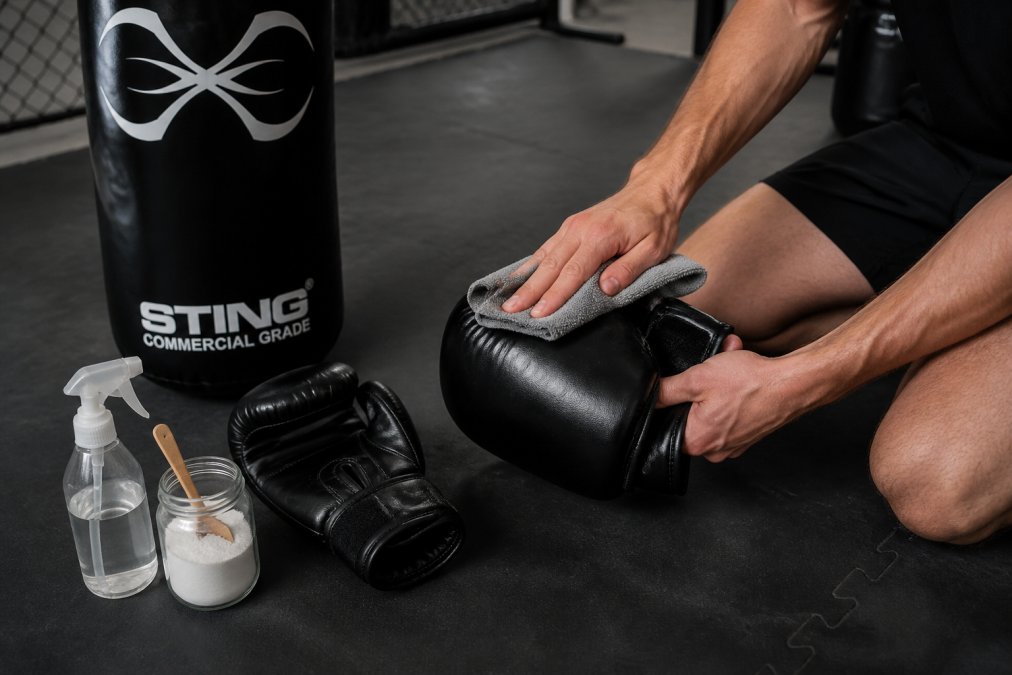
For a deeper clean once a week, mix a small amount of pH-balanced soap with warm water and work it into the interior lining with a cloth. Wipe clean, then allow complete air drying before the next session. Never use bleach, acetone, or harsh solvents, these break down synthetic foam and degrade leather faster than sweat.
Vinyl Training Gear vs. Leather Protective Gear: Different Rules
Vinyl training gear and leather protective gear require different cleaning approaches.
Vinyl gear tolerates disinfectant sprays well. Most alcohol-based or quaternary ammonium disinfectants are safe on vinyl surfaces. Avoid petroleum-based products, which cause vinyl to crack and peel. Wipe down after every session and you will rarely need more.
Leather gear is more demanding. Alcohol-based sprays used repeatedly dry out leather, causing cracking and loss of structural integrity. Clean leather sparring equipment with a damp cloth and saddle soap or leather-specific cleaner. Follow with leather conditioner every two to four weeks to maintain suppleness.
Check what your gear is made from before reaching for any cleaning product.
Best Disinfectant for Gym Equipment: What Actually Works
White distilled vinegar (diluted 50/50 with water) is effective against many common bacteria and safe on most surfaces including vinyl and synthetic foam. As a deodorizing agent and mild antimicrobial it outperforms most commercial sprays for routine use.
Quaternary ammonium sprays are effective broad-spectrum disinfectants safe on vinyl and most synthetic surfaces. They are the professional standard for gym sanitization and work well for weekly deep cleaning.
Isopropyl alcohol (70%) is effective for surface sanitization but should be used sparingly on leather and avoided on foam-backed materials. Repeated use dries out natural materials.
What to avoid: bleach solutions, hydrogen peroxide at high concentrations, and any product labeled for hard non-porous surfaces. These are too harsh for padded gear.
According to EPA's list of registered disinfectants for use in sports facilities, quaternary ammonium compounds are among the most broadly effective options for athletic equipment sanitization when used at manufacturer-recommended dilutions.
How to Dry Sparring Gear Quickly and Prevent Mildew
Mildew forms within 24 to 48 hours on damp gear left in low-airflow conditions. Once it sets into synthetic foam, it is nearly impossible to fully remove.
The fastest drying approach combines three things: position, airflow, and absorption.
- Position gear for maximum exposure. Hang gloves cuff-down so gravity pulls moisture toward the opening. Stand shin guards upright or hang face-out. Never lay gear flat.
- Create active airflow. A small fan directed at your gear cuts drying time significantly. A dehumidifier is particularly effective in humid climates.
- Use moisture absorbers inside gloves. Cedar wood inserts, activated charcoal bags, or commercial glove deodorizers pull moisture from interior foam while the exterior dries.
Avoid putting gear in a dryer, leaving it in sealed gym bags, or placing it in direct sunlight for extended periods. High heat degrades adhesives and foam.
Natural Odor Removal Methods That Actually Work
Natural odor removal works best as maintenance, not rescue. Once gear smells strongly rancid, natural methods alone will not fully reverse it.
Baking soda packed loosely inside gloves overnight absorbs odor-causing acids. Shake it out completely before training. Use two to three times per week for consistently fresh gear.
Activated charcoal inserts are more effective than baking soda for sustained deodorizing. Small activated charcoal bags placed inside gloves work continuously and can be recharged by placing them in sunlight for a few hours.
Cedar wood inserts absorb moisture and release a natural antimicrobial compound that slows bacteria growth. They are particularly effective for long-term storage.
White distilled vinegar spray applied lightly to the interior of gloves and allowed to dry completely neutralizes bacteria and eliminates rancid odor compounds.
Long-Term Gear Preservation and Storage Tips
Gear maintained well lasts significantly longer. The same bacteria and moisture that cause odors degrade foam, stitching, and surface materials over time.
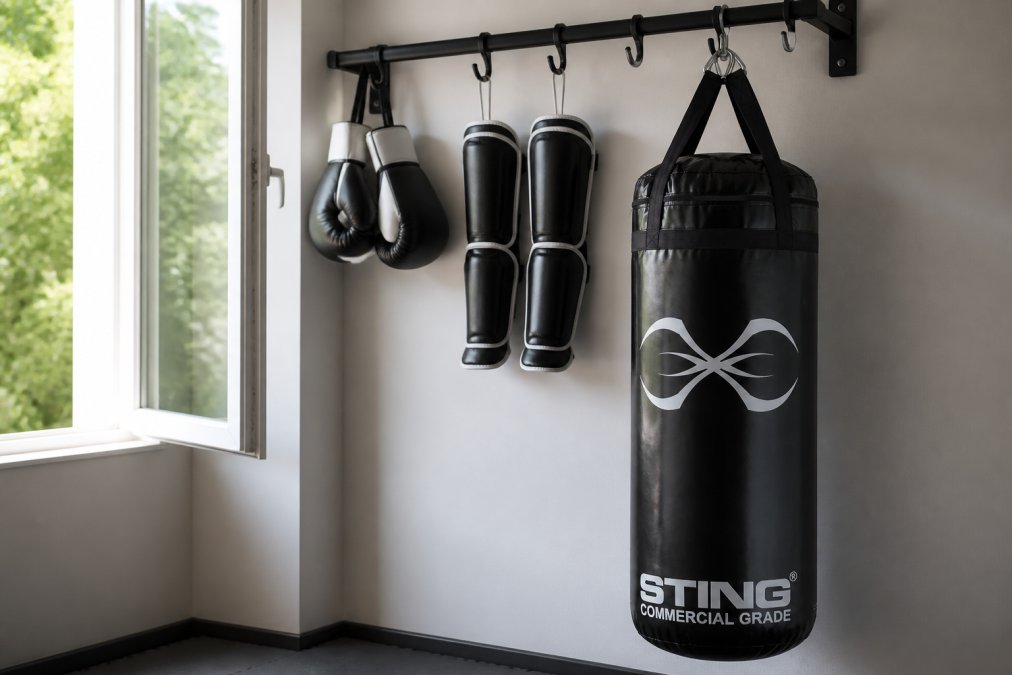
Store gear in a cool, dry location with good air circulation. A gear rack in a ventilated room is ideal. A sealed gym bag in a closet is the worst possible storage environment: it traps moisture, blocks airflow, and creates conditions for both mildew and bacteria growth.
For leather gear, condition it every few weeks during active training and before extended storage. Dry leather cracks along stress lines, particularly around wrist straps and knuckle padding.
According to guidance on textile and leather care from the American Cleaning Institute, proper moisture management and pH-neutral cleaning products are the most significant factors in extending the lifespan of textile and leather goods used in high-intensity applications.
Glove Inserts and Moisture Absorbers
Glove inserts pull moisture out of interior foam between sessions, slowing both bacteria growth and material degradation. Cedar wood inserts are the best all-around option for regular use, they absorb moisture, release a mild antimicrobial compound, and last for years. Activated charcoal bags are more effective at odor trapping. Silica gel packs are best for long-term storage.
Inserts are not a substitute for drying. They work on residual moisture after gear has air dried. Stuffing wet gloves with inserts and sealing them in a bag traps moisture and worsens the problem.
Gym Bag Hygiene and Air Circulation
Empty your bag completely after every training session and leave it unzipped in a ventilated space. Once a week, wipe the interior with diluted disinfectant spray and allow it to dry fully before repacking. Mesh bags or bags with ventilation panels are significantly better than solid nylon bags with no airflow.
For home gym setups, a dedicated gear rack is better storage than any bag. Gear stored on open hooks dries faster, stays fresher, and is easier to inspect for damage. If you are training on a heavy bag at home, the Panama 45D Heavy Punching Bag from Combat Build Supply is a popular choice for serious practitioners. Keeping your gloves fresh and properly maintained protects both your hands and your investment in quality equipment.

Preventing martial arts gear odors requires consistency. The biggest challenge most practitioners face is building the post-session habit of wiping, airing, and storing gear properly before fatigue makes it tempting to drop everything in a bag. Combat Build Supply is built around helping you train smarter and stay prepared, including keeping your gear in condition session after session. Explore our range of heavy bags and training equipment, backed by free shipping and 100% coverage on defective items.
Frequently Asked Questions
How often should you sanitize martial arts sparring gear?
Wipe down gloves, shin guards, and headgear with a disinfectant spray after every single session. Do a deeper clean with pH-balanced soap or a diluted white distilled vinegar solution once a week if you train daily. Mouthguards need rinsing after every use and a full soak weekly. Consistent sanitization stops bacteria growth before rancid odor sets in, which is far easier than reversing a deeply embedded smell.
Can I spray Lysol in my boxing gloves?
Spraying Lysol inside boxing gloves is not recommended for regular use. Most disinfectant sprays contain alcohol or harsh chemicals that degrade synthetic foam padding and dry out leather or vinyl over time. A few spritzes of a diluted antimicrobial spray formulated for sports gear is safer. For daily deodorizing, baking soda or activated charcoal inserts are gentler and still effective at neutralizing odor-causing bacteria without damaging the material.
What are the best natural deodorizers for gym bags?
Activated charcoal bags and cedar wood inserts are the most effective natural options. Both absorb moisture and neutralize odors without leaving residue on your gear. Baking soda in a small open container works as a budget alternative. Avoid fabric softener sheets, they mask the smell temporarily but do nothing about the underlying bacteria growth. Keeping the gym bag unzipped between sessions to allow air circulation also makes a measurable difference in how fresh it stays.
What is the best way to clean kickboxing gear?
Start by wiping all surfaces with a microfiber cloth dampened with a diluted disinfectant spray suited for sports equipment. For leather protective gear, follow with a leather conditioner to prevent cracking. Vinyl training gear tolerates slightly more moisture but should never be soaked. Hand wraps can go in a mesh laundry bag in the washing machine. Shin guards and headgear should air dry completely before storage, never seal damp gear in a gym bag, as that accelerates mildew prevention failures.
This article was written using GrandRanker


