

Mouthguard vs Custom Dental Guard: Which Protects Better
Table of Contents
- Mouthguard vs Custom Dental Guard: Core Differences
- Custom Mouthguard vs Store-Bought: What Sets Them Apart
- Custom Night Guard vs Over-the-Counter Options
- Boil-and-Bite Mouthguard Fit: How It Works and Its Limits
- Custom Mouthguard Cost: Weighing Upfront and Long-Term Value
- Choosing the Right Guard for Your Sport or Need
- Care, Cleaning, and When to Replace Your Guard
- Frequently Asked Questions
Last Updated: October 10, 2026
Mouthguard vs Custom Dental Guard: Core Differences
The difference between a mouthguard and a custom dental guard matters significantly. A mouthguard vs custom dental guard comparison involves protection level, fit, durability, and injury prevention, not just price or comfort.
Store-bought mouthguards are mass-produced, one-size-fits-all designs you boil and bite to fit. Custom dental guards are fabricated by a dental professional based on your teeth and jaw impression. This manufacturing difference affects fit, shock absorption, durability, and long-term cost.
The choice between a mouthguard and a custom guard depends on your sport, grinding severity, budget, and usage frequency.
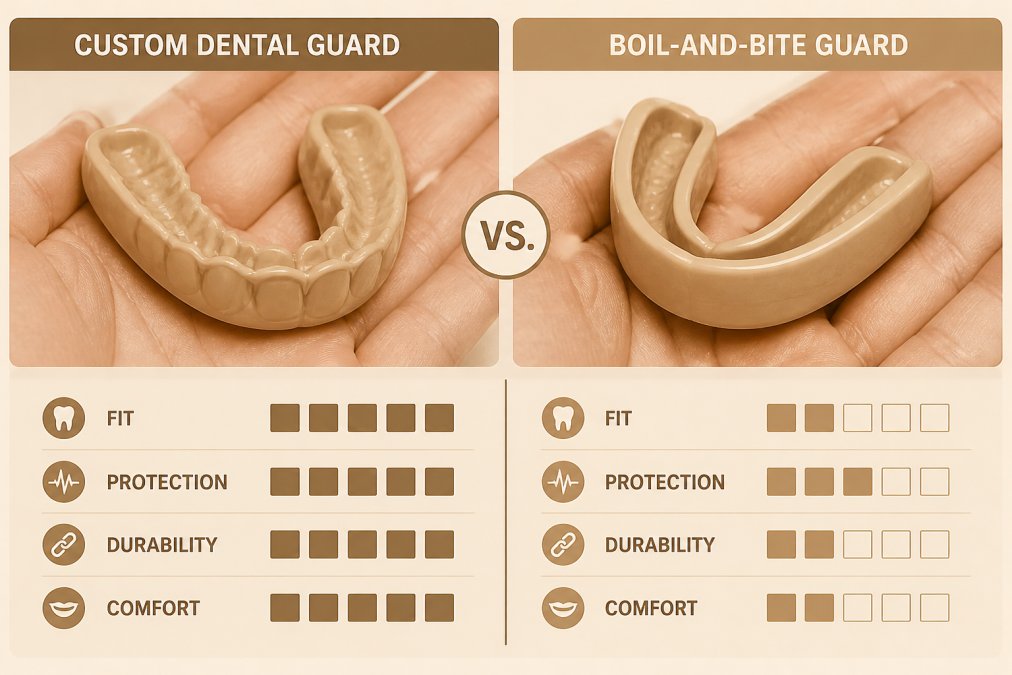
Custom Mouthguard vs Store-Bought: What Sets Them Apart
Store-bought guards and custom mouthguards operate in different performance tiers. Understanding what separates them helps you make a decision based on actual needs, not just convenience.
Fit and Jaw Alignment
A custom-made guard is molded to your exact mouth contours and bite alignment. It stays in place during intense movement, covers all vulnerable areas, and distributes impact forces evenly across your teeth and jaw.
A store-bought guard relies on boil-and-bite molding. The result is a rough approximation of your bite that often shifts during use, requires frequent readjustment, and leaves gaps where teeth remain unprotected. For competitive training or nightly grinding, these fit issues compound over time.
A misaligned guard can create pressure points and cause jaw pain or TMJ discomfort. Custom guards maintain your natural bite alignment, reducing stress on jaw joints and muscles.
Impact Protection and Shock Absorption
Custom guards are thicker and engineered with multiple material layers to absorb and distribute impact energy. A direct blow disperses force across a larger surface area, reducing peak impact to your teeth and jaw.
Store-bought guards are thinner to allow home molding, resulting in less shock absorption and reduced protection against fractures, chips, and tooth displacement in contact sports.
Custom guards use high-grade polymers selected for impact resistance and durability, while store-bought guards use softer materials that prioritize ease of molding over protection.
Comfort and Wearability
Custom guards win on comfort with precise fit, no gaps, pressure points, or shifting. Athletes and grinders report they feel natural after a short adjustment period.
Store-bought guards often feel bulky, causing friction, discomfort, sore gums, and difficulty speaking. This discomfort frequently leads to inconsistent use or abandonment.
Custom guards don't obstruct your airway or create the choking sensation some experience with store-bought options.
Custom Night Guard vs Over-the-Counter Options
Night guards demand different protection than sports mouthguards. A night guard sits in your mouth 6-8 hours, must withstand repetitive grinding force, and remain comfortable enough not to disrupt sleep.
Addressing Teeth Grinding and Clenching
Bruxism (teeth grinding and clenching) causes progressive tooth wear, enamel loss, and jaw pain. An over-the-counter night guard provides basic tooth-to-tooth protection.
A custom night guard is engineered for grinding forces, thicker, more durable, and designed to handle repetitive stress. Your dentist can adjust the bite surface to reduce clenching triggers and distribute grinding forces evenly.
A store-bought guard typically lasts 3-6 months before becoming thin and brittle. A custom guard lasts 3-5 years with proper care.
Durability and Replacement Frequency
Store-bought guards degrade faster due to softer materials and constant grinding stress, requiring frequent replacement.
Custom guards are built to last with harder material and reinforced construction. When they wear out, your dentist can often repair or replace them using the existing mold.
Over a 5-year period, you might replace a store-bought guard 10+ times. A custom guard might need replacement once or twice. That durability difference is significant both financially and practically.
Boil-and-Bite Mouthguard Fit: How It Works and Its Limits
The boil-and-bite process is simple: heat the guard in hot water until it softens, insert it into your mouth, and bite down firmly for 30-60 seconds.
The appeal is obvious, immediate, inexpensive, no dental appointment required. The limits are equally obvious.
Boil-and-bite molding is imprecise. You're relying on your own judgment about pressure, timing, and placement. Many people under-mold or over-mold their guards. Some create an uneven fit that protects one side of the mouth better than the other.
These guards also tend to be bulkier because the material needs to be soft enough to mold. That bulk creates the comfort and breathing issues mentioned earlier.
For occasional recreational use, a few pickup basketball games per year, casual sparring, a boil-and-bite guard is probably adequate. For regular training, competitive sports, or nightly grinding, the fit limitations create real problems.
Custom Mouthguard Cost: Weighing Upfront and Long-Term Value
The cost decision requires looking beyond the initial purchase price to total cost of ownership, replacement frequency, insurance coverage, and the financial impact of inadequate protection.
Upfront and Recurring Costs
Store-bought guards typically cost $15-$50 per unit, with no professional appointment or fitting required. The appeal is immediate affordability.
Custom guards require a dental appointment, impression, lab fabrication, and professional fitting. The total cost usually ranges from $200-$400, depending on your dentist and the complexity of your bite. Some dental insurance plans cover a portion of custom guard costs (typically 50% of the fee) if the guard is prescribed for bruxism or TMJ-related grinding, though coverage varies widely by plan and is less common for sports mouthguards. Evaluating these long-term custom mouthguard benefits helps determine if the investment provides sufficient value for a growing athlete whose dental needs are still evolving.
Total Cost of Ownership Over Five Years
The long-term math shifts the picture significantly.
If you use a store-bought guard regularly (3-5 times per week for sports, or nightly for grinding), you'll likely replace it every 4-6 months as it thins, becomes brittle, or loses its fit. Over five years, that's 10-15 replacements at $20-$40 each, totaling $200-$600 in guard purchases alone, plus the time and hassle of repeated replacements.
A custom guard, with proper care, typically lasts 3-5 years before needing replacement. Your initial investment is $200-$400, and you may need one replacement in that period, adding another $200-$400. Total five-year cost: $400-$800. If your insurance covers 50%, your out-of-pocket cost drops to $300-$600.
In many scenarios, the five-year cost is comparable or the custom guard is cheaper, especially if you use protection regularly. For occasional users (a few times per year), the store-bought guard remains more cost-effective upfront.
Insurance and Dental Coverage
Dental insurance treatment of mouthguards varies:
- Bruxism-related night guards are more likely to be covered because grinding is a recognized dental condition. Many plans cover 50% of the cost if a dentist prescribes the guard for teeth grinding or TMJ protection. Coverage typically requires a diagnosis code and a prescription from your dentist.
- Sports mouthguards are rarely covered by dental insurance because they are considered protective equipment rather than treatment for a dental condition. Some medical insurance plans may cover a portion if the guard is prescribed for a specific medical reason (e.g., jaw instability), but this is uncommon.
- Flexible Spending Accounts (FSAs) and Health Savings Accounts (HSAs) often allow you to use pre-tax dollars for custom mouthguards, which effectively reduces your out-of-pocket cost by 20-37% depending on your tax bracket.
Before purchasing a custom guard, ask your dentist whether it qualifies for insurance coverage and whether your FSA or HSA can be used.
The Hidden Cost of Inadequate Protection
A store-bought guard that doesn't fit well or provides insufficient protection can result in dental damage that requires expensive treatment:
- Chipped or fractured tooth: $500-$2,000 to repair or crown
- Tooth displacement or root damage: $1,000-$3,000 or more, potentially requiring root canal therapy and crown
- Jaw fracture or TMJ injury: $5,000-$15,000+ in emergency care, imaging, and specialist treatment
- Severe grinding damage (enamel loss, wear, multiple teeth affected): $2,000-$10,000+ in restorative work
A custom guard that prevents even one significant injury or dental damage event pays for itself many times over. For competitive athletes and nightly grinders, this risk-mitigation value is substantial.
Cost Decision Framework
Choose store-bought if:
- You use protection fewer than 10 times per year
- Your budget is under $50 and you cannot access insurance coverage or FSA/HSA funds
- You are willing to replace the guard every 4-6 months
- The sport or activity carries low collision risk
Choose custom if:
- You use protection 2+ times per week or nightly
- You compete in high-impact sports or have diagnosed bruxism
- Your dental insurance covers a portion or you have FSA/HSA funds available
- You want to minimize replacement hassle and maximize protection over 3-5 years
- You have had previous dental injuries or have significant dental work you want to protect
Choosing the Right Guard for Your Sport or Need
The best guard for you depends on three factors: frequency of use, intensity of impact, and your specific dental needs.
High-impact contact sports (boxing, MMA, rugby, hockey) demand maximum protection. A custom guard is the professional standard because it provides superior shock absorption and fit. Store-bought guards are risky in these environments, the fit issues and lower protection level increase injury risk.
Grinding and clenching benefit from a custom night guard. The nightly stress demands durability and precision fit. A store-bought guard might work short-term, but custom is the better long-term choice.
Recreational sports (basketball, soccer, recreational sparring) with lower collision risk might be adequately served by a store-bought guard. The risk-benefit calculation is different when impacts are less frequent and forceful.
Budget constraints sometimes make store-bought the only realistic option. In those cases, prioritize fit, spend time molding it correctly and replace it if it doesn't feel secure.
Care, Cleaning, and When to Replace Your Guard
A guard is only effective if you maintain it properly.
Store-bought and custom guards both need regular cleaning.
Replace your guard when it becomes thin, brittle, develops cracks, or no longer fits securely. A worn-out guard provides less protection and can actually cause discomfort or gum irritation.
If your guard develops minor damage, some dentists can repair it. Most damage, however, requires replacement. Custom guards are easier to replace because your dentist has your original mold on file.
The mouthguard vs custom dental guard decision comes down to your specific situation. For competitive athletes, serious grinders, and anyone training regularly, a custom guard provides superior protection, comfort, and long-term value.
Combat Build Supply supports serious practitioners with the gear and knowledge you need to train safely and consistently.
Frequently Asked Questions
What is the difference between a mouthguard and a custom dental guard?
A mouthguard typically refers to a store-bought, one-size-fits-all or boil-and-bite option designed for sports impact protection. A custom dental guard is professionally fabricated from an impression of your mouth, offering precise fit and contours. Custom guards provide superior bite alignment, comfort, and protection for both sports and teeth grinding. Store-bought guards are cheaper upfront but often shift during wear and offer less reliable shock absorption.
Does a custom mouthguard protect teeth better than a store-bought one?
Yes. Custom mouthguards conform exactly to your mouth's contours and jaw alignment, distributing impact force more evenly across the dental arch. This reduces stress on individual teeth and the jaw joint. Store-bought guards can slip or tilt during contact, concentrating force unevenly and increasing risk of tooth fracture or jaw pain. Professional fitting and thickness tailored to your sport also enhance protection effectiveness.
Can I use a sports mouthguard as a night guard?
Not reliably. Sports mouthguards are designed for impact absorption during contact activity and are often thicker and bulkier. Night guards are thinner, contoured for sleeping comfort, and designed to protect against grinding and clenching forces over extended hours. Using a sports guard at night can cause jaw discomfort, breathing difficulty, and sleep disruption. Each type serves a different function and should be selected accordingly.
Are custom dental guards worth the cost?
For frequent athletes or people with significant teeth grinding, yes. Custom guards last longer, require fewer replacements, and prevent costly dental damage like cracked teeth or worn enamel. The upfront cost is higher, but total cost of ownership over 2-3 years often favors custom options. Casual athletes with minimal grinding may find store-bought guards sufficient. Insurance may cover custom night guards for diagnosed bruxism, reducing your out-of-pocket expense.


