

Foam vs Gel Sparring Gloves: Which Protects Better
Table of Contents
- Foam vs Gel Sparring Gloves: Core Differences
- Boxing Glove Padding Types Explained
- Impact Absorption and Partner Safety
- What Weight Gloves for Sparring: Foam vs Gel Considerations
- Sparring Gloves vs Bag Gloves: When to Use Each
- Durability, Comfort, and Long-Term Performance
- How to Choose Between Foam and Gel for Your Training
- Frequently Asked Questions
Last Updated: October 10, 2026
Foam vs Gel Sparring Gloves: Core Differences
When you're choosing foam vs gel sparring gloves, you're making a decision that affects how hard you can train, how safe your partner stays, and how long your gear lasts. We help fighters understand these differences so they pick gloves that match their training goals and sparring style.
The core distinction comes down to padding material and how each absorbs impact. Foam padding uses compressed latex or synthetic materials that compress under force. Gel padding incorporates silicone or polymer gel compounds that distribute force more evenly across a broader surface area. Both protect your hands and your partner, but they do it differently, and those differences matter more than most guides acknowledge.
The real question isn't which is "better" in absolute terms. It's which suits your sparring intensity, hand size, training frequency, and how much durability you need before replacement. Let's break down what actually separates these two approaches.
Boxing Glove Padding Types Explained
Latex Foam Construction
Latex foam remains the most common padding in boxing gloves across all price points. It's affordable to manufacture, breaks in relatively quickly, and provides decent impact absorption for most training scenarios.
Foam padding works by compressing when struck. The material flattens under force, then rebounds, ideally, when pressure releases. The density of the foam determines how much compression occurs before your hand feels the impact. Foam density in sparring gloves typically ranges from 0.15 to 0.35 grams per cubic centimeter. Higher-density foam (0.30-0.35 g/cm³) resists compression longer and feels stiffer initially, maintaining responsiveness longer into a training session. Lower-density foam (0.15-0.25 g/cm³) compresses faster, which some fighters prefer for comfort, but which can shift or settle unevenly over time.
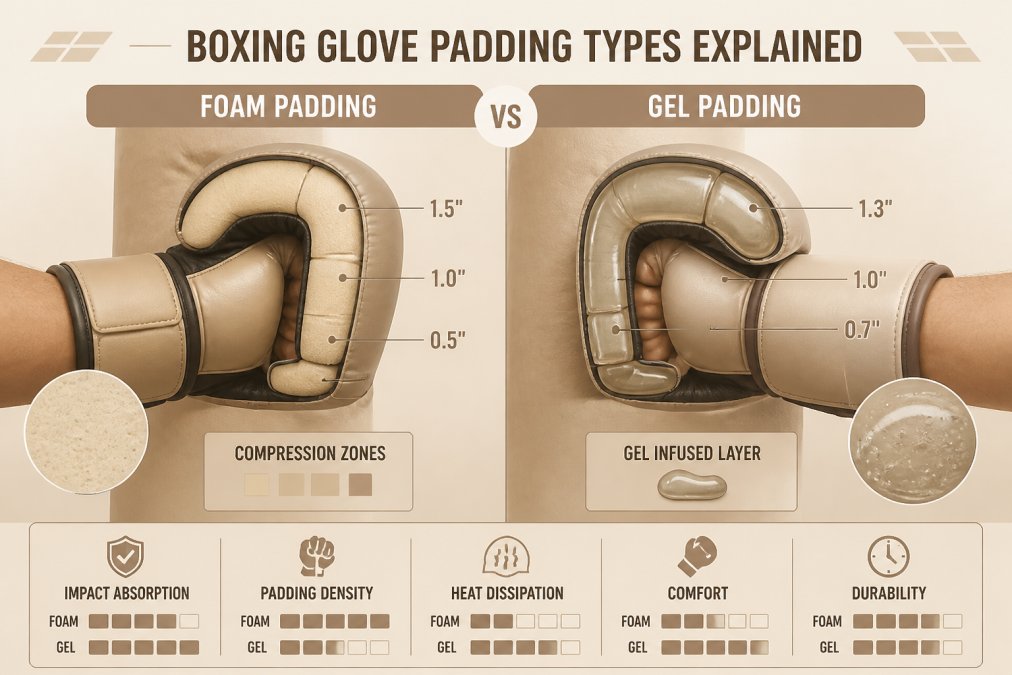
A common mistake is assuming all foam is identical. Horsehair-filled foam (traditional construction) behaves differently than pure latex foam. Horsehair adds structural fibers that resist settling and maintain padding height longer, but it's heavier and less comfortable for extended sparring sessions because it doesn't conform to hand shape as readily. Pure latex foam is lighter and more conformable but compresses more quickly with repeated impacts. Some mid-range gloves use a hybrid approach: a dense outer layer of latex foam (for impact resistance) bonded to a softer inner layer (for comfort and hand conformity). This layering affects how force transfers through the glove.
Foam padding's compression and rebound cycle also affects heat retention. As foam compresses and rebounds repeatedly, friction generates heat inside the glove. During a 30-minute sparring session, the interior temperature of a foam-padded glove can rise 8-12 degrees Fahrenheit above ambient temperature. This heat buildup increases hand sweat and can accelerate padding fatigue in the long term.
Foam padding's main limitation emerges after heavy use. The material fatigues. After months of regular sparring, compressed areas don't rebound as fully. You'll notice the glove feels softer in specific zones where you've thrown the most strikes, typically over the knuckles and the outer edge of the hand. This padding shift isn't a defect; it's the material's natural response to repeated compression cycles. The rebound speed (how quickly the foam returns to its original shape after compression) decreases measurably. A new foam glove rebounds in 100-150 milliseconds; after six months of 3-4 weekly sparring sessions, rebound time can extend to 200-250 milliseconds, meaning the padding stays compressed slightly longer between impacts.
Gel Padding Technology
Gel padding distributes impact differently. Instead of compressing and rebounding, gel flows slightly under force, spreading that energy across a larger area. This reduces peak force concentration on any single point of your hand or your partner's face.
Gel compounds (typically silicone-based or polyurethane-gel hybrids) stay consistent through thousands of impacts. They don't compress and fatigue the way foam does. A gel-padded glove feels the same on day one and day 200 of training. That consistency matters if you're sparring multiple times per week. Gel padding's force-distribution mechanism works through shear deformation: when struck, the gel shifts laterally within its chamber, spreading the impact force over a wider surface area than foam's direct compression allows. This lateral flow reduces peak pressure by approximately 15-25 percent compared to equivalent foam padding, depending on gel viscosity and chamber design.
The trade-off: gel padding feels different on initial contact. Many fighters describe it as "softer" or "mushier" compared to foam's more responsive feel. If you're used to foam gloves, gel can feel like you're hitting through a thicker barrier. That's actually the point, the gel is absorbing and distributing force more gradually, but the sensation takes adjustment. The tactile feedback is also different: foam provides a sharper, more defined impact sensation, while gel provides a cushioned, delayed feedback. For technical sparring where you want to feel exactly where your punch landed, this difference matters.
Gel padding also adds weight. A 16-ounce gel-padded glove will feel 2-4 ounces heavier in hand than a 16-ounce foam glove because the gel compounds are denser (silicone gel density is approximately 1.0-1.1 g/cm³, compared to latex foam at 0.15-0.35 g/cm³). For sparring partners, this matters: a heavier glove means more momentum behind each punch, even if the padding absorbs impact better. Some gyms and coaches restrict gel gloves for this reason during light sparring sessions.
Gel padding also resists heat buildup. Because gel doesn't compress and rebound repeatedly, friction-generated heat is minimal. A gel-padded glove during a 30-minute session typically rises only 2-4 degrees Fahrenheit, meaning less hand sweat and less accelerated padding degradation from thermal stress.
Direct Comparison: Foam vs Gel Across Key Metrics
| Metric | Foam | Gel |
|---|---|---|
| Compression rebound time (new) | 100-150 ms | 50-80 ms (faster lateral flow) |
| Rebound consistency after 6 months | Degrades 50-100% | Minimal change (<5%) |
| Peak force reduction vs bare knuckle | 30-40% | 40-55% |
| Heat buildup (30-min session) | 8-12°F | 2-4°F |
| Tactile feedback | Sharp, defined | Cushioned, delayed |
| Hand fatigue (extended sparring) | Lower (lighter feel) | Higher (denser material) |
| Padding lifespan (regular use) | 6-12 months | 12-18 months |
Neither padding type is objectively "better." Foam excels at responsive feedback and hand speed; gel excels at consistency and durability. Your choice depends on whether you prioritize the feel and efficiency of foam or the long-term reliability and impact distribution of gel.
Impact Absorption and Partner Safety
This is where the comparison gets practical. Partner safety depends on how much force reaches your sparring partner's face or body, and how that force is distributed.
Foam padding concentrates impact in a smaller area. When you throw a punch, the foam compresses directly behind your knuckles. Your partner feels a defined point of impact. If you're throwing hard, that concentrated force can sting. Many experienced fighters prefer this feedback, they can feel exactly where their punch landed, but it requires control.
Gel padding spreads impact across a wider surface. The same punch force gets distributed over a larger area of your partner's face or body. The result is less localized pain but slightly more total force transfer (because the gel doesn't absorb as much energy, it redirects it). For lighter sparring or technical work, this is safer. For hard sparring, some partners actually prefer foam because they can feel the impact and adjust their defense accordingly.
The evidence-based reality: neither padding type is inherently "safer." Safety depends on glove weight, your control, and how hard you're actually sparring. A 16-ounce gel glove with controlled technique is safer than a 12-ounce foam glove thrown hard. The padding material is secondary to those factors.
What matters most is consistency. Foam padding that's broken down and settled unevenly provides unpredictable protection. Gel padding maintains consistent protection across every session. If you're sparring frequently, that consistency reduces the risk of unexpectedly hard impacts because the padding behaves the same way every time.
What Weight Gloves for Sparring: Foam vs Gel Considerations
The weight question matters more than most guides acknowledge. A 16-ounce glove is standard for sparring, but the padding type affects how that weight feels and performs.
Foam-padded 16-ounce gloves feel responsive. They're lighter on your hands during combinations, and the padding gives immediate feedback. For technical sparring or pad work, many fighters prefer this. You can throw faster combinations without hand fatigue.
Gel-padded 16-ounce gloves feel heavier because the gel compounds add density. Your combinations will be slightly slower, but your partner absorbs less concentrated force. If you're training with someone lighter than you or less experienced, gel padding at 16 ounces is the better choice.
Some fighters move up to 18-ounce gel gloves for hard sparring. The extra weight combined with gel padding provides maximum impact absorption. Your partner feels less sting. But that extra weight fatigues your hands and shoulders faster, which limits how long you can spar effectively.
For most home training setups, 16-ounce sparring gloves, whether foam or gel, are the practical standard. Anything lighter increases injury risk. Anything heavier becomes impractical for extended sessions.
Sparring Gloves vs Bag Gloves: When to Use Each
This distinction matters because many fighters try to use one glove for both sparring and heavy bag work. That's a mistake.
Bag gloves are designed for striking a stationary object. They have less padding and less wrist support because the bag doesn't move or hit back. Bag gloves prioritize hand speed and feedback. You want to feel your punch connection and adjust your technique.
Sparring gloves have more padding and more wrist support because your partner can hit back and their movement is unpredictable. You need more protection and more stability. Sparring gloves are also heavier, which naturally slows your hand speed, that's intentional, because speed isn't the goal in sparring. Control and safety are.
Using bag gloves for sparring is unsafe. The reduced padding concentrates impact, and the lighter weight means more force transfers to your partner. Using sparring gloves for bag work is inefficient. The extra padding dampens feedback, and the weight fatigues your hands without benefit.
Combat Build Supply recommends having both. A dedicated pair of sparring gloves and a separate pair for bag work will extend the life of both and keep your training safer and more effective.
Durability, Comfort, and Long-Term Performance
How Padding Breaks Down Over Time
Foam padding breaks down predictably. After six months of regular sparring (3-4 sessions per week), foam-padded gloves will show visible settling in high-impact zones. The padding feels thinner where you throw most strikes, typically over the knuckles and the outer edge of the hand. This doesn't mean the gloves are ruined, but their protective quality has declined measurably.
The breakdown process happens in stages. In months 1-3, the foam compresses slightly but rebounds fully after each session. You won't notice performance change. In months 3-6, compressed areas begin to stay slightly flattened between sessions; rebound becomes slower (as noted above, extending from 100-150 ms to 150-200 ms). By month 6-9, visible indentations appear in the padding where you've thrown the most strikes. The glove feels noticeably softer in those zones. By month 9-12, the padding in high-impact areas may be 20-30 percent thinner than new padding, and rebound time can exceed 250 milliseconds. At this point, the glove's protective capacity has declined enough that many coaches recommend replacement, especially if you're sparring hard or frequently.
Gel padding resists this breakdown. A gel-padded glove will perform identically in month 6 and month 12. The padding doesn't fatigue or settle because gel doesn't rely on rebound, it flows and redistributes force continuously. If durability is your priority, especially if you're training frequently, gel padding wins this comparison decisively. Gel-padded gloves typically remain at 90+ percent of their original protective capacity even after 12-18 months of regular use.
Comfort and Hand Soreness
Comfort is subjective but measurable. Foam gloves feel more responsive and lighter. Many fighters find them more comfortable for technical work and combinations because the padding doesn't dampen hand speed. However, foam's sharper impact feedback can increase hand soreness after extended sparring, especially if you're throwing high volume. The concentrated impact on knuckles and hand joints accumulates fatigue.
Gel gloves feel softer and require adjustment, but they reduce hand soreness after sparring because the padding is more forgiving and distributes impact more evenly. Fighters often report less knuckle and wrist soreness after gel-padded sparring sessions, even at the same intensity level. This matters for training frequency: if you're sparring multiple times per week, gel padding's soreness reduction allows you to recover faster and train more consistently.
Wrist support matters more than padding type for long-term comfort. A glove with poor wrist support will cause wrist fatigue regardless of padding. Make sure your sparring gloves have a rigid wrist panel (typically 3-4 inches of reinforced material) and a secure closure, either hook-and-loop (Velcro) or lace-up. Velcro closures are faster but may loosen during sparring; lace-up closures are more stable but take longer to put on and remove.
Care, Cleaning, and Hygiene, The Overlooked Factor
How you maintain your gloves directly affects their lifespan and your health. Most guides skip this, but it's critical.
After every sparring session, air-dry your gloves immediately. Do not leave them in a gym bag or locker. Moisture trapped inside accelerates padding breakdown and creates an environment for bacteria and mold growth. Hang your gloves in a well-ventilated area (near a window or fan) for at least 4-6 hours after use. If possible, stuff them loosely with newspaper or a moisture-absorbing insert to speed drying. Replace the newspaper every 1-2 hours for the first few hours.
Once per week, wipe the exterior of your gloves with a damp cloth and mild soap to remove sweat residue and bacteria. Allow them to air-dry completely before storage. Do not machine wash or submerge boxing gloves; water can damage internal padding and the glove structure.
For the interior, spray a light antimicrobial or odor-control spray (designed for sports gear) inside the gloves once per week. This prevents bacterial growth and reduces odor. Allow the spray to dry completely before wearing.
Store your gloves in a cool, dry place. Heat and humidity accelerate padding degradation. A temperature range of 60-75 degrees Fahrenheit is ideal. Do not store gloves in a hot car or damp basement.
Proper care extends foam glove lifespan by 2-4 months and gel glove lifespan by 3-6 months. Neglected gloves (left damp, stored in heat) may need replacement 3-6 months earlier than well-maintained pairs. For frequent sparrers, this difference is significant: proper care can save $100-200 per year in replacement costs.
Replacement Timeline and Cost Considerations
Foam gloves typically need replacement every 6-12 months with regular use (3+ sparring sessions per week). If you spar 1-2 times per week, foam gloves may last 12-18 months. Gel gloves last 12-18 months with regular use and 18-24 months with lighter use.
If you're training seriously, gel padding's longer lifespan saves money over time. A pair of quality foam gloves costs $60-120; a pair of quality gel gloves costs $100-180. Over two years, two pairs of foam gloves ($120-240) cost less than one pair of gel gloves ($100-180), but if you're sparring 3+ times per week, you'll likely need two pairs of foam gloves in that period (one as backup while the other dries) versus one pair of gel gloves. The total cost and convenience often favor gel for serious, frequent trainers.
Inspect your gloves monthly. Look for visible padding compression, check that the wrist panel is still rigid, and ensure the closure is secure. If padding is noticeably thinner, rebound feels sluggish, or the wrist panel has become flexible, it's time to replace the gloves, regardless of how long you've owned them. Worn-out gloves increase injury risk for both you and your partner.
How to Choose Between Foam and Gel for Your Training
Start by defining your sparring frequency and intensity. If you spar 1-2 times per week at light to moderate intensity, foam-padded gloves are sufficient and more affordable. If you spar 3+ times per week or regularly engage in harder sparring, gel padding's consistency and durability justify the investment.
Consider your partner's experience level. Training with someone newer to sparring? Gel padding reduces the concentrated impact they'll feel. Training with experienced partners who want sharp feedback? Foam padding provides that.
Test the fit before committing. Padding type affects how the glove feels on your hand. Foam gloves tend to fit snugger and feel more responsive. Gel gloves fit slightly looser and feel cushioned. Your hand size matters, larger hands may find foam gloves too restrictive, while smaller hands might feel lost in gel padding's extra cushioning.
Check the wrist support. This is non-negotiable. A glove with poor wrist support will cause injury regardless of padding type. Make sure the wrist panel is rigid and the closure is secure, whether you choose foam or gel.
Think about replacement timeline. Foam gloves typically need replacement every 6-12 months with regular use. Gel gloves last 12-18 months. If you're training seriously, gel padding's longer lifespan saves money over time.
Choosing between foam and gel sparring gloves comes down to your training style, sparring frequency, and how much impact absorption matters for your situation. Foam padding offers responsive feedback and lighter weight, ideal for technical work and occasional sparring. Gel padding provides consistent protection and longer durability, essential for frequent sparring and partner safety.
Our equipment is designed for serious training that lasts, with responsive customer support to help you pick the right gear for your setup. Start with gloves that fit your hand properly and match your sparring intensity, that foundation matters more than the padding choice itself.
Frequently Asked Questions
Are foam or gel boxing gloves better for sparring?
Both have distinct advantages. Foam gloves offer more punch feedback and hand mobility, making them ideal for technical sparring sessions. Gel gloves distribute impact more evenly and typically provide superior hand protection during high-intensity rounds. Your choice depends on your training focus: choose foam for precision work with experienced partners, gel for safer, harder contact sessions.
What weight gloves should I use for sparring?
Most sparring requires 14-16 ounce gloves. Heavier 16-ounce options reduce hand speed but increase impact absorption and partner safety, making them better for intense sparring. Lighter 12-14 ounce gloves suit technical drills and lighter contact work. Match your glove weight to contact intensity and partner experience level to balance protection with training effectiveness.
How long do foam and gel boxing gloves last?
Foam gloves typically last 1-2 years with regular sparring use before padding breaks down noticeably. Gel gloves often outlast foam by 6-12 months due to superior compression resistance, though durability depends heavily on training frequency and care. Gel padding resists permanent deformation better, maintaining consistent protection longer than foam that gradually softens and compresses.
Can you use bag gloves for sparring?
Bag gloves are not recommended for sparring. They prioritize hand protection during solo work against heavy bags but lack the padding distribution and wrist support needed for partner contact. Bag gloves also tend to be lighter and offer less shock absorption for receiving punches. Always use dedicated sparring gloves to protect both your hands and your training partner.


