

Durable Sparring Gear for Home Practice: Top Picks
Table of Contents
- Why Durable Sparring Gear Matters for Home Training
- Durable Sparring Gear Comparison Table
- Heavy Bags: The Foundation of Your Home Setup
- Bag Stands: Stability and Space Efficiency
- Wall-Mounted Bags: Space-Saving Alternatives
- How to Choose Sparring Equipment for Your Home
- Martial Arts Gear Maintenance Tips for Long-Term Durability
- Essential Home Martial Arts Equipment Beyond the Heavy Bag
- Frequently Asked Questions
Last Updated: September 2, 2026
Why Durable Sparring Gear Matters for Home Training
Building a home martial arts setup requires equipment that withstands repeated, intense impact. Cheap gear fails fast, torn padding, broken stitching, and unstable stands cut workouts short and waste money. Durable sparring gear performs consistently across hundreds of sessions, absorbs strikes efficiently, and stays stable under pressure.
The difference between equipment that lasts six months and equipment that lasts five years comes down to construction. Commercial-grade materials, reinforced stitching, and multi-layered foam designed for shock dispersion separate gear that survives heavy use from gear that deteriorates. At Combat Build Supply, we focus on equipment built to handle the demands of serious home training.

Home practitioners face a specific challenge: space constraints combined with high-intensity demands. A flimsy stand wobbles under kicks. A thin bag splits after weeks of power shots. The right equipment solves these problems by combining durability with practical design for residential spaces.
Durable Sparring Gear Comparison Table
| Equipment Type | Best Option | Price | Key Feature | Ideal For |
|---|---|---|---|---|
| Heavy Bag | Panama 45D | $449-$450 | Commercial-grade Panama material, handles extreme temperatures | Serious training, power development |
| Heavy Bag (Budget) | Panama 35D | $400 | Durable construction, lower cost | Consistent practice, technique work |
| Specialty Bag | Uppercut Combination | $375 | Tapered design, versatile strike angles | Uppercut training, freestyle combinations |
| Wall-Mounted Bag | Uppercut Fixed Wall | $375 | High-density foam, space-saving design | Small apartments, limited ceiling height |
| Single Bag Stand | Heavy Duty 1 Bag Stand | $509.99 | Adjustable height (7'4"-8'6"), 360-degree access | Dedicated home gym, serious practitioners |
| Dual Bag Stand | Heavy Duty 2 Bag Stand | $574.99 | Holds two bags, 300-lb capacity, durable steel | High-volume training, cross-training |
| Budget Stand | Heavy Bag Stand (Grey) | $184.99 | 3-inch steel tubing, supports 100 lbs | Entry-level setup, space-conscious |
Heavy Bags: The Foundation of Your Home Setup
A heavy bag is the centerpiece of most home martial arts spaces. Unlike speed bags or double-end bags, heavy bags absorb force, reward power development, and work for boxing, kickboxing, and MMA training. Heavy bags fail in predictable ways: the outer cover tears, padding compresses unevenly, seams split, or internal fill shifts. Durable bags use multi-layered foam, synthetic leather or Panama material that resists punctures, and reinforced stitching that holds through thousands of impacts.

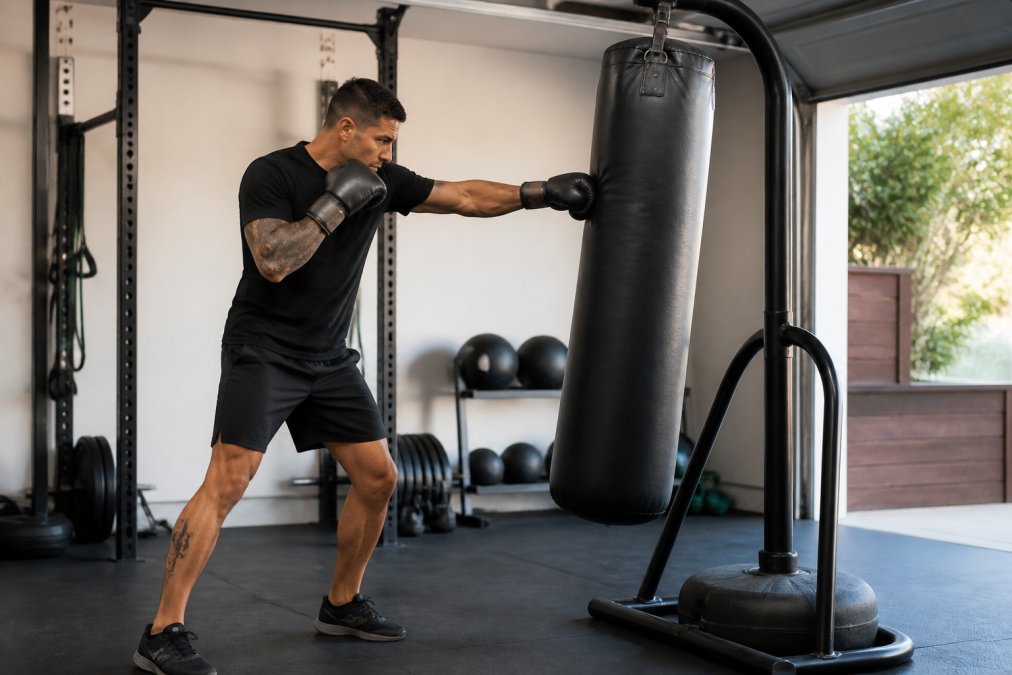
Panama 45D Heavy Punching Bag: Maximum Impact Absorption
The Panama 45D is built for serious training. This commercial-grade heavy bag uses proprietary Panama material that withstands extreme temperatures from -20°C to 70°C (peer-reviewed research). Available in three sizes (120cm, 150cm, or 180cm), it matches different training styles and spaces. The clean rag filling provides a consistent striking surface, and heavy-duty D rings with sandwich belt reinforcement ensure secure installation. At $449-$450, it justifies the cost for anyone training multiple times per week.
Pros:
- Commercial-grade material resists tearing and punctures
- Superior stability during high-power strikes
- Available in three sizes for different training needs
Cons:
- Requires sturdy stand or ceiling mount to handle weight
- Heavier bags need adequate space and ceiling clearance
Panama 35D Heavy Punching Bag: Versatile Training Option
The Panama 35D offers similar durability to the 45D but with a narrower profile (35cm vs. 45cm), making it better suited for technique-focused training. Still commercial-grade with Panama material and heavy-duty D rings, it costs $400. The narrower design works well for practicing combinations and footwork because you're not fighting as much bag movement between strikes.
Pros:
- Durable Panama material at lower price than 45D
- Narrower profile allows more precise technique work
- Heavy-duty construction handles consistent training
Cons:
- Less surface area than 45D reduces power development potential
- Still requires adequate mounting and space
Uppercut Combination Punching Bag: Tapered Design for Technique Work
The Uppercut Combination bag features a tapered design ranging from 45cm at the top to 30cm at the bottom. This shape forces you to adjust striking angles, making it excellent for practicing uppercuts, hooks, and freestyle combinations. Built with commercial-grade materials and pneumatically compressed clean rag filling, it maintains shape through intensive training. At $375, it costs less than the Panama bags but still offers professional-grade durability.
Pros:
- Tapered design improves technique variety and angles
- Commercial-grade materials ensure long-term durability
- Excellent for developing uppercut power and precision
Cons:
- Tapered shape requires different striking approach than traditional bags
- Less ideal for pure power development
Bag Stands: Stability and Space Efficiency
A heavy bag is only as durable as its support system. A wobbly stand creates instability, transferring impact stress to the bag's seams and fill. The stand must anchor firmly, allow full 360-degree rotation, and support the bag's weight without movement.
Heavy Duty 1 Bag Stand: Single-Station Performance
The Heavy Duty 1 Bag Stand is built for serious home gyms. Constructed with a 4" × 4" square post and adjustable height settings at 7'4" and 8'6", it accommodates different ceiling heights. The reinforced 12" × 12" square base has pre-drilled holes for floor anchoring, eliminating movement during impact. At $509.99, it's engineered to last through years of daily training without degradation.
Pros:
- Adjustable height accommodates different ceiling heights
- Minimal floor footprint for small spaces
- Pre-drilled base holes allow permanent floor anchoring
- Full 360-degree access to the bag
Cons:
- Higher price point requires upfront investment
- Requires floor anchoring for maximum stability
Heavy Duty 2 Bag Stand: Dual-Station Training
The Heavy Duty 2 Bag Stand provides dual mounting capability for practitioners who want to train multiple bags simultaneously. Built with durable steel construction and powder-coated black finish for rust resistance, it holds up to 300 pounds total weight. At $574.99, it doubles your training possibilities by enabling cross-training and partner workouts.

Pros:
- Holds two bags simultaneously for varied training
- Durable steel construction with rust-resistant finish
- High weight capacity (300 lbs) handles heavy bags
Cons:
- Requires more floor space than single-station stands
- Higher cost limits accessibility for budget-conscious trainers
Heavy Bag Stand (Grey): Budget-Friendly Entry Point
The Heavy Bag Stand in grey offers durability at an accessible price. Constructed with 3-inch steel tubing and a 48" × 48" footprint, it supports bags up to 100 pounds at $184.99. It's ideal for entry-level practitioners or those testing home training before investing in premium equipment.
Pros:
- Most affordable stand option
- Solid steel construction for basic training
- Compact footprint fits small spaces
Cons:
- Fixed height doesn't adjust for different ceiling heights
- 100-lb weight limit excludes heavier bags
- Less suitable for high-intensity power training
Wall-Mounted Bags: Space-Saving Alternatives
Wall-mounted bags solve space constraints by anchoring directly to a wall, eliminating the need for ceiling hooks or floor stands. They're ideal for apartments, small garages, or spaces where vertical mounting isn't possible. The trade-off is reduced movement, you're working against a fixed target rather than a responsive one.
The Uppercut Fixed Wall Punching Bag uses high-density foam wrapped in proprietary Panama material, delivering durability in a wall-anchored format. At $375, it solves the space problem with heavy-duty steel wall mount engineering and angled design for varied striking surfaces.
Pros:
- Eliminates need for ceiling hooks or floor stands
- High-density foam construction resists compression and tearing
- Ideal for apartments and small training spaces
Cons:
- Limited movement compared to hanging bags
- Requires solid wall structure for secure mounting
- Less suitable for full-power striking training
How to Choose Sparring Equipment for Your Home
Selecting the right durable sparring gear depends on three factors: training intensity, available space, and budget.
Training Intensity: High-intensity practitioners (4+ sessions weekly, heavy power work) need commercial-grade equipment like the Panama 45D and Heavy Duty stands (acsm.org). Moderate-intensity trainers (2-3 sessions weekly) can use the Panama 35D or Uppercut bags. Beginners can start with the grey stand and mid-range bag, then upgrade as training increases.
Available Space: Measure your ceiling height, floor space, and wall availability. Ceiling heights below 8 feet eliminate the Heavy Duty 1 stand's top setting. Small floor spaces favor wall-mounted bags or the compact grey stand.
Budget Allocation: Invest more in the bag than the stand. A durable bag ($375-$450) on a budget stand ($185) outperforms a cheap bag ($100) on an expensive stand.
Martial Arts Gear Maintenance Tips for Long-Term Durability
Durable equipment requires maintenance to reach its full lifespan. Neglect accelerates wear and can turn a five-year investment into a two-year failure.
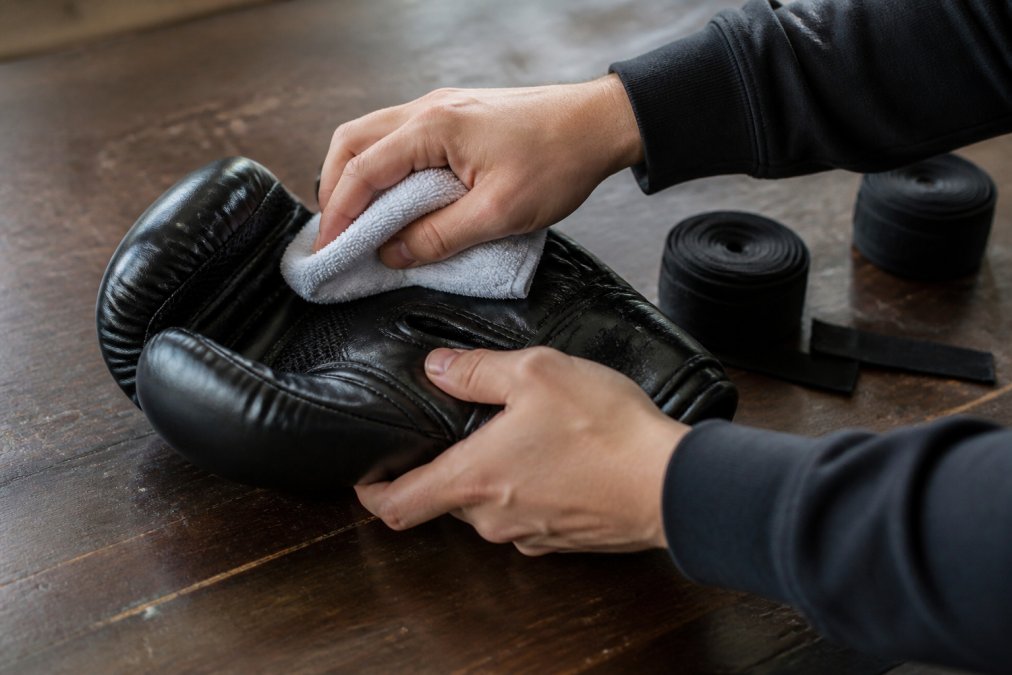
Inspect Regularly: Check your bag weekly for tears, punctures, or seam separation. Run your hand over the surface and check seams for loose stitching.
Clean After Training: Sweat and moisture accelerate material degradation. Wipe down your bag with a damp cloth after each session, then dry it thoroughly.
Store Properly: Store your bag in a climate-controlled space. Avoid direct sunlight, which degrades synthetic leather and Panama material over time.
Check Mounting Hardware: For stands and wall mounts, inspect bolts, brackets, and anchors monthly. Tighten any loose hardware before it fails.
Rotate Your Equipment: If you have multiple bags, rotate between them. This distributes impact stress and extends the life of each bag.
Avoid Extreme Conditions: Don't leave bags exposed to freezing temperatures, direct heat, or prolonged moisture. The Panama material and foam construction are designed for standard indoor conditions.
The maintenance routine takes 10 minutes weekly and prevents premature failure.
Essential Home Martial Arts Equipment Beyond the Heavy Bag
A complete home training setup includes complementary equipment that extends your training options and prevents overuse injuries.
Hand Wraps and Gloves: Quality wraps and gloves distribute force across your hand and wrist, preventing injury during heavy striking.
Protective Gear: Headgear, mouthguards, shin guards, and forearm protectors prevent injuries that interrupt training consistency.
Speed Bags and Double-End Bags: Speed bags develop hand-eye coordination and timing. Double-end bags teach you to follow a moving target.
Resistance Bands and Weights: Strength training supports striking power and injury prevention.
Mirror and Lighting: A large mirror lets you watch your form, and proper lighting prevents accidents.
Mat or Flooring: Padded mat or rubber flooring protects your joints and reduces impact noise.
Combat Build Supply focuses on the foundation, durable bags and stands that make consistent training possible. Once you have reliable equipment, these complementary tools enhance your practice and keep you injury-free.
Building a home martial arts space that lasts requires investing in durable sparring gear designed for repeated, intense use. The Panama 45D and Panama 35D heavy bags, paired with the Heavy Duty 1 or Heavy Duty 2 stands, create a professional-grade setup that performs consistently for years. Combat Build Supply provides the equipment and support you need to train with confidence, knowing your gear won't fail when you need it most. Start with durable foundational equipment, maintain it properly, and your investment will support your training goals for the long term. Sign Up Now to explore our full range of sparring gear and get free shipping on your first order.
Frequently Asked Questions
Q: What gear do I need to start sparring at home?
A: The foundation of durable sparring gear for home practice includes a heavy bag, a sturdy stand, hand wraps, sparring gloves, shin guards, and a mouthguard. Start with a heavy bag paired with a reliable stand that fits your ceiling height and floor space. Add protective equipment gradually based on your training style, kickboxers need shin guards, while boxers prioritize hand protection. A quality heavy bag with multi-layered foam and synthetic leather construction will withstand consistent training for years.
Q: How do I know if sparring gear is durable enough for daily use?
A: Look for commercial-grade construction with reinforced stitching, high-density foam padding, and heavy-duty materials like synthetic leather or proprietary Panama material. Check that straps use hook-and-loop closures. Durable bags maintain consistent padding density and resist sagging after months of impact. Stands should feature steel tubing (minimum 3-inch diameter) and weight pegs for stability. Read product specifications for temperature resistance and impact absorption ratings.
Q: Should I buy a complete sparring set or individual pieces?
A: For home practice, buying individual pieces gives you flexibility to match your specific training needs and space constraints. A heavy bag and stand are non-negotiable, but you can add protective equipment based on your martial arts discipline. Complete sets often bundle items you may not need, driving up cost. Start with a durable heavy bag like the Panama 45D ($449) paired with a stand, then add hand wraps, gloves, and shin guards as your training progresses. This approach lets you invest in quality at each stage.
Q: How should I clean and maintain my sparring gear to make it last longer?
A: Wipe down your heavy bag with a damp cloth after each session to remove sweat and dust that accelerates material breakdown. Air-dry completely before storing. Inspect D-rings and sandwich belt reinforcements monthly for signs of wear. Store gear in a cool, dry space away from direct sunlight, which degrades synthetic materials. Hand wraps and gloves should be washed separately and air-dried. For wall-mounted bags, check mounting hardware quarterly. Proper ventilation prevents moisture buildup that causes mildew and material deterioration. Low-maintenance designs like the Panama series require minimal upkeep while maintaining durability.
Q: What's the difference between beginner and professional-grade sparring equipment?
A: Professional-grade equipment uses heavier padding density, reinforced stitching, and commercial-grade materials engineered for high-impact training. Beginner gear often uses thinner padding and basic synthetic leather. The Panama 45D and Panama 35D bags feature pneumatic compression and heavy-duty D rings designed for intense daily sessions, while entry-level options may degrade faster under heavy use. Professional stands like the Heavy Duty 1 Bag Stand ($509.99) offer adjustable height settings and 360-degree access, whereas budget stands sacrifice stability and adjustability. Investing in professional-grade gear from the start prevents frequent replacements and ensures safety during intense training.
This article was written using GrandRanker


