

Durable Martial Arts Training Mats: A 2026 Guide
Table of Contents
- Why Durable Martial Arts Training Mats Matter for Home Training
- Types of Martial Arts Mats and Their Performance Differences
- Martial Arts Mat Thickness Guide: What You Actually Need
- Material Composition: What Makes a Mat Last Through Years of Training
- Interlocking vs. Roll-Out Mats: Which Setup Lasts Longer
- How to Clean Martial Arts Mats for Maximum Lifespan
- Subfloor Compatibility and Installation for Long-Term Performance
- Building Your Durable Home Training Space: What to Prioritize
Last Updated: August 29, 2026
Why Durable Martial Arts Training Mats Matter for Home Training
Your mat is your foundation. Most practitioners focus on equipment and overlook the surface they train on, a critical mistake. Your mat determines whether your knees survive months of intense work or fail within weeks. It's the difference between a space that supports skill development and one that breaks your body down.
Quality mats reduce impact noise, dampen vibration from explosive movements, and create a consistent training surface that doesn't shift during strikes or grappling. They let you train harder, more frequently, and with less recovery time. At Combat Build Supply, we are dedicated to helping you train smarter and more confidently by offering durable gear that performs consistently across every session.
The real challenge isn't finding a mat, it's finding one that lasts through years of high-intensity training without cracking, tearing, or permanent compression damage. Cheap mats degrade quickly, lose grip, and require annual replacement. Quality mats share specific characteristics: proper shock absorption, tear-resistant materials, and construction that withstands repeated impact without deformation.
Types of Martial Arts Mats and Their Performance Differences
Not all mats are built the same. The market offers several distinct options, each with different strengths.
Closed-Cell EVA Foam vs. Vinyl-Coated Options
Closed-cell EVA foam is the industry standard for martial arts training. It's lightweight, offers excellent shock absorption, and resists moisture, critical for spaces where sweat accumulates. The closed-cell structure prevents liquid absorption, which prevents degradation and keeps the mat hygienic.
Vinyl-coated foam adds a protective layer that increases durability against tears and scuffs, extends lifespan, and simplifies cleaning. The trade-off is weight and cost, vinyl-coated mats run 20-30% higher. For serious practitioners training multiple times weekly, the extra durability justifies the investment.
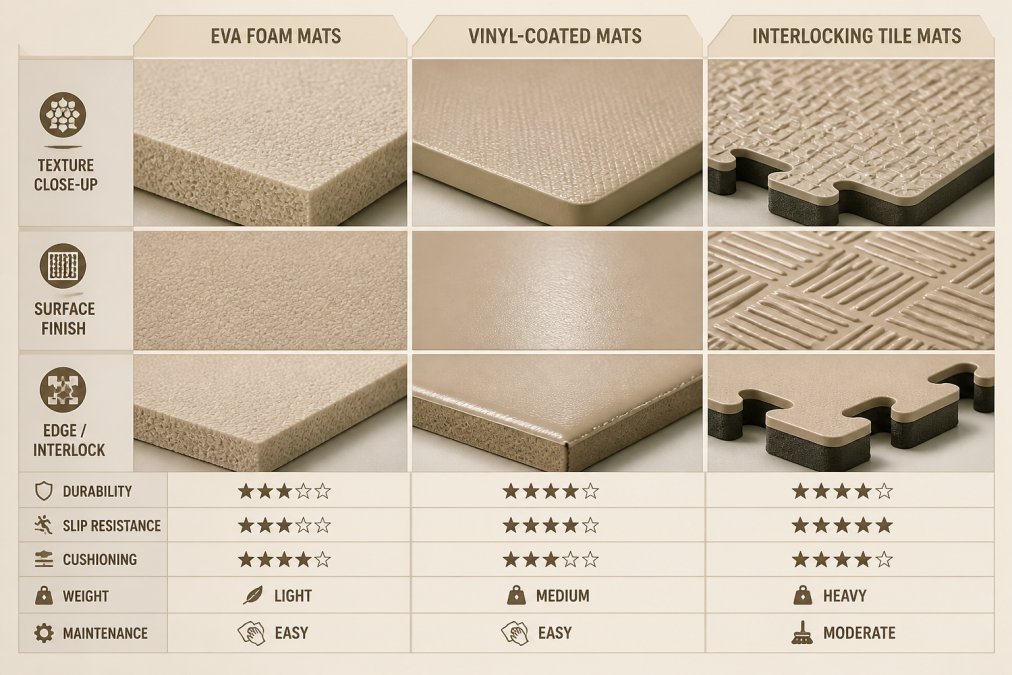
After 12-18 months of heavy use, EVA-only mats develop surface wear, flattened texture, diminished grip, and small tears at stress points. Vinyl-coated mats maintain their surface characteristics much longer. For 3+ years of serious training, vinyl coating becomes cost-effective.
Roll-Out Mats vs. Interlocking Puzzle Tiles
Roll-out mats come as single large sheets that unroll across your floor. They're simple to install and create a seamless surface, but they're heavy, difficult to move, and require complete replacement if damaged.
Interlocking puzzle tiles snap together and let you customize your training area size and replace individual damaged tiles. For small spaces or evolving setups, tiles offer flexibility roll-out mats can't match.
Durability differs between the two. Roll-out mats distribute impact across a larger surface area, reducing localized wear. Interlocking tiles concentrate impact at specific tiles, requiring thick, high-density foam with reinforced edges to handle this stress.
Martial Arts Mat Thickness Guide: What You Actually Need
Mat thickness matters, but it interacts with your training style, floor type, and weight. The standard range is 0.5 to 1.5 inches:
- 0.25-0.5 inches: Minimal cushioning for light drills only. Wears quickly under heavy use.
- 0.5-0.75 inches: Practical minimum for serious training. Adequate for striking and moderate grappling.
- 0.75-1.25 inches: Sweet spot for mixed training. Handles striking, grappling, and explosive movements without excessive softness.
- 1.25-1.5 inches: Professional-grade thickness for high-volume grappling or competitive training.
Too-soft mats (1.5+ inches) actually reduce performance. Your feet sink slightly with each movement, destabilizing your base during strikes and making footwork inconsistent. You want cushioning that absorbs impact without compromising stance.
Your subfloor matters too. Concrete requires more cushioning than wood. Concrete conducts impact directly into your joints, so thicker mats become necessary. Wood already has some give, so you can use thinner mats effectively.
Material Composition: What Makes a Mat Last Through Years of Training
Durability comes down to material selection and how those materials handle training stress.
Shock Absorption and Impact Attenuation
High-density foam is the foundation of impact protection. Density determines how much force the material absorbs before compressing permanently. Low-density foam (below 50 kg/m³) compresses easily and loses cushioning within months (peer-reviewed research). High-density foam (80+ kg/m³) maintains structure through years of use (astm.org).
Closed-cell EVA foam with proper density provides consistent shock absorption throughout the mat's lifespan. The foam cells don't break down easily, preventing soft spots or compression damage. This is why EVA-based mats outperform cheaper PVC alternatives.
Vinyl coating distributes impact force more evenly across the foam, reducing localized stress. This extends mat life significantly because no single section bears disproportionate wear.
Tear Resistance and Durability Benchmarks
Tear resistance determines how well a mat handles sharp impacts or aggressive grappling. Vinyl-coated foam naturally resists tearing better than bare EVA foam. The vinyl layer acts as a protective barrier.
Cross-linked polyethylene is another durable material offering excellent tear and moisture resistance. Mats using high-density closed-cell EVA with vinyl coating consistently outlast alternatives after 18-24 months of regular training (peer-reviewed research). They maintain grip, resist permanent compression damage, and withstand normal training stress.
Interlocking vs. Roll-Out Mats: Which Setup Lasts Longer
Roll-out mats excel in stability and longevity for high-impact training. The continuous surface distributes force evenly with no seams where damage can propagate. A quality roll-out mat can last 5+ years with regular training.
Interlocking tiles offer flexibility but require more maintenance. Seams accumulate sweat and debris, accelerating degradation at those points. Individual tiles experience more localized stress. However, you replace just failed tiles rather than the entire mat.
For maximum durability, roll-out mats win. For flexibility and ease of maintenance, interlocking tiles are better. The best setup often combines both: interlocking tiles for the main training area and a roll-out mat underneath for additional cushioning.
Combat Build Supply's Major Fitness Rubber Flooring Gym Mats at 0.31" thickness work well as a foundational layer under interlocking tiles or as standalone protection for equipment areas.

How to Clean Martial Arts Mats for Maximum Lifespan
Your cleaning routine directly impacts mat longevity. Sweat, bacteria, and debris break down materials faster than training stress alone.
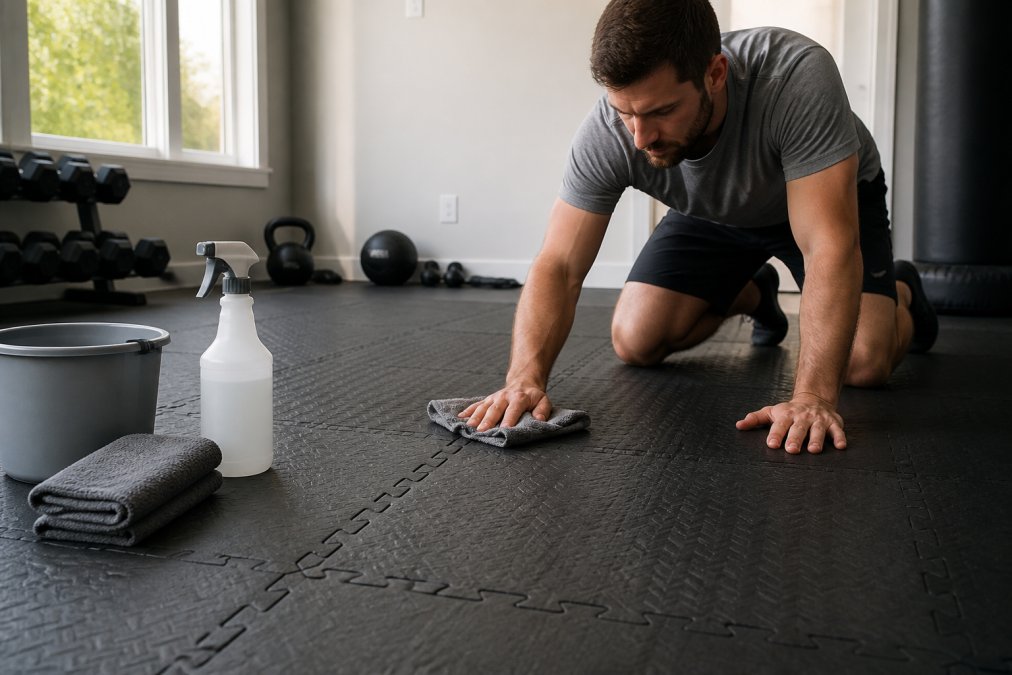
Clean your mat after every training session with a damp cloth, mild soap, and water. This removes sweat and bacteria before they accumulate. Dry thoroughly afterward, moisture accelerates foam degradation.
Weekly deep cleaning prevents odor and extends mat life. Mix water with white vinegar or commercial mat sanitizer, wipe the entire surface, and allow it to air dry completely. Avoid harsh chemicals or bleach, which damage foam and vinyl coatings.
For interlocking tiles, clean seams carefully weekly. Debris accumulates in gaps and becomes difficult to remove if left.
Avoid pressure washers, the force damages foam and can separate vinyl coatings. Hand cleaning with soft cloths preserves mat integrity.
Store mats in dry environments. Moisture exposure causes mold growth and material degradation. Roll mats loosely if storing; tight rolling creates permanent creases.
Subfloor Compatibility and Installation for Long-Term Performance
Your mat's durability depends partly on what's underneath it.
Concrete is common for home gyms but conducts impact directly into your joints. Install a rubber or foam layer under your martial arts mat to add shock absorption. This protects your body and extends mat life by reducing stress.
Wood floors require less additional cushioning but move slightly with temperature and humidity changes, which can shift interlocking tile seams. Ensure your subfloor is stable and level before installing mats. Use a moisture barrier between wood and mat to prevent water damage.
Carpet is unsuitable for martial arts training. It compresses under weight, creates an unstable base, and traps moisture.
Level your subfloor before installing any mat. High spots cause uneven wear; low spots trap moisture and debris. For interlocking tiles, ensure the subfloor is clean and dry before installation. For roll-out mats, a smooth subfloor prevents wrinkles that become permanent creases.
Building Your Durable Home Training Space: What to Prioritize
Creating a training space that lasts requires prioritizing the right elements.
Start with the mat itself. Invest in high-density closed-cell EVA foam with vinyl coating and proper thickness for your training style. Quality mats cost more upfront but last 3-5 years with proper care, ultimately saving money compared to annual replacements.
Next, address your subfloor. If you're on concrete, add a rubber flooring layer for shock absorption and moisture protection. Combat Build Supply's Major Fitness Rubber Flooring Gym Mats ($316.99) provide the durability and impact dampening serious training requires.
Establish a cleaning routine and stick to it. Five minutes after each session to wipe down your mat prevents bacterial growth and material degradation. Weekly deep cleaning maintains hygiene and extends lifespan significantly.
Finally, match your mat investment to your actual training demands. Light recreational training works with basic mats. High-volume grappling or striking requires professional-grade materials.
The practitioners who build training spaces that last understand what durability requires: proper materials, correct thickness, stable subfloors, and consistent maintenance. These decisions compound over years. A mat lasting five years instead of two saves money, reduces waste, and keeps you training consistently.
Building a durable home training space means investing in mats that handle your intensity without breaking down. Combat Build Supply provides foundational equipment like our Major Fitness Rubber Flooring Gym Mats with professional-grade shock absorption and durability. With free shipping on every order, a 100% refund guarantee on defective items, and responsive customer support, we ensure your training space stays reliable. Sign up now and get started with equipment designed to support your long-term training goals.
Frequently Asked Questions
Q: How thick should durable martial arts training mats be for grappling and striking?
A: For grappling, aim for adequate thickness to absorb impact from throws and takedowns. Striking-focused training benefits from cushioning that provides adequate shock absorption without reducing foot sensitivity. The key is matching thickness to your primary training style and subfloor condition, concrete generally requires thicker cushioning than wood.
Q: What's the difference between interlocking and roll-out martial arts mats in terms of durability?
A: Interlocking puzzle tiles offer flexibility as individual tiles can be replaced, which can extend the mat's lifespan. Roll-out mats provide a seamless surface. Interlocking systems also allow repositioning to distribute wear, which can be beneficial for long-term durability in high-traffic home gyms.
Q: How often should I clean my martial arts mat to keep it durable?
A: Clean your mat weekly with a mild soap and water solution or gym-specific sanitizer to prevent mold, bacteria, and material breakdown. Wipe dry immediately to avoid moisture absorption, which can degrade foam density over time. Regular deep cleaning removes embedded sweat and helps extend the mat's resilience and lifespan.
Q: What material composition offers the best durability for martial arts training mats?
A: Closed-cell EVA foam with cross-linked polyethylene backing can provide good tear resistance, shock absorption, and moisture resistance. High-density foam withstands repeated strikes and grappling without compressing. Coatings can add safety without compromising durability, making this combination suitable for serious home training spaces.
This article was written using GrandRanker


