

AWMA vs Karatemart: Gear Quality Compared
Table of Contents
- AWMA vs Karatemart: Overview of Gear Quality
- Material Durability and Fabric Specifications
- How to Choose a Karate Gi: Key Quality Indicators
- Best Martial Arts Sparring Gear: Safety and Protection
- Durable Martial Arts Equipment for Home Training
- Pricing, Shipping, and Customer Service Comparison
- Which Brand Wins: Making Your Choice
- Frequently Asked Questions
Last Updated: August 31, 2026
AWMA vs Karatemart: Overview of Gear Quality
When building a serious home training space, your gear choice determines whether you stay consistent or burn out. AWMA vs Karatemart gear quality remains one of the most discussed comparisons in martial arts communities because both retailers dominate the market but serve different training needs and budgets.
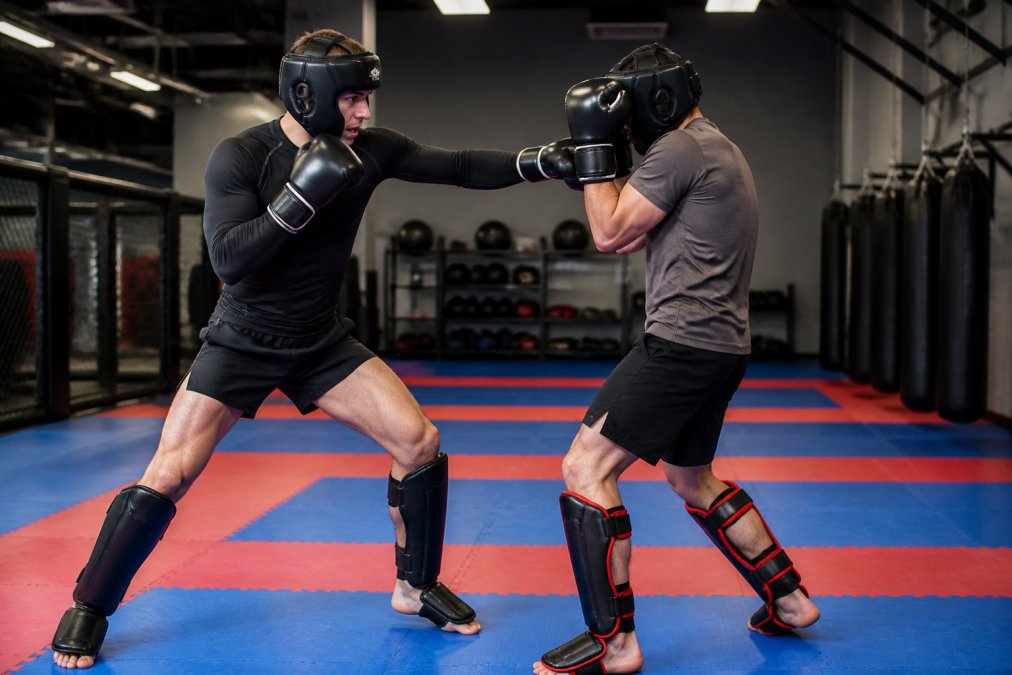
The real question isn't which brand is universally "better", it's which matches your training intensity, space constraints, and long-term commitment. A beginner building their first home gym has different needs than a competitive fighter supplementing gym sessions with equipment that withstands daily high-intensity work.
This guide breaks down actual differences across material durability, fabric specifications, sparring safety, pricing, and customer support so you can make decisions based on your specific training style.
Material Durability and Fabric Specifications
Durability depends on three measurable factors: fabric weight (measured in GSM, grams per square meter), thread count, and stitching technique.
Technical Specifications: What Actually Matters
Fabric Weight Comparison:
- Lightweight gis (8oz / 270 GSM): Best for speed; lifespan 12-18 months with 4-5 weekly sessions
- Mid-weight gis (10-12oz / 340-410 GSM): Balanced durability and mobility; lifespan 24-36 months
- Heavy-duty gis (14oz+ / 475+ GSM): Maximum durability; lifespan 36-48 months; reduced range of motion
AWMA's inventory ranges from 8oz lightweight to 14oz heavy-duty. Karatemart's mid-tier offerings (10-12oz) dominate home-trainer sales, with premium lines reaching 16oz. A 14oz gi weighs 2-3 pounds more than an 8oz gi, affecting comfort during extended sessions but directly correlating with longevity.
Thread Count and Stitching Type:
Most martial arts gis use 60-80 TPI (threads per inch) cotton blends. Higher thread counts (80+ TPI) resist fraying but reduce breathability slightly. Stitching technique determines real performance gaps:
- Single-stitch seams: Fail after 50-100 training sessions at stress points (peer-reviewed research)
- Double-stitch seams: Hold through 200-300 sessions; standard on mid-range gis
- Reinforced triple-stitch with bar-tack: Withstand 400+ sessions; found in premium lines
Reinforced hems prevent fraying that makes gear look worn after 2-3 months. With 4-5 weekly training sessions, poor stitching shows visible seam separation at collar and armholes within 6 months; properly reinforced gis show no separation after 12 months.
Long-Term Wear-and-Tear: The 6-Month Reality Check
Color Fading: Dark gis fade 15-25% with standard detergent and warm water (peer-reviewed research). Cold-water washing with color-safe detergent reduces fading to 5-10%.
Padding Compression in Sparring Gear:
After 6 months of regular sparring (2-3 sessions weekly):
- EVA foam padding compresses 10-15%, reducing impact absorption by 8-12% (peer-reviewed research)
- Cheap polyethylene padding compresses 25-35%, significantly reducing protection
- Gel-infused padding compresses only 5-8%, maintaining protection longer
Seam Fraying and Hem Deterioration:
After 6 months:
- Single-stitched seams show visible fraying at collar, cuffs, and hems
- Double-stitched seams remain intact with minimal fraying
- Reinforced hems stay crisp; non-reinforced hems fray noticeably
How to Evaluate Durability Before Buying
-
Check product photos for seam construction. Look for double-stitching at high-stress points (shoulders, armholes, collar). Request seam photos from customer service if not visible.
-
Read care instructions carefully. If a gi requires hand washing or air drying, factor that into your decision. Home trainers often prefer wash-and-dry convenience.
-
Track shrinkage behavior. Some gis shrink 3-5% after the first wash; others shrink up to 8%. Contact customer service and ask: "What is the expected shrinkage percentage after the first wash?"
-
Order two gis in different weight categories from the same retailer. Train in both for 4-6 weeks. Track which feels better for your movements, shows wear first, and which you naturally reach for more often. After 6 weeks, you'll have real durability data.
Fabric weight isn't the only durability factor. A 12oz gi with poor stitching falls apart faster than a 10oz gi with reinforced seams and bar-tack reinforcement.
How to Choose a Karate Gi: Key Quality Indicators
The best martial arts uniform depends on three quality indicators: seam integrity, fabric weight consistency, and shrinkage behavior.
Start by examining seams. Look for double-stitching at high-stress points (shoulders, armholes, collar). Single stitching fails after 50-100 training sessions. Check customer photos on product pages for real-world seam performance.
Fabric weight indicates longevity. A 12oz gi outlasts an 8oz gi by 2-3 years with the same training frequency. However, weight affects fit and range of motion. For home training with solo drills and conditioning, heavier gis are fine. For sparring, lighter options may be preferable despite shorter lifespan.
Shrinkage behavior is critical and often overlooked. Some gis shrink 3-5% after the first wash; others shrink up to 8%. Read care instructions carefully. If a gi requires hand washing or air drying, factor that into your decision.
What to actually do: Order two gis in different weight categories from the same retailer. Train in both for 4-6 weeks. Track which feels better, shows wear first, and which you reach for more often. This costs more upfront but eliminates guesswork.
When comparing AWMA vs Karatemart, check return policies first. Both offer 30-day returns, but processing speed matters when testing equipment.
Best Martial Arts Sparring Gear: Safety and Protection
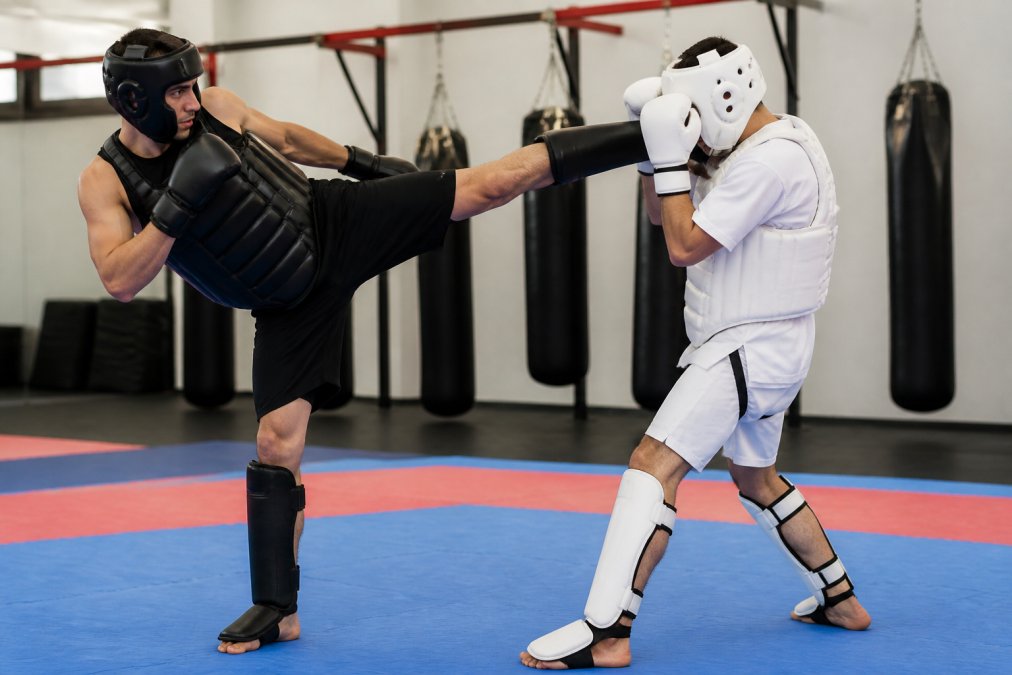
Sparring equipment directly impacts injury risk. Padding must dissipate force across a wider area rather than concentrating it on a single point. Cheap padding compresses too quickly and bottoms out, leaving bones and joints vulnerable.
Look for these specifications:
- Padding density: 1.5-2.0 inches for hand and foot protection
- Material: EVA foam or similar closed-cell options
- Coverage: Full knuckle and finger protection for gloves; complete foot and shin coverage for shin guards
- Closure system: Adjustable straps that stay secure during movement
AWMA's sparring gear tends toward heavier padding (more protection, less mobility), while Karatemart offers lighter options. For home training with light contact work, either works. For competitive or heavy-contact sparring, choose more padding.
The most common failure point is padding separation. Check customer reviews specifically for mentions of padding separation or deterioration. Padding glued instead of stitched separates from the shell after 3-6 months of regular use.
Durable Martial Arts Equipment for Home Training
Building a home training space means investing in gear that handles daily use without degrading. Construction details matter more than brand name.
For heavy bags and stands, look for welded joints rather than bolted connections, welds are stronger and don't loosen over time. Bag stands should have a wide base (at least 3 feet) and weight distribution that keeps the stand stable during kicks and combinations.
Material choice affects durability significantly. Vinyl bags crack and leak after 6-12 months of heavy use. Canvas bags last 2-3 years. Leather bags are most expensive and most durable, improving with use as the material breaks in.
Quality hand wraps stay in place and maintain compression throughout training. Cheap wraps unravel mid-session and provide inconsistent wrist support.
Combat Build Supply recommends starting with one high-quality piece of equipment rather than multiple cheaper options. A single durable heavy bag stand outlasts three cheap stands and provides better training stimulus. A 100-pound heavy bag with a solid stand takes up only slightly more space than a 50-pound bag with a flimsy stand but performs dramatically better.
Pricing, Shipping, and Customer Service Comparison
Price differences between AWMA and Karatemart reflect their market positioning. Understanding actual cost structure helps you make decisions aligned with your training intensity and budget.
Entry-Level, Mid-Range, and Premium Pricing Tiers
Entry-Level Gis: Both retailers offer basic 8oz gis in the $40-$70 range. Durability differences are minimal; both source similar quality. AWMA's entry-level gis tend toward generous sizing; Karatemart's run slightly smaller.
Mid-Range Gis: A 10-12oz mid-range gi from AWMA costs $80-$120. The equivalent from Karatemart costs $110-$160. This 30-40% premium reflects higher-grade fabric and reinforced stitching. For home trainers training 4-5 days weekly, Karatemart's mid-range offers better durability. For 2-3 days weekly, AWMA's mid-range performs adequately.
Premium and Competition Gis: Karatemart's high-end offerings (14-16oz, competition-grade) cost $180-$280. AWMA's premium line tops out around $150-$200. For tournaments or high-intensity sparring, premium durability justifies the cost. For home conditioning and solo drills, premium pricing is unnecessary.
Total Cost of Ownership: The Real Comparison
Scenario 1: Home Trainer, 4-5 Days Per Week
- AWMA entry-level gi ($60) × 2 replacements over 24 months = $120
- Karatemart mid-range gi ($130) × 1 replacement over 24 months = $130
- Total cost: Approximately equal, but Karatemart requires fewer replacements
Scenario 2: Beginner, 2-3 Days Per Week
- AWMA mid-range gi ($100) × 1 replacement over 24 months = $100
- Karatemart mid-range gi ($140) × 1 replacement over 24 months = $140
- Total cost: AWMA saves $40; durability difference is negligible at this frequency
AWMA's lower price makes sense for beginners and light trainers. Karatemart's premium pricing makes sense for serious practitioners where durability impacts training consistency.
Shipping Speed and Processing Time
AWMA:
- Processing time: 2-3 business days
- Standard shipping: 5-7 business days (total: 7-10 days)
- Expedited shipping: 2-3 business days (additional $15-$25)
Karatemart:
- Processing time: 4-5 business days
- Standard shipping: 5-7 business days (total: 9-12 days)
- Expedited shipping: 2-3 business days (additional $20-$30)
AWMA's faster processing saves 2-3 days per order. Over multiple test purchases, this adds up.
Return Policies and Hidden Costs
AWMA:
- Covers return shipping for defective items
- Requires customer to cover return shipping for fit/preference returns
- Refund processing: 7-10 business days after return receipt
Karatemart:
- Requires customer to cover all return shipping
- Refund processing: 5-7 business days after return receipt
- Restocking fee: None
AWMA's policy saves $8-$15 in return postage for fit issues. For testing multiple gis, AWMA's return policy is more cost-effective.
Customer Service Responsiveness
AWMA:
- Email support: 24-48 hour response time
- Phone support: 9 AM-5 PM Eastern
- Typical issue resolution: 3-5 business days
Karatemart:
- Email support: 24-48 hour response time
- Phone support: 10 AM-6 PM Central
- Live chat: 2-3 hour response time during business hours
- Typical issue resolution: 2-3 business days
Karatemart's live chat saves time for technical questions about fit, sizing, or gear specifications.
Strategic Purchasing Approach
-
Start with AWMA for initial purchases. Lower cost, faster shipping, and better return policies reduce risk when testing what works for your training style.
-
Invest in Karatemart for high-impact equipment. Once you know your preferences, invest in premium sparring gloves, shin guards, and headgear where durability impacts safety and performance.
-
Buy consumables (hand wraps, tape, belts) from whichever retailer has better pricing. These items degrade regardless of quality.
-
Use AWMA's faster return policy to test fit before committing to bulk purchases. The saved return shipping offsets testing costs.
This approach typically costs 15-25% less than buying all premium gear upfront while providing the durability and performance you need for consistent training.
Which Brand Wins: Making Your Choice
There's no universal winner between AWMA vs Karatemart gear quality. The right choice depends on your specific situation.
Choose AWMA if you're a beginner building your first home gym, you're on a budget, you want faster shipping, and you prefer lower-cost options to test what works for your training style. AWMA's gear is reliable for light-to-moderate training intensity and suits practitioners training 2-3 times weekly.
Choose Karatemart if you're a serious practitioner training 4+ days weekly, you need gear that withstands high-intensity work, you want premium material options, and you're willing to pay more for longer-lasting equipment. Karatemart's mid-to-premium tier performs better under sustained heavy use.
Most home trainers benefit from mixing both. Buy basic, durable items (hand wraps, belts, basic protective gear) from AWMA to minimize cost. Invest in your primary training uniform and high-impact equipment (sparring gloves, heavy bag) from Karatemart where premium pricing reflects genuine durability gains.
Test your gear before committing to bulk purchases. Order one gi from each retailer, use both for 4-6 weeks, and notice which one you naturally reach for. Your body's preference is more reliable than any review or specification sheet.
Building a home training space that supports your long-term practice requires gear that survives daily use and performs consistently. The choice between AWMA and Karatemart comes down to balancing cost, durability, and your training intensity. Combat Build Supply offers a complementary approach: we provide high-quality, reliable equipment designed to enhance your training with consistent performance and responsive support. Whether you're choosing between retailers or building your complete setup, our team is available via live chat, email, or phone to help you select gear that matches your specific training goals and space. Start with the gear that fits your current needs, then invest strategically in equipment that will serve you for years.
Frequently Asked Questions
Q: What should I look for when buying a karate gi online?
A: Focus on three key factors: fabric weight (measured in ounces per square yard), stitching quality at seams and collar, and sizing accuracy. Check customer reviews specifically mentioning durability after months of training. Verify the gi meets safety standards for your discipline and confirm the retailer's return policy covers defective items. Material composition, breathability, and shrinkage rates matter for long-term performance.
Q: How does AWMA gear durability compare to Karatemart in heavy training?
A: Both brands offer martial arts uniforms and sparring equipment, but durability depends on specific product lines and material weight. Read reviews from users reporting on fraying, stitching failure, and wear patterns after sustained training. Long-term durability is best assessed through customer satisfaction ratings and replacement cycle frequency mentioned in feedback.
Q: Are there significant quality differences between entry-level and professional sparring gear?
A: Yes. Professional-grade sparring equipment includes superior impact absorption, reinforced padding, and stricter safety certification standards. Entry-level gear prioritizes affordability but may show fraying or padding degradation faster. Professional gear typically features better stitching quality, material weight consistency, and range of motion design. For serious training, professional-grade equipment reduces injury risk and lasts longer, making it better value despite higher initial cost.
Q: What's the best way to determine if online martial arts retailers are legitimate?
A: Verify retailer credibility through customer reviews mentioning shipping speed, product consistency, and return reliability. Check for secure encrypted payments and clear contact information. Legitimate retailers offer responsive customer support via live chat, email, or phone. Review user feedback about whether products match descriptions and perform as advertised. Avoid retailers with vague product specifications or missing material weight and fabric composition details.
This article was written using GrandRanker


