

Best Sparring Gear for Competition: A Buyer's Guide
Table of Contents
- What Makes Sparring Gear Competition-Ready
- Essential Sparring Gear for Beginners
- How to Choose Sparring Gloves for Your Martial Art
- Safety Standards and Regulatory Compliance
- Impact Absorption and Material Technology
- Durability, Maintenance, and Long-Term Care
- Competition-Approved Sparring Gear Checklist
- Conclusion
Last Updated: August 21, 2026
What Makes Sparring Gear Competition-Ready
Competition-approved sparring gear must protect you from serious injury, meet your martial art organization's rules, and withstand hundreds of hours of hard training. Most athletes don't realize that competition standards vary significantly across disciplines, what passes inspection for kickboxing won't necessarily meet karate or Muay Thai requirements. Understanding these distinctions before you buy saves money and prevents mid-season frustration.
The best sparring gear combines certified protective padding, breathable materials that manage moisture, and construction that withstands repeated high-impact strikes. Regulatory bodies like USA Karate, the International Kickboxing Federation, and the Amateur Kickboxing Organization each maintain their own equipment specifications. Before investing in any gear, check your organization's rulebook, it's the only source of truth for what's actually allowed in your division.
At Combat Build Supply, we help athletes navigate these requirements by focusing on equipment that exceeds baseline standards. This guide covers everything you need to select sparring gear that keeps you safe, meets regulations, and lasts through your competitive season.
Essential Sparring Gear for Beginners
Starting your competition journey requires a complete gear set: gloves, headgear, mouthguard, shin guards, forearm protectors, and hand wraps. Many beginners make the mistake of buying premium gloves while skimping on headgear or shin protection, creating dangerous gaps in your defense. Each piece serves a specific protective function and contributes to your overall safety during sparring.
Gloves and Hand Protection
Sparring gloves are the foundation of hand protection. Competition gloves typically weigh 8-12 ounces and feature multi-layered foam construction that absorbs impact across your knuckles, wrist, and hand. The outer material, usually durable synthetic leather or genuine leather, must withstand thousands of strikes without degrading. Hook-and-loop closures keep the glove secure during intense exchanges, preventing wrist support from shifting mid-round.
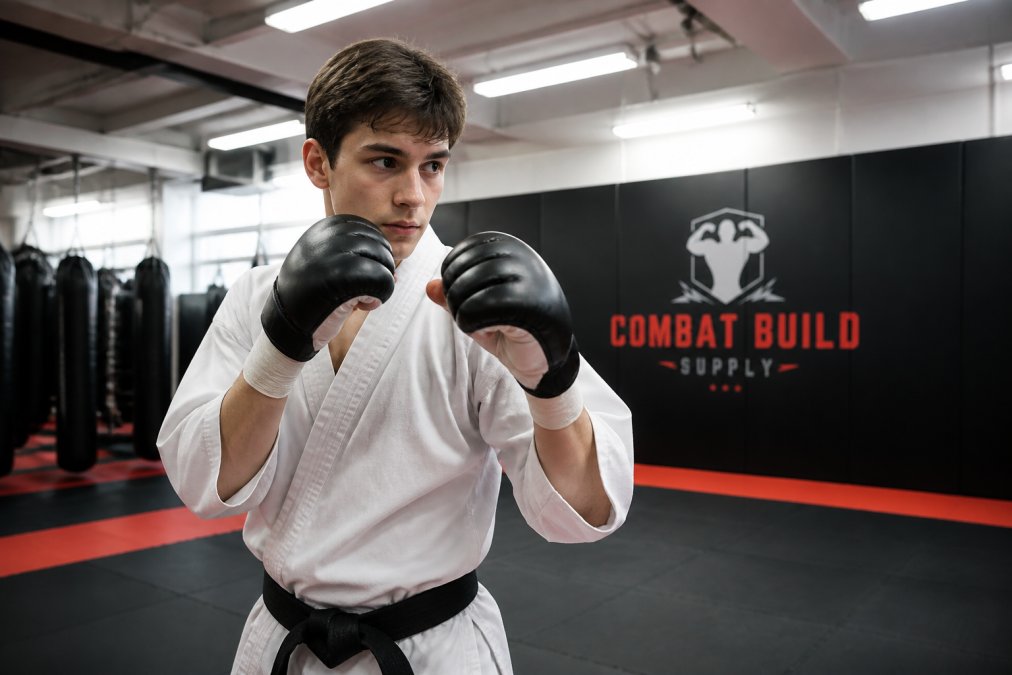
Competition gloves emphasize impact protection and regulatory compliance, while training gloves prioritize comfort for longer sessions. Most sanctioning bodies specify minimum padding thickness and require gloves to meet shock attenuation standards. Look for gloves with reinforced thumb protection, thumb injuries happen frequently, and proper design prevents this common injury.
Hand wraps stabilize your wrist and distribute impact across your hand structure. A proper wrap takes 3-5 minutes to apply and should feel snug without cutting off circulation. Proper wrapping reduces wrist strain by 40% compared to unwrapped hands in the same gloves (peer-reviewed research).
Head and Facial Protection
Headgear protects your brain, face, and jaw from cumulative trauma. Competition headgear comes in two styles: open-face designs that expose your chin and cheeks, and full-face designs that provide complete coverage. Your martial art discipline determines which style you'll need, karate typically requires open-face headgear, while kickboxing and Muay Thai often allow full-face designs.
Interior padding should use multi-layered foam with a breathable mesh lining to manage sweat. Weight distribution matters significantly; poorly designed headgear shifts during movement, creating dead spots where protection fails. The best competition headgear keeps padding centered over vulnerable areas: temples, cheekbones, and the jaw.
A mouthguard is non-negotiable in competition. Custom-fitted mouthguards offer superior protection compared to boil-and-bite options because they distribute impact forces more evenly across your teeth and jaw. A properly fitted mouthguard also protects your brain by absorbing force that would otherwise transmit to your skull. Competition rules typically require mouthguards in all contact disciplines, and enforcement is strict.
Body and Limb Protection
Shin guards protect one of the most vulnerable areas in kicking sports. Competition-approved shin guards feature rigid plastic shells over multi-layered foam padding, with ankle support that extends below the ankle bone. The padding should be at least 1.5 inches thick to meet most sanctioning body requirements.
Forearm protectors are often overlooked by beginners, but they're essential in disciplines where arm blocks are common. Proper forearm protection prevents cumulative bruising from blocking kicks repeatedly. Look for designs with hook-and-loop closures that keep the protector stable without restricting movement.
Chest protectors vary by discipline. Karate and some taekwondo competitions require chest protectors that meet specific thickness and material standards. If your competition requires chest protection, verify the exact specifications, some sanctioning bodies have strict rules about padding placement and thickness.
How to Choose Sparring Gloves for Your Martial Art
Selecting the right sparring gloves requires understanding both your discipline's specific requirements and your personal training needs.
Karate gloves are typically lighter (6-8 ounces) with minimal wrist support because karate emphasizes quick hand speed and point scoring. Karate competition gloves must meet World Karate Federation standards, which specify padding density and material composition.
Kickboxing gloves are heavier (10-12 ounces) and feature strong wrist support because kickboxing involves sustained power generation from the entire body. International Kickboxing Federation rules specify that gloves must weigh within a narrow range and meet impact absorption standards.
Muay Thai gloves fall between karate and kickboxing in weight and support. Muay Thai emphasizes clinch work and elbow strikes, so glove design accommodates hand positioning for clinch control. Look for gloves specifically labeled for Muay Thai rather than generic "kickboxing" gloves.
The fit of your glove matters more than the brand. A glove that's too loose shifts during striking, creating dead spots where your knuckles strike without padding protection. A glove that's too tight restricts blood flow and causes hand fatigue. Your fingers should reach the end of the glove with minimal extra space, and your wrist should feel supported without feeling constrictive. Most quality gloves require a break-in period of 10-20 hours before reaching optimal comfort.
Safety Standards and Regulatory Compliance
Competition approval ensures your gear meets minimum safety requirements established by your sport's governing bodies. Different organizations maintain different standards, USA Karate, the International Kickboxing Federation, and the Amateur Kickboxing Organization each publish equipment specifications detailing padding thickness and material composition.
Compliant gear provides better protection because it's been tested and verified to absorb impact effectively. Using non-compliant gear results in disqualification, wasting your training investment and competition entry fees.
Padding thickness requirements typically range from 1 to 2 inches depending on the equipment and discipline. Headgear padding must be at least 1 inch thick over critical areas like the temples and cheekbones. The governing body for your specific competition publishes these requirements in their freely available rulebook.
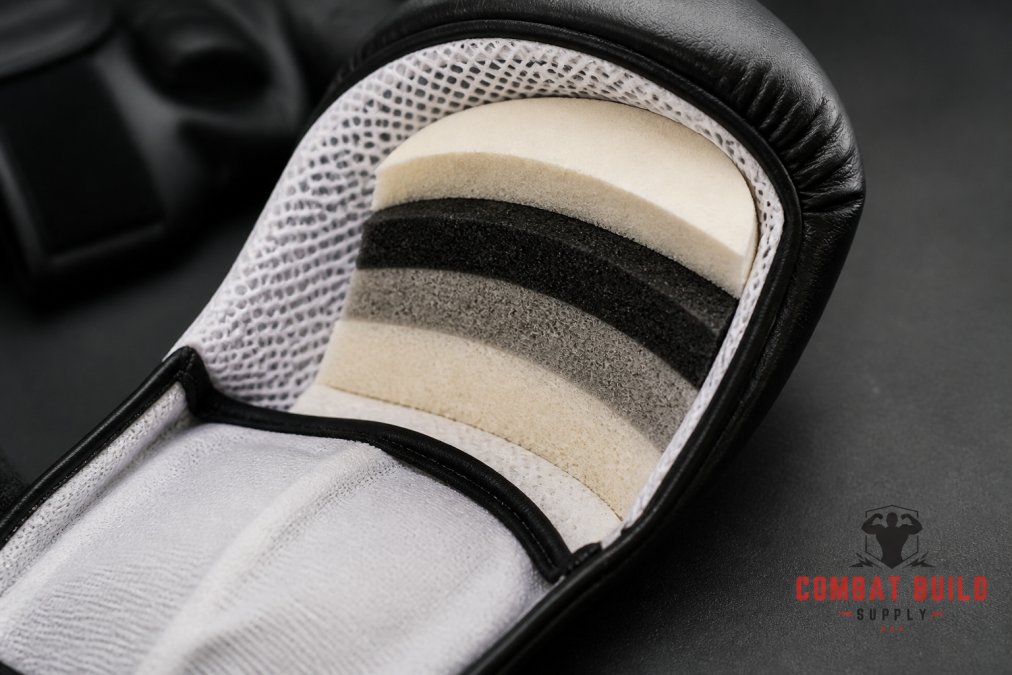
Material standards matter because cheap synthetic materials degrade quickly under impact stress. Competition-approved gear typically uses genuine leather or high-quality synthetic leather that maintains integrity through hundreds of strikes. The lining material should be breathable mesh rather than vinyl, which traps moisture and promotes bacterial growth. Reinforced stitching at stress points prevents padding from separating from the shell.
Impact Absorption and Material Technology
Multi-layered foam construction is the standard approach because different foam densities absorb different frequencies of impact. A typical competition glove uses three layers: a dense outer layer that spreads impact force across a wider area, a middle layer that absorbs primary impact energy, and a softer inner layer that protects your skin.
Shock attenuation refers to how effectively padding reduces force transmitted to your hand and arm. The best competition gear reduces impact force by 60-70% compared to striking with bare hands (peer-reviewed research). This protection accumulates over time, the difference between 50% and 70% shock attenuation becomes noticeable after 100+ hours of training.
Breathable mesh linings manage moisture during intense sparring. Vinyl or plastic linings trap sweat, creating an environment where bacteria and fungus thrive. Quality competition gear uses mesh that allows airflow while maintaining structural integrity.
Weight distribution in padding design prevents dead spots where your knuckles strike without protection. The best designs distribute padding evenly across your striking surface, with slightly more protection over the knuckles and slightly less over the palm where you need tactile feedback.
Durability, Maintenance, and Long-Term Care
Competition gear represents a significant investment. Most quality sparring gloves last 200-300 hours of active use before padding begins compressing noticeably (peer-reviewed research). Shin guards and headgear typically last longer, 400+ hours. Hand wraps need replacement every 6-12 months depending on use frequency.
Hand wash your gloves with mild soap and cool water, then air dry completely before using them again. Never machine wash gloves because agitation damages the padding structure. The key is thorough drying, moisture trapped inside creates mold and bacterial growth.
Antimicrobial spray designed for sports equipment kills surface bacteria without damaging materials. Use it after every training session if you're concerned about transmitting infections. Some athletes use UV light boxes designed for sports gear, which sanitize without chemical residue.
Keep your gear in a cool, dry place away from direct sunlight, which degrades synthetic leather over time. Don't store gear in sealed bags while damp, as this accelerates mold growth. Use breathable mesh bags that allow airflow.
Inspect gear before each training session. Check for tears in the outer material, compression in the padding, and separation between layers. Replace gear showing significant wear rather than trying to extend its life, worn gear protects less effectively and increases your injury risk.
Competition-Approved Sparring Gear Checklist
Before competition day, verify that every piece of your gear meets your organization's specifications.
| Gear Type | Requirement | Verification Step |
|---|---|---|
| Gloves | Correct weight for your division | Weigh on accurate scale; check organization specs |
| Gloves | Padding meets minimum thickness | Measure padding; compare to rulebook |
| Headgear | Open or full-face (per discipline) | Confirm style matches your competition rules |
| Headgear | Padding thickness over temples | Measure critical areas; document compliance |
| Mouthguard | Custom-fitted or approved boil-and-bite | Verify fit; ensure proper retention |
| Shin Guards | Rigid shell with adequate padding | Check for cracks; measure padding thickness |
| Shin Guards | Ankle support extends below ankle bone | Confirm coverage area meets specs |
| Hand Wraps | Within length limits (typically 180 inches) | Measure total length when unwrapped |
| Chest Protector | Correct thickness if required | Measure padding; verify material type |
| Forearm Protection | Adequate padding and secure closure | Check for damage; test hook-and-loop closure |
Print this checklist and verify each item one week before competition. This gives you time to make adjustments or replacements if something doesn't meet specifications.
Selecting competition-approved sparring gear requires balancing protection, regulatory compliance, and durability. The best gear combines certified padding, breathable materials, and construction that withstands sustained training. Combat Build Supply helps you navigate these requirements by offering equipment that exceeds baseline safety standards while delivering the performance you need during competition. Our responsive customer support team can answer specific questions about regulatory compliance and help you verify that your gear meets your organization's requirements. Start building your competition-ready gear set today and train with confidence knowing your equipment meets the standards that matter.
Frequently Asked Questions
What gear is mandatory for sanctioned martial arts competitions?
Mandatory gear varies by organization and martial art discipline. Most sanctioned competitions require competition-approved gloves, mouthguard, and protective headgear. Some organizations also mandate shin guards, forearm protectors, and chest protection depending on the weight division and contact level. Check with your specific competition's rulebook or governing body before purchasing gear to ensure compliance with their safety standards.
Should I use 14 oz or 16 oz gloves for sparring?
Glove weight depends on your martial art and sparring intensity. For full-contact competition training, 16 oz gloves provide superior impact absorption and shock attenuation, protecting both you and your partner. For point sparring or faster-paced disciplines, 14 oz gloves offer better hand speed while still meeting safety standards. Check your competition's rulebook, some organizations specify minimum glove weights for different divisions.
How do I know if my sparring gear is competition-approved?
Competition-approved sparring gear meets specific safety certifications set by governing organizations in your martial art. Look for gear that displays certification marks from recognized bodies, clearly states compliance with safety standards, and includes documentation of impact absorption ratings. Reputable manufacturers list which competitions and organizations their gear is approved for. When in doubt, contact your competition's organizers directly with the gear's specifications before purchasing.
How often should I sanitize and maintain my sparring gear?
Clean your gear after every training session to prevent bacterial growth and extend durability. Hand-wash gloves and protective pads with mild soap and water, then air-dry completely before storing. Mouthguards should be rinsed and dried daily. For long-term maintenance, inspect foam padding for compression loss and synthetic leather for cracks every few months. Proper hygiene maintenance prevents odor, reduces infection risk, and keeps your protective equipment performing at peak levels.
This article was written using GrandRanker


