

How to Choose Boxing Gloves for Home Training
Last Updated: November 19, 2026
Quick Summary
To choose boxing gloves for home training, start with your main training purpose: bag work, speed work, and sparring each need different padding and weight. Most home trainees should buy 12 oz to 16 oz gloves, with 14 oz or 16 oz fitting the widest range of bag and pad work. If you only buy one pair, buy 14 oz hook-and-loop gloves in leather.
- Boxing gloves are measured in ounces, where the ounce rating describes padding volume rather than physical weight.
- Use a size chart mapping body weight and dominant-hand circumference to pick a starting glove weight, then adjust for training purpose.
- A long wrist cuff, a tight hook-and-loop closure, and padding that stays put matter most for wrist support in solo home training.
- Always try gloves on with your hand wraps in place, since wraps add bulk through the palm and knuckles.
- Replace gloves when knuckle padding compresses, seams split, wrist support weakens, or odor survives cleaning.
Table of Contents
- Start With Your Training Purpose, Not the Color
- What Oz Boxing Gloves Should I Get for Training?
- Use a Boxing Gloves Oz Size Chart to Match Your Body
- Boxing Gloves for Heavy Bag Training: What Changes at Home
- Boxing Glove Wrist Support: Why It Matters More Than You Think
- Fit, Closure, and Trying Gloves On With Hand Wraps
- A Practical Decision Tree for Buying One Pair
- Glove Care, Hygiene, and When to Replace Them
- Frequently Asked Questions
Start With Your Training Purpose, Not the Color
If you want to know how to choose boxing gloves for home training, start with the work your hands will actually do. Glove weight, padding, and closure all follow from that one decision.
Boxing gloves are padded hand coverings measured in ounces, where the ounce rating describes padding volume rather than the glove's physical weight. A heavier glove carries more foam around the knuckles and wrist.
Bag work, speed work, and sparring pull you in different directions:
- Bag work rewards dense knuckle padding and a locked wrist
- Speed work rewards a lighter glove you can hold up for rounds
- Sparring rewards soft, thick padding that protects a partner
Buy for the training you do most. One pair cannot serve all three well.
Bag Work, Speed Work, and Sparring Need Different Gloves
Bag gloves prioritize impact absorption. Speed gloves prioritize hand speed and mobility. Sparring gloves prioritize partner protection with softer foam across the striking surface.
A common mistake is buying 16 oz sparring gloves for solo bag sessions. You get wrist protection, but your shoulders fatigue faster and your speed work suffers. The reverse is worse: light bag gloves in sparring put your partner at risk.
What Oz Boxing Gloves Should I Get for Training?
Most home trainees should buy 12 oz to 16 oz gloves, with 14 oz or 16 oz fitting the widest range of bag and pad work. Lighter gloves suit speed drills and smaller hands; heavier gloves suit heavy bag rounds and sparring.
Garage Gym Reviews' boxing glove testing guide notes that lighter gloves are typically suited to smaller athletes doing light training or speed work. That matches what we see: hand size and training intensity move together.
| Glove Weight | Best For | Typical User |
|---|---|---|
| 8-10 oz | Speed work, bag drills | Smaller hands, light training |
| 12 oz | Bag work, pads | Beginners, general fitness |
| 14 oz | Heavy bag, pads | Most home trainees |
| 16 oz | Heavy bag, sparring | Larger hands, sparring |
For sparring or heavy-bag training, experts generally suggest sizing up because heavier gloves carry more padding, per Garage Gym Reviews. When in doubt, go up one weight for bag work.
Recommended Boxing Glove Weight by Body Weight and Hand Circumference
Use a Boxing Gloves Oz Size Chart to Match Your Body
A boxing gloves oz size chart maps body weight and hand circumference to a starting glove weight. Use it as a starting point, then adjust for training purpose. DICK'S Sporting Goods' sizing guide recommends accounting for height, weight, and the circumference of your dominant hand.
Height, Weight, and Hand Circumference
Measure around the knuckles of your dominant hand with a soft tape. Then check the chart:
| Body Weight | Hand Circumference | Starting Weight |
|---|---|---|
| Under 120 lb | Under 7 in | 8-10 oz |
| 120-150 lb | 7-8 in | 10-12 oz |
| 150-180 lb | 8-9 in | 12-14 oz |
| 180-200 lb | 9-10 in | 14-16 oz |
| Over 200 lb | Over 10 in | 16 oz |
Smaller hands often need a glove built on a narrower last, not just a lighter one. If your measurements land between rows, size up for bag work. Our heavy bag gloves for small hands guide walks through fitting for narrower hands.
Boxing Gloves for Heavy Bag Training: What Changes at Home
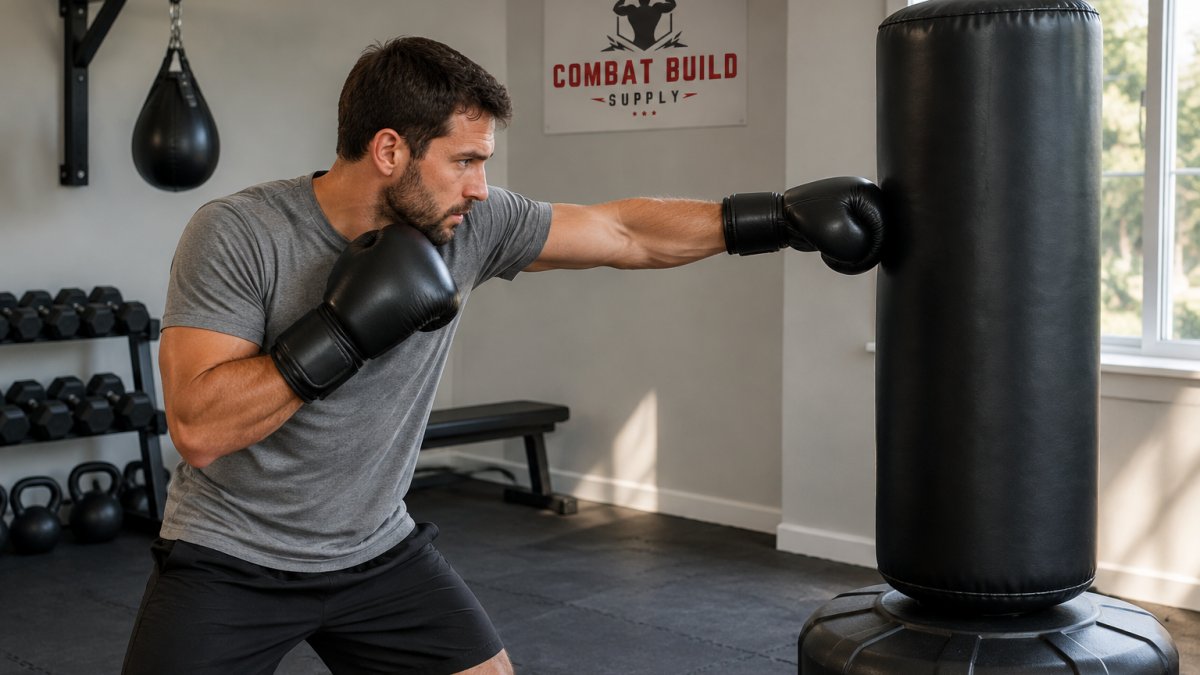
Home bag work changes the calculus because the setup is often not adjusted for you. A swinging bag shifts impact angles mid-punch, so wrist support and knuckle padding matter more than they do on a fixed gym bag that stays square to your fist.
Match Gloves to Your Bag and Training Surface
The glove does not fix a bad setup. A bag that is too light for your body weight will swing wildly no matter how much foam is on your knuckles, and a bag hung from an unrated ceiling joist is a structural problem, not a glove problem.
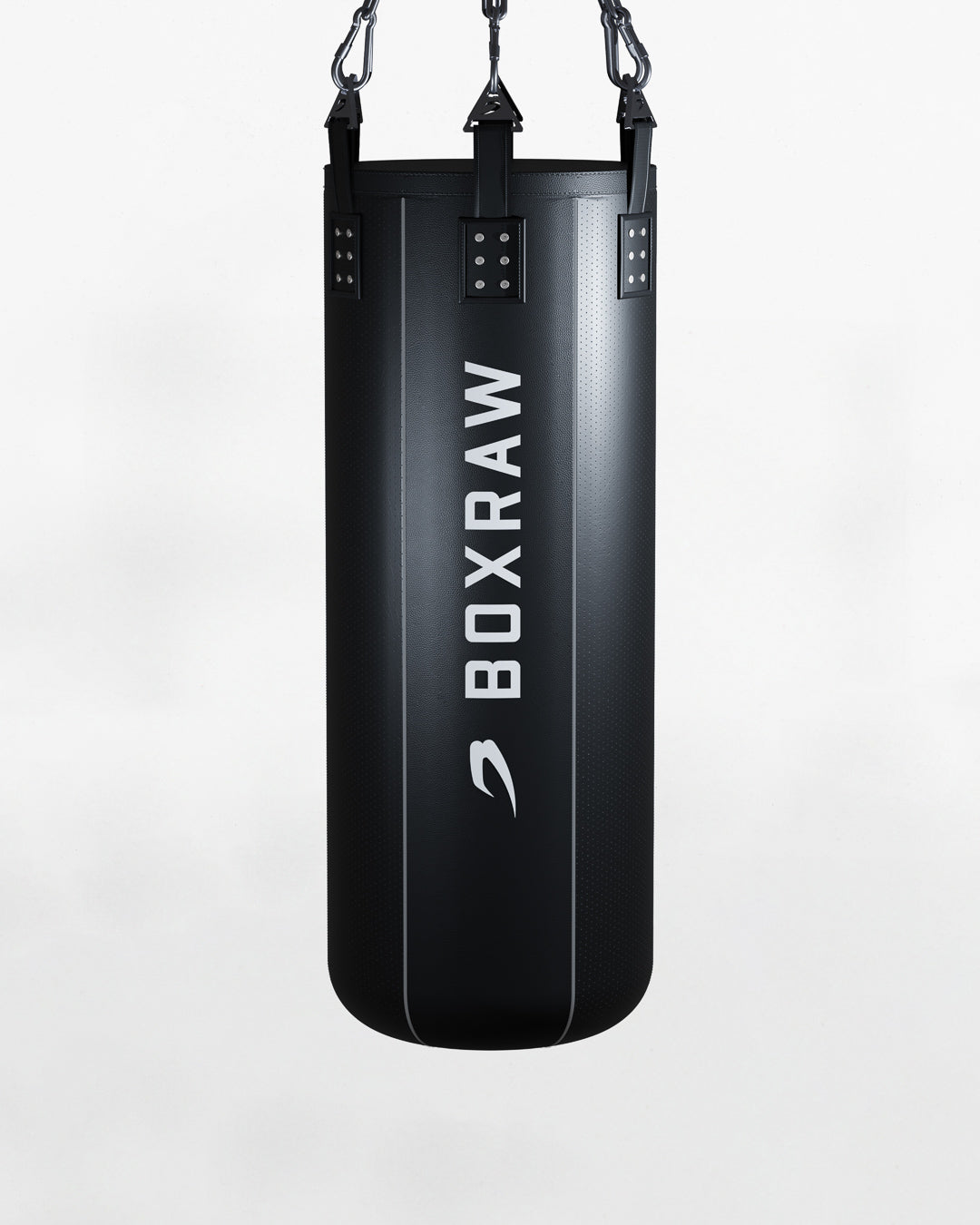
- Hanging heavy bags (typically 70-100 lb filled): These reward dense knuckle foam and a long wrist cuff because the bag returns force straight back at you. A 14-16 oz glove is the common home choice.
- Freestanding bags: The base absorbs some energy, but the bag can tip or rotate on angled punches. A glove with a stiff, wide hook-and-loop cuff keeps your wrist from rolling when the bag shifts.
- Wall-mounted bags: Less swing, more rebound. Lighter 12-14 oz gloves are workable, but thin mats over concrete still punish missed angles.
- Floor and matting: A concrete floor under a thin yoga mat transmits shock through your ankles and knees on every step and missed punch. Interlocking rubber gym tiles or a proper boxing mat reduce that, and heavier gloves spread impact across more foam when you do land flush.
Fix the equipment, then size the glove to your training.
If you are still choosing a bag, our breakdown of wall mounted heavy bags for home training covers space and stability. Pair the gloves with a bag you can actually hang or anchor safely, like our Classic Heavy Bag Black.
Watch out: A glove with soft, pillowy foam feels comfortable on a light bag but bottoms out on a dense 100 lb bag, leaving your knuckles to take the impact.
Boxing Glove Wrist Support: Why It Matters More Than You Think
Wrist support is the most overlooked spec in home glove buying. Repetitive impact on a bag your wrist cannot stabilize is how soreness turns into a nagging injury.
Look for three things:
- A long wrist cuff that wraps past the joint
- A hook-and-loop closure you can cinch tight
- Padding that stays put when you make a fist
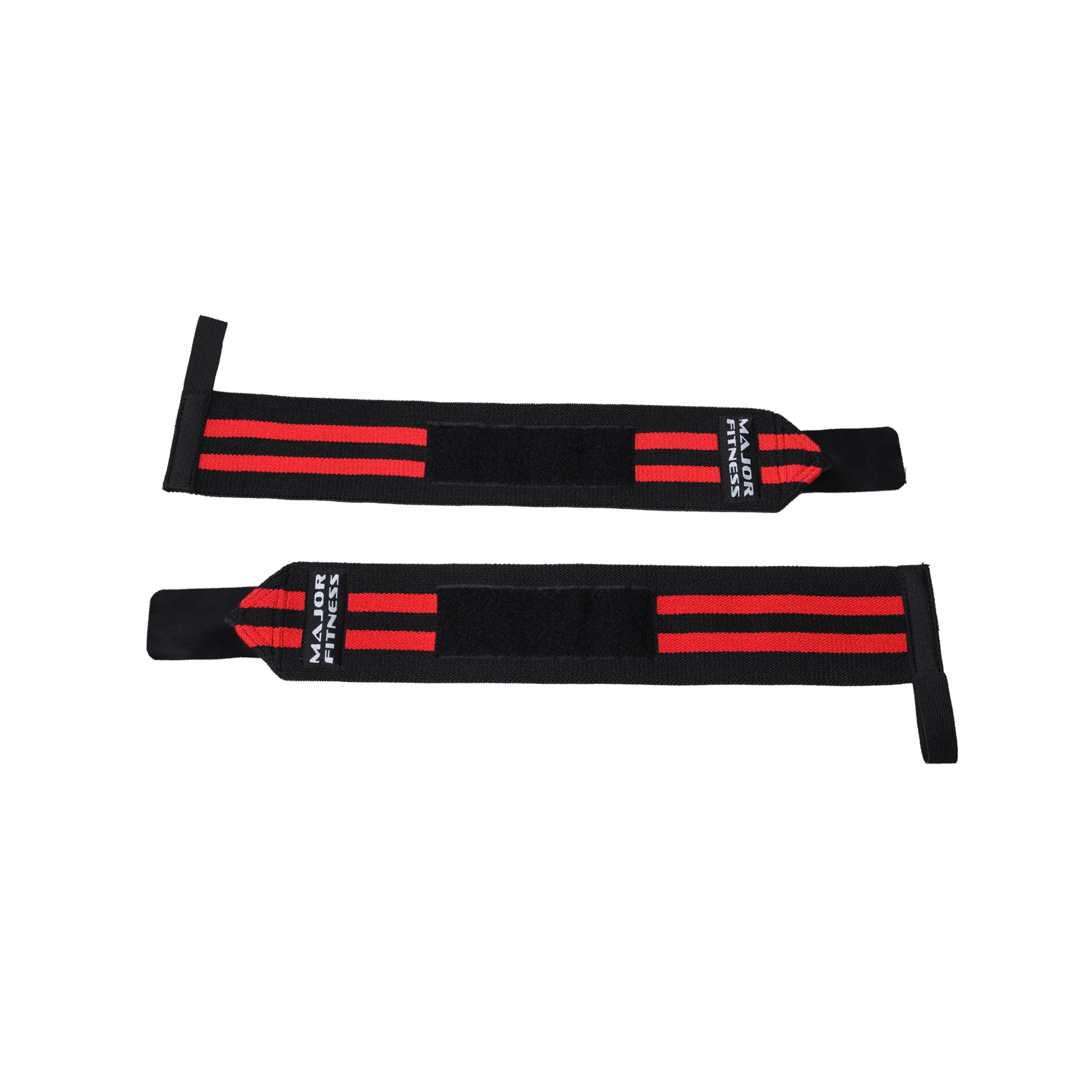
Lace-up gloves lock the wrist more firmly, but you need a partner to tie them. For solo home training, hook-and-loop wins on practicality. A pair of wrist wraps under the glove adds another layer if your wrists feel loose.
Fit, Closure, and Trying Gloves On With Hand Wraps
Always try gloves on with your hand wraps in place. Wraps add bulk through the palm and knuckles, and a glove that fits bare will feel tight wrapped.
Check these fit points:
- Finger compartment: fingers should reach the end without curling
- Thumb attachment: should limit hyperextension without pulling
- Closure: should cinch without pinching
- Snug fit: firm everywhere, tight nowhere
If you are new to wrapping, our guide to wrapping hands for Muay Thai beginners covers the seven-step method before you size anything.
A Practical Decision Tree for Buying One Pair
If you only buy one pair, buy 14 oz hook-and-loop gloves in leather. That single choice covers bag work, pad work, and light sparring for most adults. Here is how to narrow it further:
- Under 150 lb, bag and speed work only? Go 12 oz.
- Over 180 lb or sparring regularly? Go 16 oz.
- Small hands? Go one weight down and pick a narrow fit.
- Wrists feel unstable? Prioritize cuff length over brand.
One pair, chosen this way, will serve a home gym for years. Two pairs only make sense once you train both speed work and sparring consistently.
Glove Care, Hygiene, and When to Replace Them
Sweat left in the lining can break down foam and encourage bacteria growth, and poor airflow makes that worse.
A Home Hygiene Routine That Actually Works
- Air them out immediately. Pull the gloves off, open the cuff wide, and set them palm-down with the wrist opening facing up so moisture rises out. Do this before you shower, not after.
- Wipe the lining after every session. A microfiber cloth dampened with a mild soap-and-water solution lifts salt and oils; avoid soaking the foam.
- Dry, don't bake. Stuff loosely with newspaper or a dry cloth to pull moisture, and keep gloves out of direct sun and away from heaters, high heat cracks leather and degrades foam. A mesh glove dog or a simple wire rack near a fan works better than sealing them in a gym bag.
- Never store them closed. Compressed in a bag, the lining stays damp and the foam takes a set. Hang them or leave the cuffs open on a shelf.
- Condition leather sparingly. A light leather conditioner every few months keeps leather supple; synthetic gloves need no conditioner and should just be wiped and dried.
Hand wraps deserve the same treatment: wash them after every session in a mesh bag on a gentle cycle, or hand-wash and hang dry. Unwashed wraps are a common source of glove odor and skin irritation.
When to Replace Gloves
Replace gloves when protection fails, not when the color fades. Check these signals every few months:
- Compressed knuckle padding: Press your thumb into the knuckle foam. If it bottoms out against the seam or feels uneven across the four knuckles, impact protection is gone even if the leather looks fine.
- Damaged seams or split leather: A seam failure at the thumb or palm lets the glove shift on impact and can expose the foam.
- Weakened wrist support: If the cuff has softened, the hook-and-loop no longer cinches tight, or the glove twists on the wrist when you punch, the support has degraded.
- Persistent odor or torn lining: A lining that tears exposes foam to sweat directly and accelerates breakdown; odor that survives cleaning usually means bacteria have colonized the foam.
Foam compression is invisible from the outside, so judge by feel and by how your hands recover after bag rounds, soreness that wasn't there before is a replacement signal.
Building a home setup means every purchase has to earn its place. Combat Build Supply stocks durable gloves, bags, and wraps designed to hold up across consistent sessions, with free shipping on every order, a full refund for defective items, and live chat, email, or phone support when you need a sizing question answered. Get started with Combat Build Supply and train with gear you stop thinking about.
Frequently Asked Questions
Should I train with 14 or 16 oz gloves?
For bag work and general training, 14 oz suits most adults between roughly 140 and 175 pounds, while 16 oz is the safer pick above that range or if you hit hard. If you plan to spar, 16 oz is a common choice for sparring and heavy-bag work.
Do I need different gloves for heavy-bag work and sparring?
It helps. Bag gloves in the 12 to 14 oz range give you speed and enough padding for solo sessions, while sparring gloves at 16 oz protect both you and your partner. If you are buying one pair for home training, a 14 or 16 oz pair covers bag work and light partner drills. Check your gym's sparring rules before relying on a single pair.
How should boxing gloves fit with hand wraps?
Always try gloves on with your wraps in place, since wraps add bulk across the knuckles and wrist. Your fingertips should reach near the end of the finger compartment without pressing against it, and your thumb should sit securely in its attachment. A snug fit with no sliding at the wrist is the goal. Sizing is generally based on height, weight, and dominant-hand circumference.
What features should I look for in boxing gloves for home workouts?
Prioritize padding distribution across the knuckles, wrist support that keeps your hand aligned, and a closure that stays tight. Hook-and-loop closures are easier to manage alone at home than lace-ups. Also confirm the glove fits over your hand wraps, since that combination is what you will actually train in.


