

Can a 20-Minute Full-Body Workout Really Work?
Last Updated: November 21, 2026
Quick Summary
Yes, a 20 minute full body workout can work when it is structured well and done consistently. Most effective sessions include a short warm-up, a circuit of strength moves that train the major muscle groups, and a brief cooldown, and they need no gym or equipment to start.
- A typical session is two minutes of warm-up, about 15 minutes of circuit work, and three minutes of cooldown.
- The no-equipment circuit uses five moves: air squat, push-up, reverse lunge, glute bridge, and shoulder tap or plank.
- Each move is held for 40 seconds, with 15 to 20 seconds of rest between moves and 60 seconds between rounds.
- Beginners should start with two rounds and add a third once the movements feel smooth.
- Choose a dumbbell weight you can control for every rep, and reduce it if form breaks down or your back arches.
Table of Contents
- Warm-Up and Cooldown in Five Minutes
- 20 Minute Full Body Workout No Equipment
- 20 Minute Full Body Workout for Beginners
- 20 Minute Full Body Workout with Weights for Beginners
- Modifying Each Movement: Regressions, Progressions, and Low-Impact Options
- Building a Weekly Plan Around Your 20-Minute Sessions
- Start Your First 20-Minute Session at Home
- Frequently Asked Questions
Can a 20-minute full-body workout really work? Yes, for many people it can, as long as the session is structured well and done consistently. Most effective 20 minute full body home workouts follow a simple pattern: a short warm-up, a set of strength moves that use the major muscle groups, and a brief cooldown. You do not need a gym or an hour to get started.
The U.S. Department of Health and Human Services recommends 150 to 300 minutes per week of moderate-intensity aerobic activity, or 75 to 150 minutes of vigorous activity, for substantial health benefits (Physical Activity Guidelines for Americans, 2nd edition). A 20-minute session will not meet that target alone, but several sessions per week can add up quickly.
The sections below show how to build a session that fits into a busy day.
Warm-Up and Cooldown in Five Minutes
Spend about two minutes warming up before you start the work. March in place, swing your arms, and do a few slow bodyweight squats. This raises your heart rate and loosens your hips and shoulders.
Finish with about three minutes of cooldown. Walk slowly, then stretch your quads, hamstrings, chest, and shoulders for 20 to 30 seconds each. Breathe slowly through each stretch.
- Warm up: march, arm circles, light squats (about 2 minutes)
- Work: the full-body circuit (about 15 minutes)
- Cool down: slow walk and stretches (about 3 minutes)
20 Minute Full Body Workout No Equipment
A no-equipment session works best when you organize moves by movement pattern rather than by muscle group. That way every major area, legs, push, pull or hinge, and core, gets trained in one pass. The structure below fits a full circuit into roughly 15 minutes of work after a two-minute warm-up and leaves about three minutes for a cooldown.
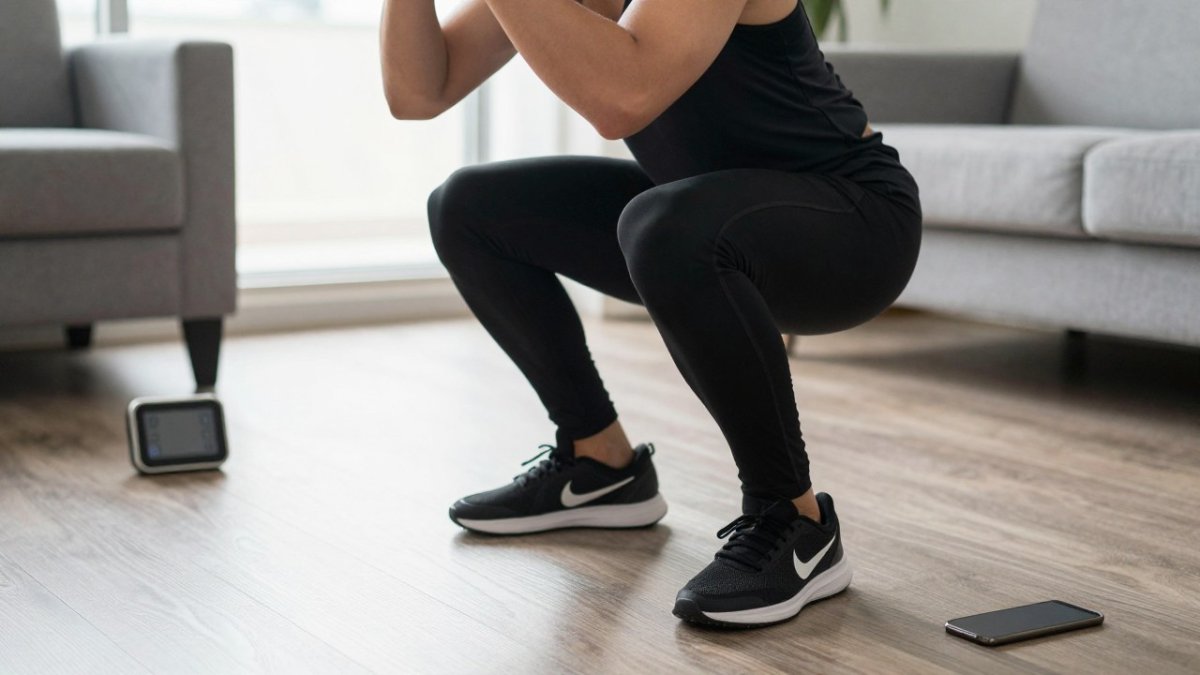
The circuit (5 moves, 3 rounds):
- Air squat, 40 seconds. Stand with feet shoulder-width apart, sit your hips back and down as if reaching for a chair, keep your chest tall, and drive through your whole foot to stand. A common mistake is letting the knees cave inward; push them gently out over your toes.
- Push-up, 40 seconds. Set your hands slightly wider than your shoulders, keep a straight line from head to heels, lower your chest toward the floor, and press back up. If your hips sag, drop to your knees or elevate your hands on a sturdy chair.
- Reverse lunge, 40 seconds, alternating legs. Step one foot back, lower until both knees bend to about 90 degrees, then push through the front heel to return. Keep your torso upright and your front knee tracking over your mid-foot.
- Glute bridge, 40 seconds. Lie on your back with knees bent and feet flat, squeeze your glutes to lift your hips until your body forms a straight line from knees to shoulders, pause, and lower. Avoid arching your lower back at the top.
- Standing shoulder tap or plank, 40 seconds. From a high plank, tap one hand to the opposite shoulder while keeping your hips as still as possible, then alternate. If your wrists complain, do the standing version: reach one hand across your body to tap the opposite shoulder while marching in place.
Rest 15 to 20 seconds between moves and 60 seconds between rounds. Three rounds takes about 15 minutes at a controlled pace. If you are new to this format, start with two rounds and add the third when the movements feel smooth.
Low-impact swaps: Replace any jumping variation with a step-out or a slow march. For knees that dislike deep squats, use a chair squat, sit back to lightly touch a chair seat and stand. For wrists that hurt during push-ups, do them with your hands on a low step or use fists against a padded surface.
Progression without adding time: Once three rounds feel easy, slow the lowering phase of each move to three seconds, add a two-second pause at the bottom, or switch to a single-leg version of the glute bridge. These changes raise difficulty without lengthening the session.
Watch out: Speed is the most common form killer in a timed circuit. If you cannot control the lowering phase of a squat or push-up, slow down or take the easier variation, the clock is a guide, not a race.
The no-equipment circuit covers five moves, each held for 40 seconds across three rounds.
| Move | Time | Low-impact swap |
|---|---|---|
| Air squat | 40 seconds | Chair squat |
| Push-up | 40 seconds | Hands on chair or low step |
| Reverse lunge | 40 seconds per leg | Slow march or step-out |
| Glute bridge | 40 seconds | Single-leg version for progression |
| Shoulder tap or plank | 40 seconds | Standing shoulder tap |
| Rest between moves | 15 to 20 seconds | Rest 60 seconds between rounds |
Time
20 Minute Full Body Workout for Beginners
If you are new to exercise, start with fewer rounds and easier versions of each move. Two rounds of five moves is a solid first goal. Choose a slower tempo and rest longer between sets.
Beginner-friendly swaps include wall push-ups instead of floor push-ups and a chair squat instead of a deep squat. Build up slowly over several weeks before adding more rounds.
Tips for beginners:
- Rest as long as you need between moves
- Stop if you feel sharp pain
- Add one round every week or two
20 Minute Full Body Workout with Weights for Beginners
Adding dumbbells raises the demand on your muscles and lets you build strength with the same 20-minute format. The key for beginners is to pick a weight you can control for every rep, if the last two reps of a set slow down dramatically or your form breaks, the weight is too heavy.
The weighted circuit (5 moves, 3 rounds):
- Goblet squat, 10 to 12 reps. Hold one dumbbell vertically against your chest with both hands, sit your hips back and down, and stand. Keep your elbows inside your knees at the bottom and your chest tall.
- Dumbbell row, 10 to 12 reps per side. Place one hand and one knee on a bench or sturdy chair, let the dumbbell hang, pull it toward your hip while keeping your back flat, and lower under control. Avoid twisting your torso to lift the weight.
- Reverse lunge, 8 to 10 reps per leg. Hold a dumbbell in each hand at your sides, step back, lower until both knees bend to about 90 degrees, and push through the front heel to return.
- Overhead press, 8 to 10 reps. Stand with dumbbells at shoulder height, press them overhead until your arms are straight, and lower to your shoulders. Keep your ribs down and avoid leaning back.
- Romanian deadlift, 10 to 12 reps. Hold dumbbells in front of your thighs, hinge at your hips with a slight knee bend, lower the weights along your shins until you feel a stretch in your hamstrings, then stand by squeezing your glutes.
Rest 30 to 45 seconds between moves and 60 to 90 seconds between rounds. Three rounds fits inside the 15-minute work block. Start with two rounds in week one and add the third when you can complete every rep with clean form.
How to choose a starting weight: For each move, do a test set of five reps. If you could do five more with good form, the weight is too light; if you could not do two more, it is too heavy. Most beginners land between 5 and 15 lb for upper-body presses and rows and between 10 and 25 lb for squats and deadlifts, though this varies widely by individual.
Bodyweight versus dumbbells, which should you pick? Choose the no-equipment circuit if you are new to exercise, short on space, or want to master movement patterns first. Choose the dumbbell circuit if bodyweight moves already feel easy, if your goal is building strength rather than endurance, or if you want to keep progressing without adding rounds. A practical middle path is to run the bodyweight circuit for four to six weeks, then repeat the same movements with light dumbbells.
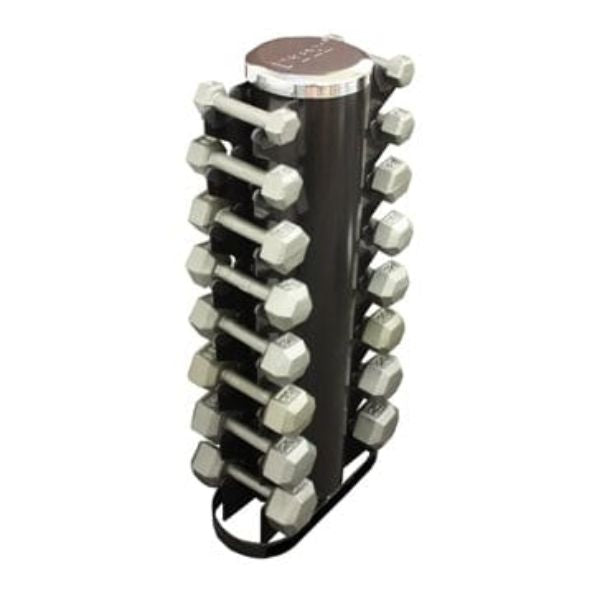
Space and storage: A pair of adjustable or fixed dumbbells and a sturdy chair cover most of this circuit. If you plan to train long term, a small rack keeps weights off the floor and makes the session faster to set up. The Troy USA Sports Iron Hex Dumbbells with Vertical Rack (VERTPAC-IHD25), priced at $726.00, include eight pairs from 3 to 25 lb and a two-sided rack that can be placed against a wall. For a wider range, the Troy USA Sports Rubber Encased Hex Dumbbells with Rack (VERTPAC-HDR100) cover 5 to 100 lb in 5 lb increments for $5,088.00.
Watch out: The overhead press and Romanian deadlift are the two moves where beginners most often use too much weight. If your lower back arches during the press or your back rounds during the deadlift, reduce the load before adding reps.
Modifying Each Movement: Regressions, Progressions, and Low-Impact Options
Every move can be made easier or harder. Regressions reduce the load or range of motion. Progressions add difficulty. For example, a squat can become a chair squat (regression) or a jump squat (progression).
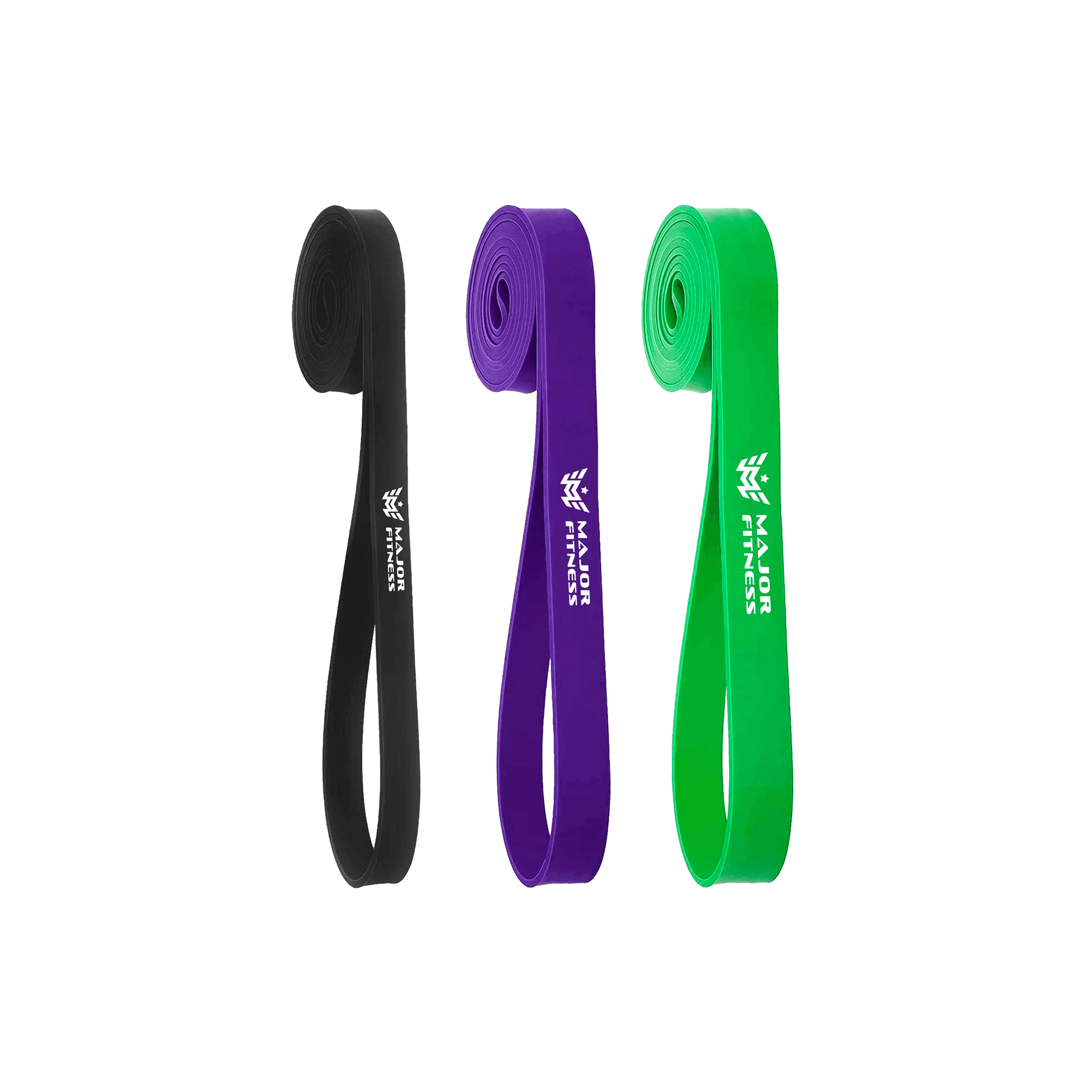
Low-impact options help protect your knees and joints. Replace jumping moves with step-outs or marching. Use a resistance band for assisted or added resistance on pulls and presses. The Major Fitness Pull-Up Assist Band Resistance Power Bands ($55.99) come in three resistance levels and are made from natural latex, so you can add or reduce assistance as your strength changes.
Building a Weekly Plan Around Your 20-Minute Sessions
Three to four sessions per week works well for most people, with at least one rest day between hard sessions. Alternate lower-body days with upper-body days, or rotate through full-body circuits.
Track your rounds and the weight you use. Small weekly gains in reps or load are a good sign that your program is working.
Start Your First 20-Minute Session at Home
Pick a free corner, set a timer, and complete your warm-up. If you are unsure how to arrange your space, read How Do You Build a Functional Home Training Environment? Then run one round of the beginner circuit. You can add weights or extra rounds once the movements feel comfortable.
Combat Build Supply offers free shipping on every order, a 100% refund for defective or non-functioning items, and premium support by live chat, email, or phone. Sign Up Now!
Frequently Asked Questions
Can a 20-minute full-body workout be effective?
Yes, when the sessions are structured well. A 20-minute full-body workout works the major muscle groups in one session, and it can be combined with other activity to reach the Physical Activity Guidelines for Americans from the U.S. Department of Health and Human Services. That guidance recommends 150 to 300 minutes per week of moderate-intensity aerobic activity, or 75 to 150 minutes of vigorous activity, plus muscle-strengthening work on at least two days. Three to five short sessions per week can cover much of that. Effectiveness depends on consistency, controlled form, and progressively harder movements over time.
What is a good 20-minute full-body workout at home?
A good session pairs a short warm-up with four to six movements that cover the lower body, upper body, and core. Squats, push-ups or incline push-ups, reverse lunges, rows, glute bridges, and plank holds form a balanced set. Work in timed intervals of 30 to 40 seconds with 15 to 20 seconds of rest, then finish with a brief cooldown. Equipment such as dumbbells or resistance bands can add load, but the structure works without them.
Is a 20-minute workout enough for beginners?
For most beginners, a 20-minute session is a sensible starting point because it is manageable and easier to repeat. Begin with lower-intensity versions of each movement, such as box squats or wall push-ups, and focus on form before speed. As you adapt, add repetitions, shorten rest periods, or move to harder variations.


