

AWMA vs. Other Combat Supply Brands: Durability Guide
Table of Contents
- AWMA vs. Other Combat Supply Brands: How to Judge Long-Term Durability
- The Best Materials for Combat Training Gear
- Stitching Integrity and Construction: What Separates Durable Gear from Knockoffs
- Objective Stress-Test Methodology for Combat Gear
- How to Maintain Tactical Equipment for Longevity
- Combat Gear Replacement Cycle: When to Repair vs. Replace
- Repairability and Environmental Impact: Angles Most Brand Comparisons Miss
- Frequently Asked Questions
Last Updated: September 16, 2026
AWMA vs. Other Combat Supply Brands: How to Judge Long-Term Durability
Long-term durability in combat supply brands comes down to four measurable factors: material composition, stitching integrity, reinforcement placement, and how the gear holds up under repeated stress. Brand reputation matters far less than these construction details, which you can inspect yourself before buying.
The Best Materials for Combat Training Gear
The best materials for combat training gear balance abrasion resistance, tensile strength, and flexibility, and those three properties are determined by measurable fabric specs, not marketing adjectives. Microfiber synthetics and all-way stretch fabrics dominate modern construction because they resist wear without restricting movement. Military-grade specifications often guide these standards, though commercial gear rarely needs full mil-spec certification.
The Specs That Actually Predict Durability
When you compare combat supply brands, four numbers tell you more than any label:
- Denier (D): The linear mass of the yarn. Higher denier means thicker, heavier fibers. A 1000D polyester shell outlasts a 600D shell of the same weave by a wide margin under abrasion.
- Tenacity: Tensile strength per unit of yarn weight. Nylon typically has higher tenacity than polyester, which is why nylon webbing is common on load-bearing straps while polyester is common on UV-exposed surfaces.
- Coating: Polyurethane (PU) and polyvinyl chloride (PVC) backings add water resistance and dimensional stability. PU is lighter and more flexible; PVC is heavier and more abrasion-resistant but less breathable.
- Weave: Ripstop, basket, and plain weaves fail differently. Ripstop's grid reinforcement stops a tear from propagating, which matters on shells that take repeated strikes.
Microfiber, All-Way Stretch, and Abrasion Resistance
Microfiber fabric delivers exceptional abrasion resistance because its tightly woven structure distributes impact force across a wider surface area. All-way stretch adds flexibility without sacrificing tensile strength, which matters for gear that takes repeated strikes.
| Material | Abrasion Resistance | Breathability | Best For |
|---|---|---|---|
| Microfiber synthetic | High | Moderate | Punching bags, gloves |
| All-way stretch fabric | Moderate | High | Tactical clothing, wraps |
| Reinforced vinyl | High | Low | Heavy bags, floor mats |
| Full-grain leather | Very high | Low | Competition gloves |
| 1000D nylon with PU backing | Very high | Low | Load-bearing straps, bag shells |
The Sustainability Trade-Off Most Comparisons Ignore
Durability and environmental impact are not opposites. Solution-dyed fibers use less water and energy than piece-dyed fabrics and hold color better under UV exposure, so they fade less over years of gym use. Recycled polyester from post-consumer bottles performs close to virgin polyester in abrasion tests, though it can lose a small amount of tear strength. For a buyer optimizing long-term value, the more useful question is not "is this material eco-friendly?" but "will this material still be structurally sound in five years?" A bag that lasts a decade and is repairable has a lower lifetime footprint than three cheaper bags that fail and get landfilled.
Fiber and fabric performance standards overview
Stitching Integrity and Construction: What Separates Durable Gear from Knockoffs
Stitching integrity is the single most reliable predictor of gear longevity. Double-stitched seams with reinforced stress points outlast single-stitch construction by a wide margin. When inspecting any combat supply brand, flip the item inside out and examine the seam construction before anything else.
Here's what to check:
- Seam type: Double or triple stitching at stress points
- Thread quality: Heavy-duty nylon or polyester, not cotton
- Reinforcement: Bar-tacked or box-stitched at high-wear areas
- Edge finishing: Bound or folded seams, not raw-cut edges
Objective Stress-Test Methodology for Combat Gear
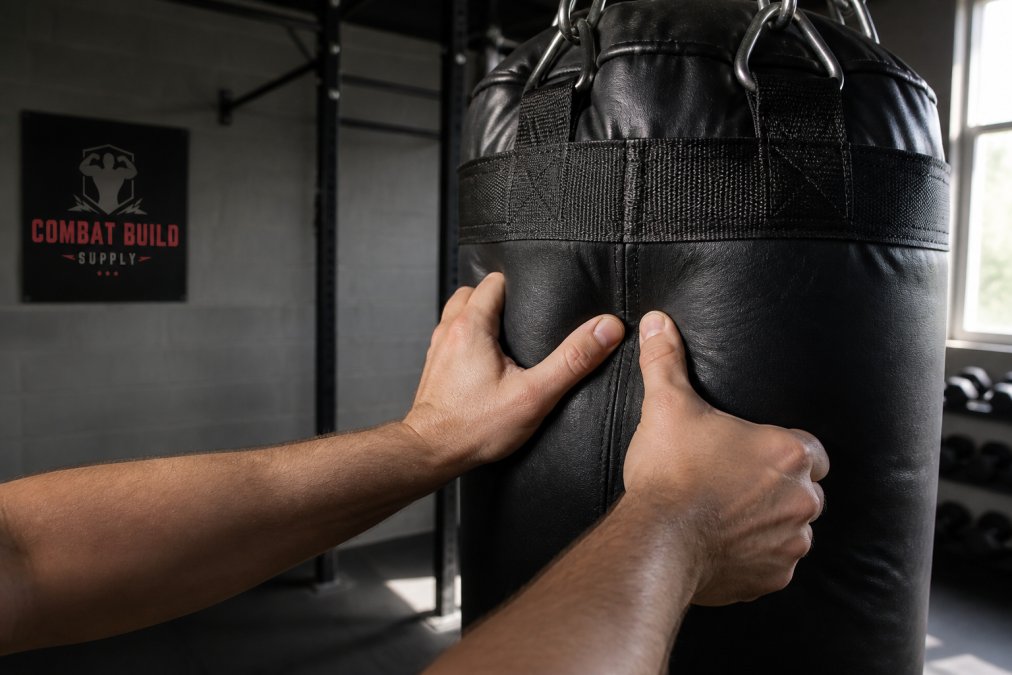
Objective stress-testing removes brand bias from durability assessment. The methodology involves controlled, repeatable tests that measure specific performance metrics under load. You can run simplified versions of these tests yourself. This is the section most brand comparisons skip entirely, they rely on subjective "feels tough" impressions, so treat the framework below as a way to generate your own evidence rather than trust a reviewer's.
The Four-Test Framework
Professional testing protocols typically include:
- Cyclic load testing: Repeated impact at controlled force to measure seam fatigue. A practical home version is a fixed number of strikes per session, say 300, logged over four weeks, with a seam inspection after every session.
- Abrasion testing: Surface friction tests that simulate months of use. Rub a known abrasive (fine sandpaper works) across the same spot 50 times and measure how much the face fabric pills or thins.
- Tensile strength testing: Pull tests on straps, D-rings, and attachment points. Hang a known weight from each attachment and watch for stitch elongation or hardware deformation.
- Environmental exposure: Temperature and humidity cycling to test material stability. Alternate gear between a cold garage and a warm room, or between dry and damp storage, and check for cracking, stiffening, or coating separation.
Turning Tests Into a Pass/Fail Score
A test is only useful if it produces a decision. Use a simple scoring sheet:
Panama 45D Heavy Punching Bag →
| Test | Measurement | Pass | Fail |
|---|---|---|---|
| Cyclic load | Seam separation after 1,200 strikes | No visible gap | Any stitch pull-through |
| Abrasion | Surface thinning after 50 rubs | Face fabric intact | Pilling or hole |
| Tensile | Attachment elongation under load | Returns to shape | Permanent stretch |
| Environmental | Coating after 10 hot/cold cycles | Flexible, no cracks | Cracking or flaking |
Repairability: The Test Most Buyers Never Run
Before you stress-test anything, check whether it can be repaired. A bag with a replaceable cover, a glove with restitchable seams, and a strap system with swappable hardware all have a longer effective lifespan than a sealed unit, even if the sealed unit tests slightly better on day one. Ask three questions:
- Can the cover or shell be removed and replaced independently of the core?
- Are the highest-wear seams accessible to a cobbler or heavy-duty sewing machine?
- Does the brand sell replacement straps, D-rings, or fill?
How to Maintain Tactical Equipment for Longevity
Maintaining tactical equipment for longevity requires consistent cleaning, proper storage, and regular inspection. Most gear failures trace back to neglect rather than manufacturing defects. A simple maintenance routine can double the functional lifespan of most combat training equipment.
Cleaning and Storage Best Practices
Cleaning frequency depends on use intensity. Daily trainers should wipe down gear after every session. Occasional users can clean weekly.
- Wipe synthetic surfaces with a damp cloth and mild soap
- Avoid harsh chemicals that degrade synthetic materials
- Dry gear completely before storage to prevent moisture damage
- Store bags and gloves in climate-controlled spaces when possible
- Inspect stitching monthly for early signs of wear and tear
Combat Gear Replacement Cycle: When to Repair vs. Replace
The combat gear replacement cycle depends on three factors: the type of gear, training intensity, and construction quality. Repair makes sense when damage is isolated. Replace when structural integrity is compromised across multiple points.
| Gear Type | Typical Lifespan | Repair When | Replace When |
|---|---|---|---|
| Heavy punching bags | 5-10 years | Surface cracks, loose stitching | Filling shifts, structural sag |
| Boxing gloves | 1-3 years | Minor seam repair | Padding compresses, lining tears |
| Hand wraps | 6-12 months | Not repairable | Stretch loss, fraying |
| Shin guards | 2-4 years | Strap replacement | Shell cracking, foam breakdown |
Repairability and Environmental Impact: Angles Most Brand Comparisons Miss
Repairability and environmental impact rarely appear in combat supply brand comparisons, yet both affect long-term value significantly. Gear that can be repaired stays out of landfills and saves money over time.

Consider these factors when evaluating any brand:
- Replaceable components: Can straps, fillings, or covers be swapped independently?
- Material recyclability: Are synthetic components recyclable at end of life?
- Repair support: Does the brand offer replacement parts or repair services?
- Construction transparency: Does the brand disclose materials and methods?
Frequently Asked Questions
Which brand of combat boots is the most durable?
Durability depends on materials and construction, not just brand name. Look for full-grain leather or high-denier synthetic uppers, sealed seams, and Vibram or similar outsoles. Brands like Danner and Belleville are known for long-lasting military boots, but any boot with reinforced stitching and quality leather can last years with proper care. Always check for stitching integrity and abrasion resistance before buying.
What factors determine the long-term durability of combat training gear?
Key factors include material quality (e.g., microfiber, all-way stretch fabrics), stitching integrity, reinforcement at stress points, and hardware quality. For punching bags, look for commercial-grade materials like Panama fabric and heavy-duty D-rings. Maintenance also plays a role: cleaning, proper storage, and timely repairs extend gear life. Objective stress-testing and repairability analysis help separate durable gear from knockoffs.
How does AWMA gear compare to professional-grade combat supply brands?
AWMA offers a range of gear at various price points, but professional-grade brands often use higher-quality materials and construction. For example, Combat Build Supply's Panama 45D Punching Bag uses proprietary Panama material and sandwich belt reinforcements, designed for commercial gyms. When comparing, focus on specific features like tensile strength, seam construction, and warranty. Reputable brands provide detailed specs and stand behind their products.
How often should high-intensity training gear be replaced?
Replacement depends on use and maintenance. High-intensity training gear like punching bags may need replacement every 3-5 years if used daily, but with proper care and repairability, some bags last longer. Gloves and wraps typically need replacement every 6-12 months. Watch for signs of wear: cracking, fading, loose stitching, or loss of padding. A good rule is to inspect gear monthly and replace when performance degrades.


