

Is Headgear Necessary for Light Sparring?
Table of Contents
- What Headgear Actually Protects Against
- Does Headgear Prevent Concussions?
- Headgear vs. No Headgear for Light Sparring
- How to Choose Boxing Headgear for Your Training
- Proper Sparring Etiquette and Control
- When Headgear Becomes Essential
- Making Your Decision
- Frequently Asked Questions
Last Updated: September 29, 2026
What Headgear Actually Protects Against
Headgear serves a specific purpose in combat sports: it reduces the risk of superficial injuries like lacerations, bruising, and abrasions. When you're sparring, your face takes direct contact. Headgear cushioning absorbs some of that impact energy, spreading force over a wider surface area and protecting your skin and underlying soft tissue from cuts and swelling.
This is where many people get confused. Headgear excels at preventing what you can see: the black eye, the split lip, the gash above your eyebrow. But it does not work the way most practitioners assume it does for deeper, more serious injuries. The padding and structure of headgear are designed to handle superficial trauma, not to fundamentally alter how rotational forces or impact biomechanics affect your brain.
Understanding exactly what your protective equipment does and doesn't do is crucial. Headgear reduces contact with the canvas or your opponent's gloves. It keeps your face intact. That's valuable, especially for beginners who are still developing head movement and defensive habits. But understanding these limitations is just as important as knowing the benefits.
Does Headgear Prevent Concussions?
No. Headgear does not prevent concussions. This is the most important distinction to understand when deciding whether to wear it for light sparring.
A concussion occurs when rotational or linear forces cause your brain to move inside the skull, creating shear stress on neural tissue (the CDC). The impact energy that causes a concussion is transmitted through the neck and skull directly to the brain. Headgear padding sits on the outside of your head. It cannot stop these forces from reaching your brain because the force travels through the bone structure itself.
Research into combat sports head trauma consistently shows that headgear reduces superficial injury risk but does not meaningfully reduce concussion risk. This distinction matters because many practitioners believe wearing headgear makes them safer from serious brain injury. That false sense of security can lead to riskier sparring behavior, which actually increases overall injury risk.
The biomechanics are straightforward: headgear absorbs energy from direct impact to the face and scalp. It does not absorb rotational force. In light sparring where control is maintained and impact is moderate, concussion risk is already low. Headgear doesn't change that baseline. In harder sparring, the forces involved exceed what headgear can meaningfully mitigate.
Headgear vs. No Headgear for Light Sparring
Light sparring intensity exists on a spectrum, and headgear necessity correlates directly to where you fall on that spectrum.
Defining Light Sparring Intensity Levels
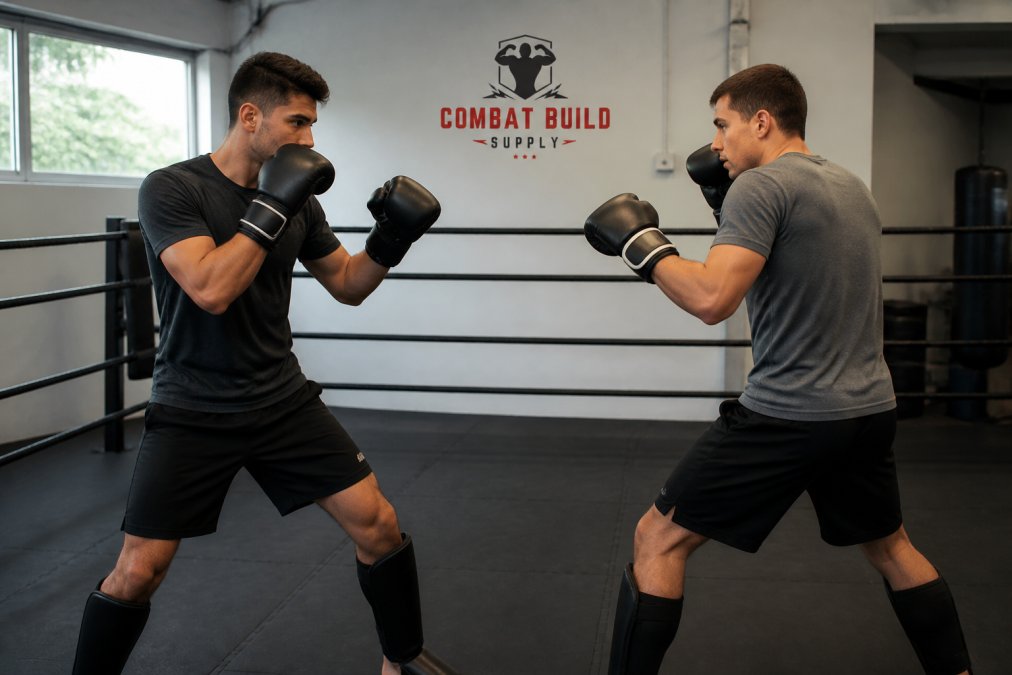
Light sparring typically falls into two distinct tiers:
Tier 1: Technical/Controlled Sparring (20-35% Power) Both partners focus on technique with minimal force, "touch contact" where you're making contact but not driving through the target. Partners are highly cooperative with constant communication. At this intensity, superficial injury risk is extremely low. Many experienced practitioners skip headgear entirely because the injury risk is comparable to drilling.
Tier 2: Light Sparring with Moderate Control (35-50% Power) Partners spar with realistic technique but maintain clear control. Contact is firm but not explosive, with less constant communication than Tier 1. Accidental harder shots happen occasionally. Cuts and bruising become realistic possibilities, especially around the eyes and cheekbones. This is where headgear provides measurable protective value.
The Protection vs. Feedback Trade-off
With headgear in Tier 2 light sparring, you reduce superficial injury frequency compared to no headgear, allowing more consistent training volume. Without headgear, you're exposed to cuts and bruising, but you gain direct sensory feedback that accelerates head movement development. Research shows practitioners who train without headgear in light sparring develop faster head movement patterns than those who rely on headgear protection.
Experience Level Changes the Equation
For beginners in Tier 2 light sparring, headgear is the stronger choice. Anxiety about getting cut often causes beginners to flinch, disrupting technique learning. Headgear removes that anxiety barrier, allowing focus on footwork, distance, and defensive positioning.
For intermediate and advanced practitioners in Tier 2, the choice is contextual. No headgear accelerates learning if you have good head movement habits; headgear reduces downtime if you prioritize consistent training volume.
In Tier 1 technical sparring, headgear is optional for all experience levels because injury risk is already minimal.
How to Choose Boxing Headgear for Your Training
If you decide headgear is right for your training, several factors determine whether a specific model actually protects you or creates new problems, particularly neck strain and fatigue, that undermine your training quality.
Padding Density and the Neck Strain Trade-off
Headgear padding ranges in thickness, with weight varying. Heavy headgear creates sustained neck load that can cause fatigue and degrade technique in later rounds. For light sparring, choosing moderate padding in a suitable weight range balances protection and weight without the neck strain penalty. If training for extended sessions, prioritizing lighter models can be beneficial, technique consistency matters more than maximum padding in light sparring.
BOXRAW Boxing Ring Toblerone - Custom →
Fit and Stability
Headgear should be snug enough that it doesn't move during head movement, but not so tight that it restricts blood flow or causes discomfort. The chin strap should be secure and positioned so it doesn't slip during contact. Overtightening creates restricted blood flow (headaches) and jaw pressure (jaw pain). A properly fitted headgear should feel secure but not restrictive.
Open-Face vs. Full-Face Coverage
Open-face headgear offers superior visibility and head movement. Full-face headgear restricts peripheral vision and reaction time. For light sparring, open-face is the stronger choice, the injury risk reduction from full-face coverage is marginal in controlled sparring, while the visibility cost affects skill development. Full-face headgear makes sense for moderate or hard sparring where jaw protection becomes more valuable.
Cheek Protectors and Extended Coverage
Some open-face models include cheek protectors that add weight and can affect neck stability. For light sparring, basic open-face headgear without extended cheek coverage is sufficient.
Material Durability and Protective Consistency
Headgear padding degrades over time. Headgear padding degrades over time. Choose headgear with reinforced stitching, quality foam that resists compression, and durable chin straps. Durability directly affects whether your protective investment actually protects you.
Age and Experience-Based Selection
Younger athletes (under 18) benefit from slightly more padding because their skulls are still developing. A 12-ounce headgear is appropriate; a 20-ounce model creates excessive neck strain. Adult beginners use standard 10-13 ounce open-face headgear. Experienced practitioners often prefer lighter models (8-11 ounces) for better feedback and less neck strain. Professional athletes should follow their sport's specific headgear standards.
The best headgear for light sparring is one that fits securely without restricting blood flow, offers moderate padding (1-1.25 inches) in the 10-13 ounce range, maintains open-face visibility, is constructed from durable materials that resist compression, and doesn't create neck strain during extended sessions. Match your headgear choice to your experience level and training duration, not just to maximum protection. ::: Prioritizing this balance of comfort and utility ensures that your headgear remains essential training gear, much like the moisture-wicking layers that support your performance during gym workouts.
Proper Sparring Etiquette and Control
Headgear effectiveness depends entirely on sparring intensity. Light sparring means controlled contact, proper distance management, and communication between partners about intensity level.
In light sparring, both partners agree to moderate impact. You're not trying to hurt each other. You're working on technique, footwork, distance, and timing. Contact is present but controlled. Your partner pulls their shots. You pull yours. This is where headgear provides real value: it protects against the inevitable accidental harder contact and the cumulative effect of repeated moderate impacts.
Proper sparring etiquette includes checking in with your partner about pace. If someone is hitting harder than agreed, you communicate that and reset. You don't escalate. You don't try to match their intensity if they're breaking the agreed-upon light sparring protocol.
Many practitioners underestimate how much control affects injury risk.
When Headgear Becomes Essential
Headgear transitions from optional to essential when sparring intensity increases or when your training context changes.
Making Your Decision
The question "Is headgear necessary for light sparring?" doesn't have a universal answer. It depends on your training goals, your experience level, your partners, and your tolerance for superficial injuries.
Frequently Asked Questions
Does headgear actually prevent concussions during light sparring?
Headgear reduces the risk of superficial injuries like lacerations and bruising, but it does not eliminate concussion risk. Concussions result from rotational force and impact absorption that headgear padding alone cannot fully prevent. Proper technique, controlled sparring intensity, and head movement are more effective at reducing traumatic brain injury risk than headgear alone. Headgear provides a false sense of security if used without strict control of sparring force.
What's the difference between light sparring and full-contact training?
Light sparring involves controlled, technical exchanges at controlled intensity with emphasis on form and defense rather than power. Full-contact training includes maximum-power strikes and higher impact intensity. For light sparring, headgear is optional if both partners maintain strict control and focus on technique. Full-contact and heavy sparring sessions make headgear more necessary. The key difference is intent: light sparring prioritizes skill development over testing power.
How do I choose the right headgear if I decide to wear it?
Look for headgear with adequate padding density, an adjustable chin strap for secure fit, and an open-face design for better peripheral vision and reaction time. Weight matters, heavier headgear increases neck strain during extended training. Cheek protectors should not restrict head movement. Try it on before purchasing to ensure it doesn't impair your defensive habits or make you compensate with poor technique. Proper fit prevents the headgear from shifting during contact.
Is headgear necessary for beginners learning to spar?
For beginners, headgear is recommended during the first few months of sparring to build confidence and protect against accidental impacts while learning control. As your defensive skills improve and you develop better head movement and reaction time, headgear becomes less critical during light technical sparring. However, age matters, younger practitioners benefit from consistent headgear use to reduce cumulative damage risk. The goal is to develop solid technique so you rely less on equipment and more on skill.


