

Improve Punching Power at Home: A Step-by-Step Training Plan
Last Updated: November 23, 2026
Quick Summary
You can improve punching power at home by training the movement pattern itself, using shadowboxing, bodyweight strength, and core work with nothing but floor space. Hip rotation and balance must come before adding resistance, because force travels from the ground up through your legs, hips, and torso before it reaches your fist.
- Shadowboxing builds technique: rotate the hip first, then let the arm follow.
- Core work like planks and dead bugs bridges the gap between hips and hands.
- Keep most dumbbell work in the 6-to-10 rep range and drive each rep fast.
- Run speed sets of 10 seconds or fewer with 60 to 90 seconds rest.
- Follow the four-week progression and finish with a deload week.
Table of Contents
- Why Technique Beats Raw Strength for Punching Power
- How to Improve Punching Power at Home Without Equipment
- How to Increase Punching Power With Dumbbells
- Exercises to Increase Punching Speed
- Best Boxing Training Equipment for Home
- Recovery, Periodization, and the 4-Week Progression
- Build Your Home Power Setup With Combat Build Supply
- Frequently Asked Questions
Why Technique Beats Raw Strength for Punching Power
Punching power starts with mechanics, not muscle. Research shows that hip rotation and balance must come before adding resistance, because force travels from the ground up through your legs, hips, and torso before it ever reaches your fist.
A common mistake is building big arms while neglecting technique. Lifters with more muscle can still hit softer than smaller fighters with clean mechanics, because the kinetic chain determines power.
A 12-week study found that speed strength training produced measurably better punching performance than conventional training (experimental study on speed strength training). The lesson: train the pattern, not just the muscle.
The Kinetic Chain: Hips Before Hands
The kinetic chain is the sequence of body segments that transfer force from the floor to your knuckles. Your legs push into the ground, your hips rotate, your torso follows, and your arm delivers last.
Get the order wrong and power leaks out at every joint.
- Ground reaction force: drive through the ball of your rear foot
- Hip drive: rotate the hip before the shoulder
- Torque: let the torso whip around the spine
- Follow-through: finish the punch, don't stop it short
For a deeper look at how fighters train this, read our guide on rotational power training for fighters.
How to Improve Punching Power at Home Without Equipment
You can improve punching power at home without equipment by training the movement pattern itself. Shadowboxing, bodyweight strength, and core work build force transfer with nothing but floor space.
No gym, no bag, no problem. Here is the order we recommend.
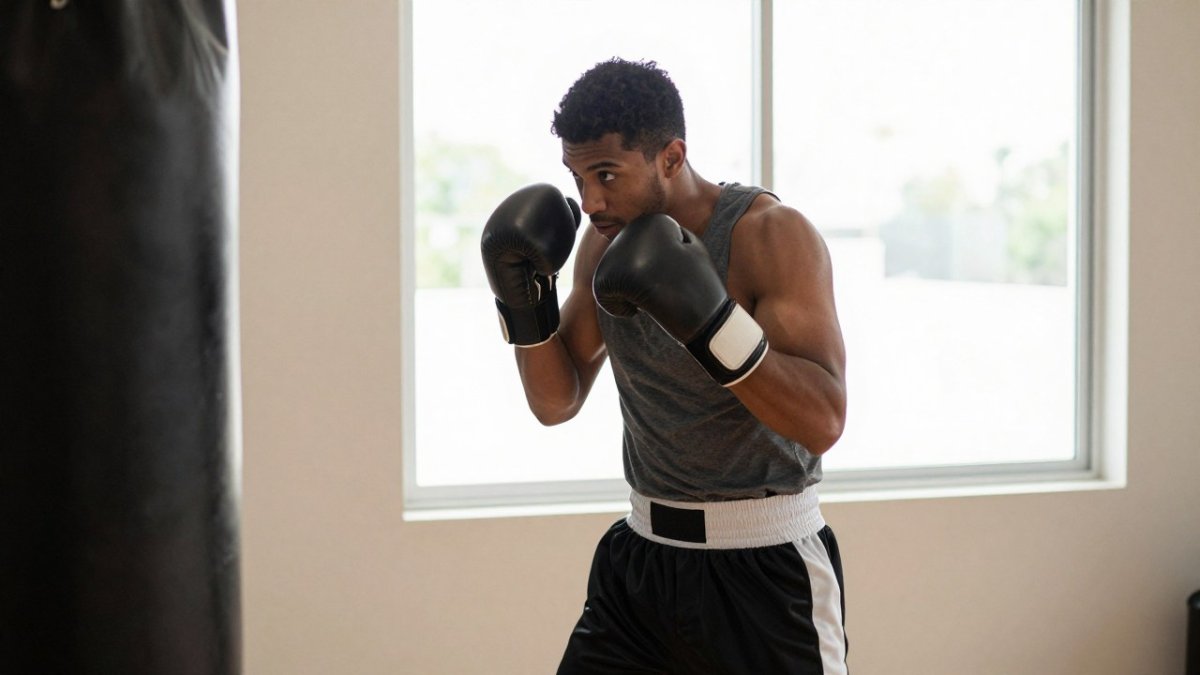
Shadowboxing Drills for Power and Speed
Shadowboxing is where technique gets built. Throw punches with full intent, but slow enough to feel your hips turn first.
Try this five-round circuit:
- Round 1: Slow-motion straight right, 20 reps per side
- Round 2: Hip-turn only, no arm extension, 30 seconds
- Round 3: Fast straight punches, 30 seconds on, 30 off
- Round 4: Hooks with full hip rotation, 20 per side
- Round 5: Free shadowboxing at 70% speed
A common mistake is snapping the arm out first. That kills force transfer. Rotate the hip, then let the arm follow.
Bodyweight and Core Exercises That Build Force
Core stability is the bridge between your hips and your hands. A 2023 study found that lower core resistance training improved rear-hand punching performance in professional boxers (study on core stability and punching power).
Build a base with these:
- Planks: 3 sets of 45 seconds
- Dead bugs: 3 sets of 10 per side
- Pallof press: 3 sets of 12 per side
- Hip bridges: 3 sets of 15
- Russian twists: 3 sets of 20
Keep the core engaged on every punch. That stability is what lets rotational force reach the fist.
How to Increase Punching Power With Dumbbells
Dumbbells add resistance to the exact patterns that drive power, but the transfer only happens if you train the pattern fast. The goal is not size. It is strength you can express quickly, which means moderate loads moved with intent rather than heavy loads ground out slowly.
A useful frame is rate of force development: how fast you can build force from zero. Slow grinding sets build maximal strength but do little for the first 100 milliseconds of a punch, which is where snap lives.
The Three Patterns That Matter
Almost every dumbbell exercise worth doing for punching power falls into one of three buckets:
- Lower-body drive: goblet squats, reverse lunges, split squats. These train the leg push that starts the kinetic chain.
- Rotational strength: rotational presses, half-kneeling wood chops, single-arm rows with a hip turn. These train the hip-to-torso transfer.
- Anti-rotation stability: suitcase carries, single-arm overhead holds, offset farmer walks. These keep the torso from leaking force sideways on contact.
A Dumbbell Power Circuit You Can Run at Home
Three rounds, 60 seconds rest between rounds:
- Goblet squats: 8 reps, drive up fast
- Half-kneeling rotational press: 8 reps per side, rotate from the hip not the arm
- Single-arm dumbbell rows: 10 reps per side, pause at the top
- Reverse lunges: 8 reps per side, push through the front heel
- Suitcase carry: 30 seconds per side
Move the concentric portion of each rep with intent. If the weight forces you to slow down, it is too heavy for power work.
Progressive Overload Without a Gym
The gap most home guides miss is how to make dumbbell work harder over time when you only own one or two pairs. Four levers work without buying anything new:
- Reps: add one or two reps per set before adding weight.
- Tempo: slow the lowering phase to three seconds to increase time under tension.
- Density: shave 10 seconds off rest between rounds each week.
- Unilateral loading: switch from two-arm to one-arm versions to double the demand on the core.
Watch out: adding load and adding speed in the same week is the most common way home trainees stall. Pick one lever per week and hold the others steady.
Follow the 80/20 rule: most work at moderate effort, a smaller slice at maximum intensity (training volume and intensity guidance). Two dumbbell sessions per week alongside shadowboxing is enough for most home trainees to see transfer within a month. Keeping most sets controlled while reserving only a few for hard effort also makes it easier to build strength safely at home with FlexFuelCo.
Exercises to Increase Punching Speed
Punch velocity comes from fast-twitch muscle fibers and neuromuscular coordination. Train speed separately from power, with full recovery between sets so each rep is crisp. Speed work should feel sharp, never sloppy. If your form breaks, stop the set.
A useful rule: speed sets last 10 seconds or fewer, and rest is long enough that the next set looks like the first. That usually means 60 to 90 seconds of rest for short bursts, not circuit-style pacing.
The Speed Block
Run this twice per week, before any strength work:
- Speed shadowboxing: 10-second bursts at 80 to 90 percent of max speed, 60 seconds rest, 6 rounds. Focus on the arm returning as fast as it extends.
- Band-resisted punches: 8 reps per side with a light band anchored behind you, then 8 reps unresisted immediately after. The contrast teaches the nervous system to fire faster.
- Clap push-ups: 5 reps, full rest. Quality over quantity, stop the set the moment the clap gets shallow.
- Medicine ball chest throws: 5 reps against a wall or to a partner, explosive, full rest.
Plyometrics for Explosive Power
Plyometrics train your legs to produce force fast. That ground reaction force is the start of every punch, so the quality of your jump work shows up directly in your hips.
Keep volume low. Plyometrics are potent but taxing, and most home trainees need two sets of five quality reps, not twenty sloppy ones. Land softly, absorb through the hips, and reset fully between reps.
- Box jumps: 3 sets of 5, step down between reps
- Broad jumps: 3 sets of 4, stick the landing
- Lateral bounds: 3 sets of 6 per side
- Depth drops: 2 sets of 5 from a low box, focus on a quiet landing
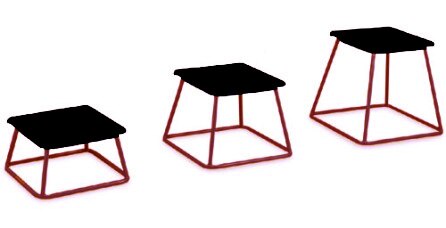
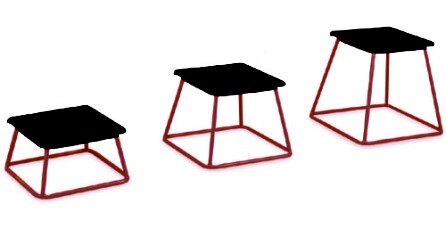
The Trigon Sports 30" plyometric box suits advanced athletes, and the 24" box works for building a base. Both feature a steel frame and a non-slip top surface.
Home-Friendly Alternatives
You do not need a plyo box to train explosive legs. A sturdy step, a low wall, or a stack of stable plates works for step-ups and depth drops. For band-resisted punches, a resistance band anchored to a door frame or a heavy piece of furniture covers the same contrast training. The principle matters more than the equipment: short bursts, full recovery, and a hard stop when form degrades.
Watch out: doing plyometrics after a long conditioning session is the fastest way to turn explosive work into grindy work. Put jumps and throws first in the session, when you are fresh.
Best Boxing Training Equipment for Home
The best home boxing equipment depends on your space. A wall-mounted bag fits small rooms, while a free-standing stand suits garages and basements.
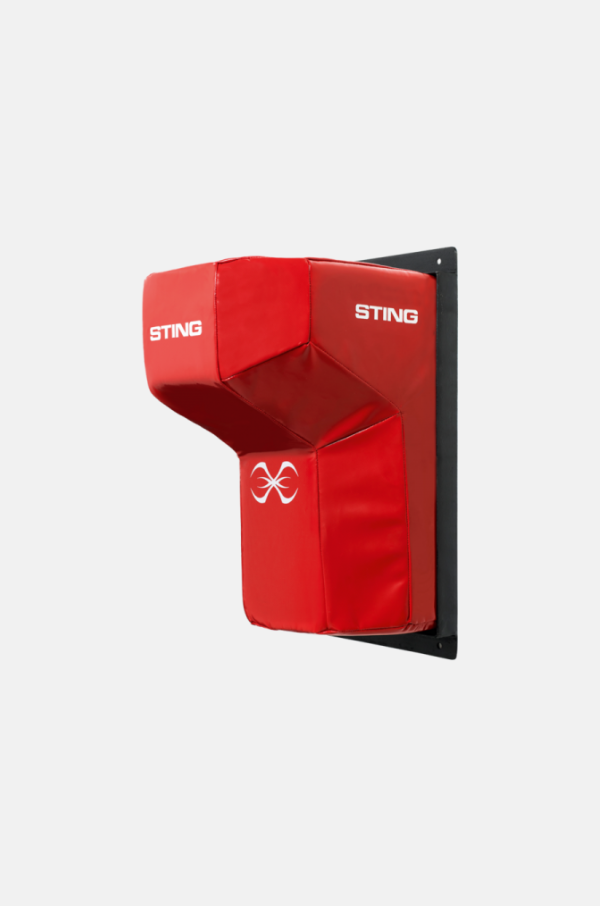
A strong option for tight spaces is the Uppercut Fixed Wall Punching Bag. It uses high-density foam and a heavy-duty steel wall mount, so it installs without ceiling hooks. The angled design lets you work jabs, hooks, and kicks on one surface.
Want to understand the trade-offs first? Read the benefits of wall mounted heavy bags for home training.
| Equipment | Best For | Price |
|---|---|---|
| Uppercut Wall Bag | Small rooms, apartments | $375.00 |
| Cornerman Stand | Full heavy bag work | $549.99 |
| 24" Plyo Box | Beginners, base building | $147.29 |
| 30" Plyo Box | Advanced jump work | $190.19 |
Price
The Cornerman holds up to a 100 lb bag with six height settings from 72 to 102 inches. Bag not included.
Recovery, Periodization, and the 4-Week Progression
Power gains need recovery as much as work, so hard sessions should be spaced out.
Follow a four-week progression, with technique cues and drills building week by week (four-week training progression).
- Week 1: Technique only, shadowboxing and core
- Week 2: Add dumbbell circuit, two days
- Week 3: Add plyometrics, low volume
- Week 4: Full circuit, then deload
Watch out: skipping the deload week is the fastest way to stall. Overtraining kills snap before it kills strength.
Sleep and easy days matter here. Two hard power sessions per week is plenty for most home trainees.
Build Your Home Power Setup With Combat Build Supply
Improving punching power at home comes down to clean mechanics, smart progression, and gear that holds up. Train the hips first, add resistance second, and let recovery do its job.
Combat Build Supply helps you build a setup that lasts. Every order ships free, defective items get a full refund, and our team answers questions by live chat, email, or phone.
Get started with Combat Build Supply and train with equipment you can trust.
Power at home is not about having the biggest gym. It is about repeating the right pattern with gear that will not fail you mid-session.
Frequently Asked Questions
How can I increase my punching power at home without equipment?
Start with technique: rotate your hips before extending your arm, keep your rear heel turned out, and drive off the back foot. Add shadowboxing rounds focused on snap and follow-through, plus bodyweight core work like planks, rotational twists, and hip hinges. Three to four 20-minute sessions per week, done consistently, will build punching power without any gear.
How often should I train to see improvements in my punching force?
Aim for three to four power-focused sessions per week, each 20 to 40 minutes, with at least one rest day between hard sessions. Follow the 80/20 rule: 80% of your training at moderate intensity and 20% at maximum effort. A four-week progression of technique cues and drills is a realistic first checkpoint. Rotational and plyometric work is demanding on the nervous system, so back off if punch velocity drops or your shoulders feel beat up.
What role does core strength play in generating punching power?
Your core transfers force from the ground through your hips into your fist. Train anti-rotation holds, rotational medicine ball throws, and hip hinges rather than endless sit-ups. The goal is a core that stays braced and stable while your hips rotate fast, which is what actually delivers force transfer into the punch.
How can I use dumbbells to improve my punching speed and power?
Keep dumbbells light and move them fast. Shadowbox with light dumbbells for short 30-second bursts, do explosive dumbbell punches from a braced stance, and add rotational rows and single-arm presses for hip drive and stability. Heavy dumbbell work builds hypertrophy, which can slow arm speed. Focus on fast-twitch muscle fibers with low weight and high velocity, and stop a set the moment your punch form breaks down.


