

Benefits of Modular Home Gym Equipment for Small Spaces
Quick Summary
A modular home gym is training equipment built from components you can add, remove or rearrange over time, so one footprint can handle squats, presses, cable work and pulls. Foldable racks and all-in-one stations let small rooms hold a full setup, and you can spread spending across months instead of paying all at once.
- The Major Fitness F35 folds to 22 inches deep against the wall when stored.
- Spread spending by starting with a foldable cage and adding accessories later.
- Build a five-year cost model covering purchase, attachments, maintenance and subscriptions.
- Confirm attachment compatibility before buying, since Roc cages only fit compatible Hydra or non-B.o.S. attachments.
- Check the pin-select stack step size before buying, since large jumps can slow progress on small-muscle movements.
Table of Contents
- What Modular Home Gym Equipment Actually Is
- Space Savings: Best Home Gym Equipment for Limited Space
- Cost of Ownership: Buying Once Versus Building Over Time
- Full-Body Training Coverage and Progressive Overload
- All-in-One Versus Separate Machines: Where Each Wins
- Setup, Stability, and Room Requirements
- Choosing a Workout Machine for Home That Fits Your Routine
- Frequently Asked Questions
Benefits of Modular Home Gym Equipment for Small Spaces
Last Updated: November 22, 2026
What Modular Home Gym Equipment Actually Is
Modular home gym equipment is training gear built from components you can add, remove or rearrange over time. Combat Build Supply sells several systems designed this way, so the setup can start small and grow with your training. The home fitness equipment market is projected to keep expanding, with one forecast putting growth at a 7.59% compound annual rate through 2031 (Mordor Intelligence home fitness equipment market forecast).
The core idea is simple. A modular frame, rack or trainer accepts attachments, so one footprint can handle squats, presses, cable work and pulls. Compare the trade-offs in our all-in-one home gym versus individual equipment breakdown. A 2025 paper on functional modularity describes this approach as a way to make home equipment more scalable and flexible by letting users combine components (Research on Functional Modularity and Health Monitoring Design).
In practice, it helps to think of modular gear in three groups:
- Foldable racks, such as the Roc Foldable 2 Post and 4 Post Cages, which store flat against a wall between sessions.
- All-in-one stations, such as the Major Fitness F22 and F35, which combine rack, pulley and landmine functions.
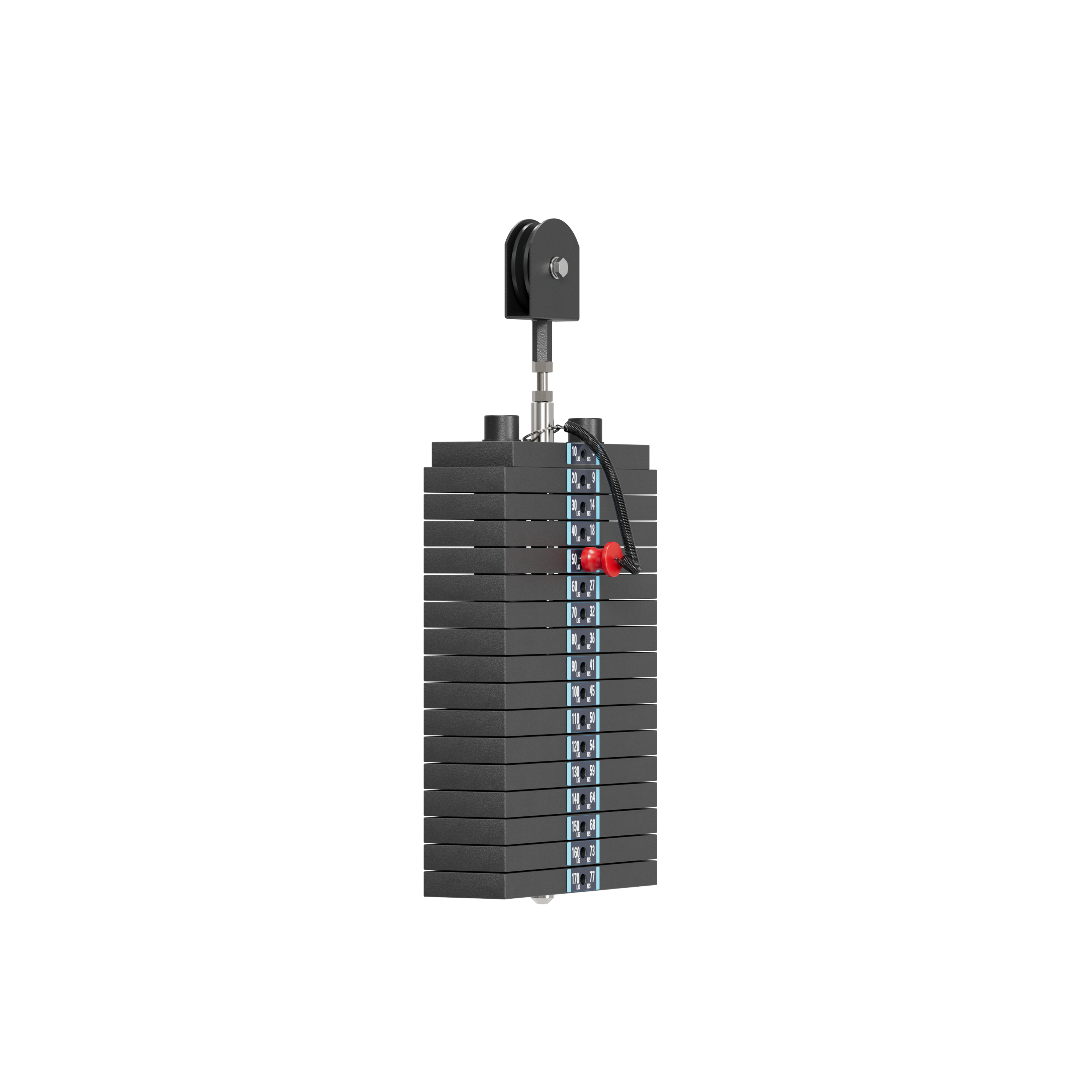
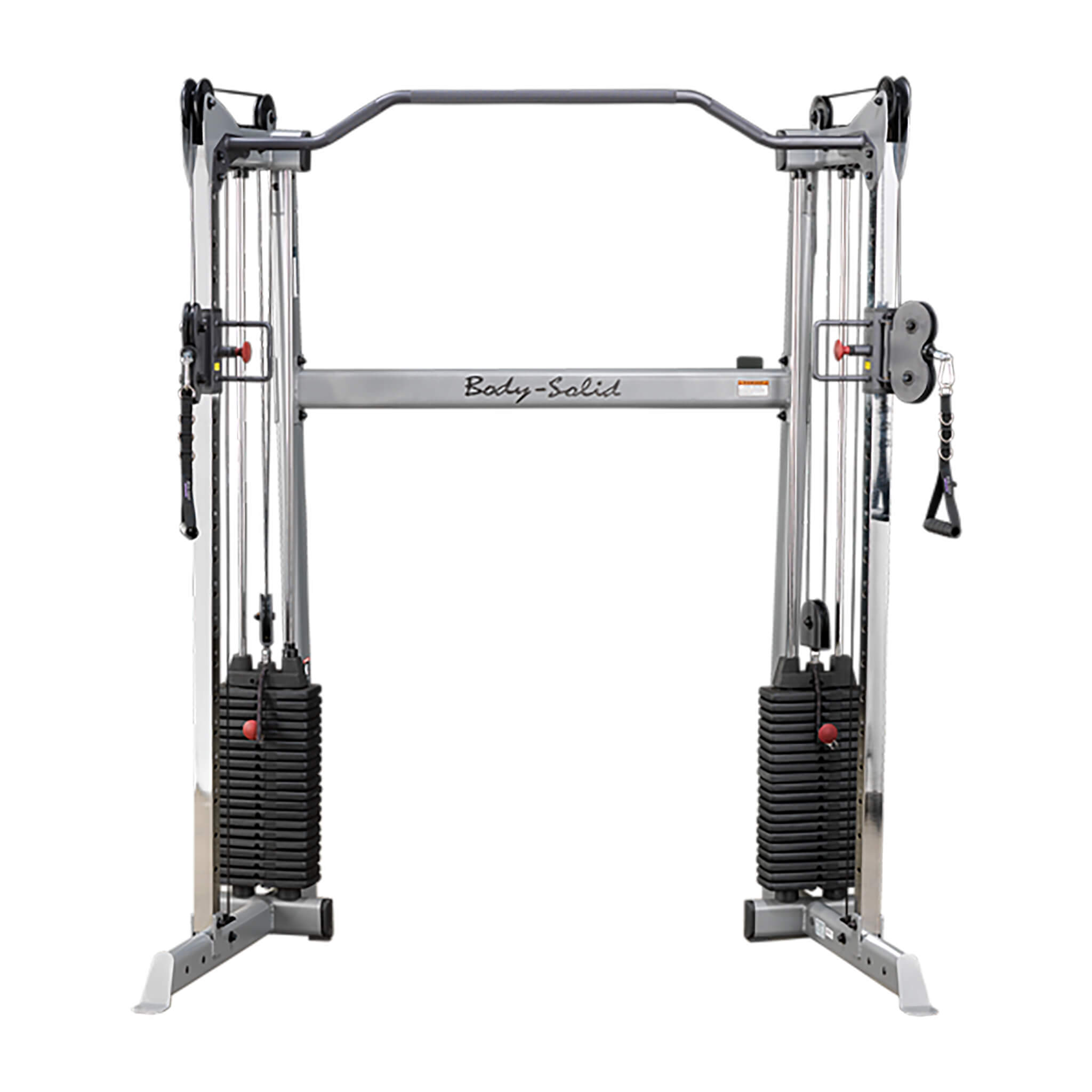
- Functional trainers and add-ons, such as the Body Solid GDCC200 and GDCC210, plus the Major Fitness Weight Stack Set.
Space Savings: Best Home Gym Equipment for Limited Space
Space is the constraint most small-room buyers hit first. The Major Fitness F35 folds to 22 inches deep against the wall, and measures 54 inches wide when expanded.
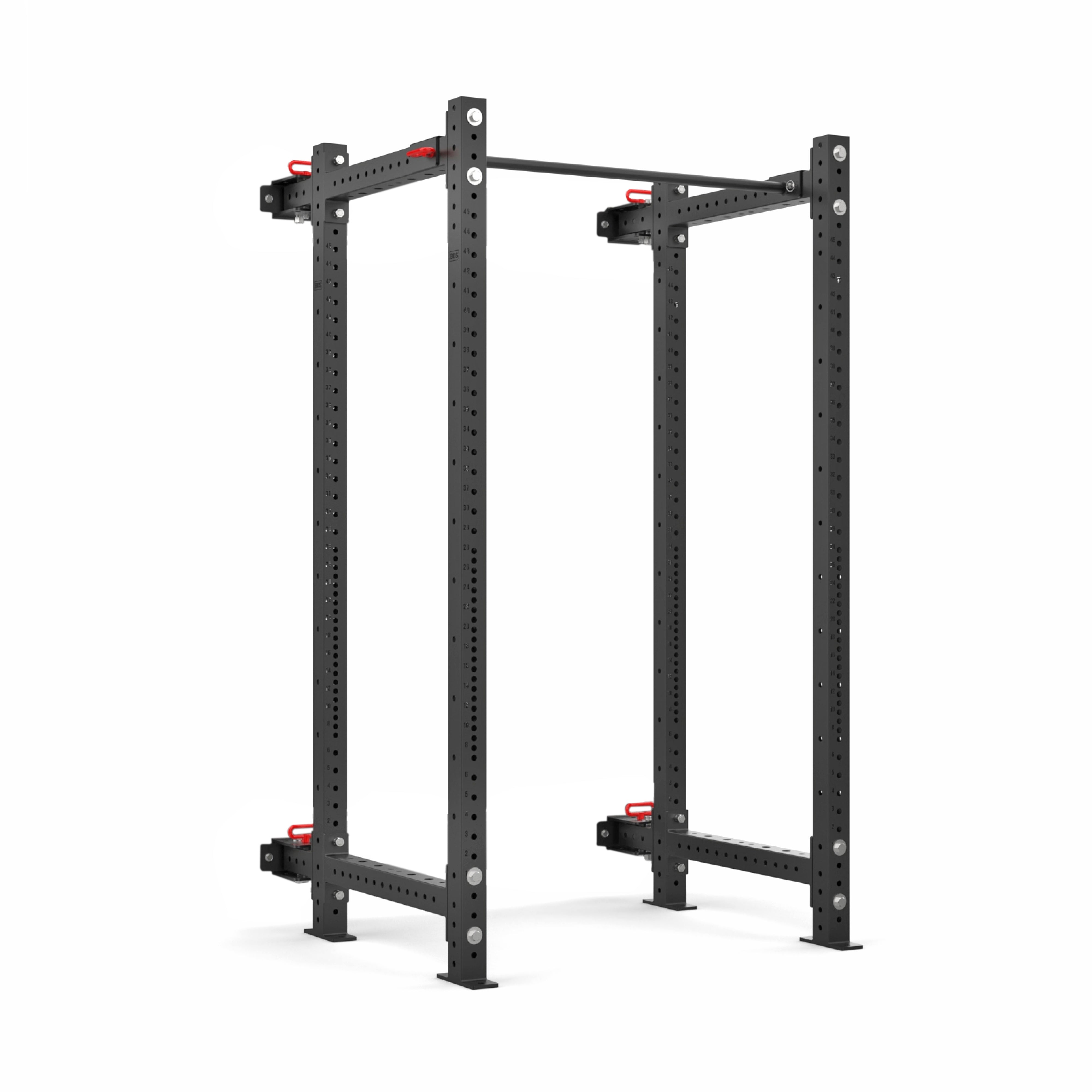
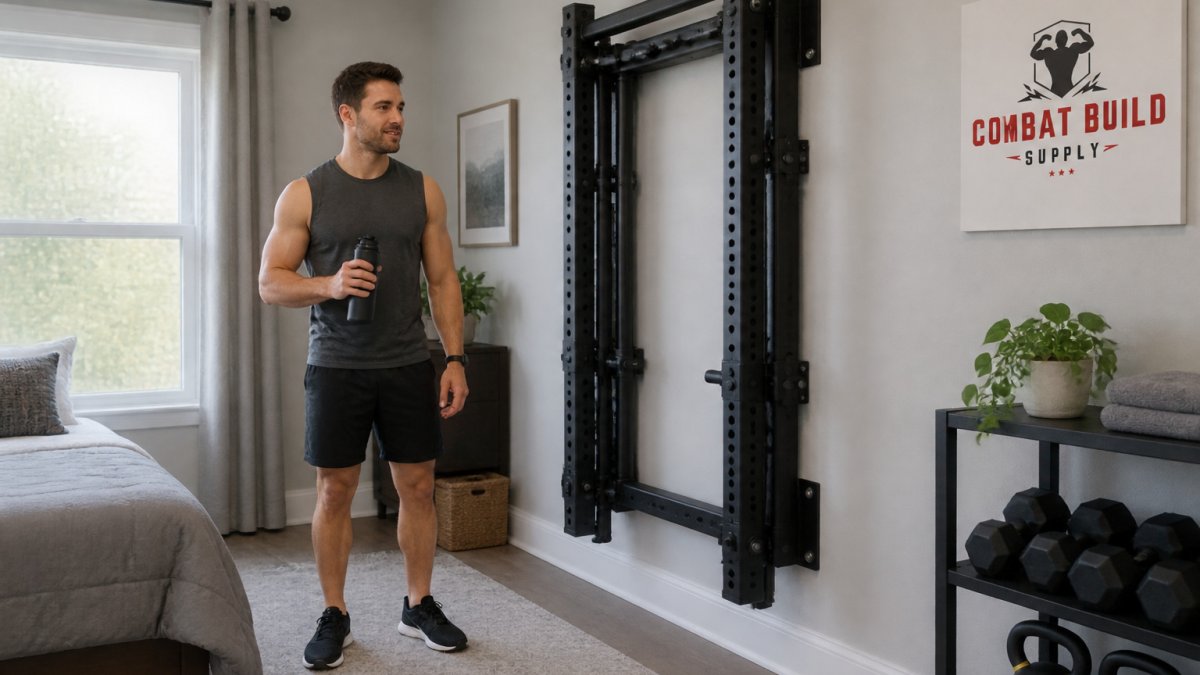
Compare that with a fixed rack that never leaves its spot. Limited space rewards equipment you can fold, stack or mount. This is also where the best home gym equipment for limited space separates itself: you measure the folded depth, not just the expanded one.
Use this quick check before you buy:
| Equipment | Folded or Storage Note | Starting Price |
|---|---|---|
| Major Fitness F35 | 22" deep when folded | $949.99 |
| Major Fitness F22 | Fixed station | $929.99 |
| Body Solid GDCC210 | Fixed station | $1,875.00 |
| Troy VTX Rubber Dumbbells with Rack | Stores up to 10 pairs | $1,645.00 |
Starting Price
Cost of Ownership: Buying Once Versus Building Over Time
A modular system lets you spread spending across months instead of paying for everything at once. Start with a foldable cage at $639.99 for the two-post model or $1,099.99 for the four-post, then add a Wall-Mount Storage Panel at $299.99 when clutter appears. That staged approach is the headline benefit, but the real comparison is total cost of ownership over several years, not the sticker price on day one.
Build a simple five-year cost model before you buy. Add four lines: purchase price, accessories and attachments, maintenance and replacement parts, and any subscription or app fees.
Use the table below as a worksheet, not a quote. Fill in current prices from the manufacturer before you commit.
| Cost Line | What to Record | Why It Matters |
|---|---|---|
| Purchase price | Rack or trainer base price | Sets your entry point |
| Attachments | J-hooks, landmine, cable handles, weight stack | Often 20-40% of total spend over time |
| Maintenance | Cable, pulley, bushing and bearing replacement | Recurring cost that scales with use |
| Subscriptions | App or programming fees | Can exceed equipment cost over five years |
| Replacement parts | Upholstery, pads, hardware | Availability matters more than price |
Long-term value depends on durability and warranty. Read warranty terms before you compare prices, because a cheaper unit with a one-year warranty can cost more over time. Confirm that cables, pulleys and bushings are available and priced before you buy.
Modular gear can consolidate those costs into one frame you can reconfigure. Accessories add up, so price the full configuration you actually want, not just the base unit.
Watch out: buying a rack without checking attachment compatibility can strand money. The Roc cages use true 3" x 3" tubing with 5/8" holes, so only compatible Hydra or non-B.o.S. attachments will fit. Confirm the attachment ecosystem and replacement-part availability before you commit, because an orphaned frame with no compatible add-ons is the most expensive outcome in this category.
Full-Body Training Coverage and Progressive Overload
A modular setup earns its place when it supports full-body training that you can progress over time. Garage Gym Reviews describes the ability to deliver a full-body workout across different modalities as a key feature of a home gym machine (Garage Gym Reviews home gym machine guide). The practical question is whether the system's resistance range and adjustment increments match your next year of training.
Progressive overload requires adding load gradually. Cable stations do this well: the Major Fitness Weight Stack Set adds up to 170 lbs of pin-select resistance, so you change weight in seconds rather than loading plates between sets. Check the step size of any pin-select stack before you buy, since a large jump between weights can slow progress on small-muscle movements like lateral raises or curls.
The BodyKore MX1169 adjusts from -20 to 80 degrees for flat, incline and decline work, and it supports leg extension and preacher curl attachments. Bench angle range matters because it determines which pressing and rowing variations you can train; a bench with few angles will eventually cap your progression.
Map your main lifts to the equipment before you buy:
- Squats and presses: need a rack with adjustable J-hooks and safety arms at the right height.
- Cable work: needs a pulley system with a resistance range that covers your current and target loads.
- Pulls and rows: need a landmine, high pulley, or compatible attachment points.
- Accessory work: needs bench angles and attachments for curls, extensions and rear-delt work.
Limits matter too. A rack without cable work or a bench with few angles can restrict the exercises you can progress through. Check that the frame accepts the attachments you need, and that the resistance range covers your loads.
Pick the system that covers the movements you need for the next year, not just today. If you are near the top of a stack's range on your main lifts, plan for a plate-loaded upgrade path rather than assuming the stack will scale with you. A common pattern is to buy for the next 12 to 24 months of progress and confirm that the frame accepts the attachments and load you will need next.
All-in-One Versus Separate Machines: Where Each Wins
All-in-one stations save floor space and setup time. The Major Fitness F22 ships with sandwich J-hooks, safety arms, dip bars, a foot pedal, a landmine and cable handles, so you can train the day it arrives.
Separate machines win on specialization and upgrade paths. Pair a Roc cage with a standalone bench and a dumbbell rack when you want to replace one component without rebuilding everything. The Roc cages are compatible with Hydra rack attachments, so you can expand later.
Choose all-in-one when the room is tight and you want one unit. Choose separate components when you already own some gear or plan to add a larger rack later.
Setup, Stability, and Room Requirements
Setup affects how safe and stable a modular system feels in use. Check ceiling height and floor space before ordering. Confirm that your room and floor can handle the GDCC200's dimensions and weight before you order.
Anchor wall-mounted equipment according to the manufacturer's instructions. The Roc cage uses wall mount hinges and wall connectors, while the F35 folds against a wall and requires a stable mounting surface.
Assembly time varies. The Troy rack requires assembly before use.
Choosing a Workout Machine for Home That Fits Your Routine
Start with the movements you do most. Martial arts practitioners and strength trainers usually need squats, presses, pulls and cable work, which points toward a rack or functional trainer. Casual lifters may do better with a bench and dumbbells.
Match the machine to your space, budget and training goals. A compact functional trainer like the GDCC210 suits a small room that needs cable versatility. A foldable cage suits someone who wants a full rack but cannot leave it up permanently.
Browse the full Combat Build Supply catalog to compare rack, trainer and dumbbell options side by side.
Ready to build your setup? Combat Build Supply carries foldable racks, all-in-one stations, functional trainers and storage that fit small training spaces. Get started with the setup that matches your room and training plan.
Frequently Asked Questions
Is modular home gym equipment worth buying?
For most people with limited room or a budget that grows over time, yes. A modular setup such as the Roc Foldable 2 Post Cage ($639.99) or Roc Foldable 4 Post Cage ($1,099.99) lets you start with a basic frame and add Hydra-compatible attachments later instead of replacing the whole rack. The tradeoff is that you must confirm attachment compatibility before buying, because the 3" x 3" tubing with 5/8" holes only accepts parts made for those specs. If you rarely train at home or have a fixed, dedicated room, a single fixed rack may be simpler.
How does modular gym equipment save space?
Modular equipment saves space in two ways: it folds or mounts flat when not in use, and it combines several functions in one footprint. The Major Fitness F35 folds to 22 inches deep against the wall, compared with a 56.3-inch half-expanded depth, so the floor opens back up between sessions. Check the rack width, depth and ceiling height against your room before ordering, and allow clearance for the wall-mount hinges and the movement of any cable system.
Can modular home gym equipment support a full-body workout?
Yes, when the setup includes a rack, cable system and bench or attachments. The Body Solid GDCC200 Functional Training Center ($1,875.00) offers dual independent weight stacks and multiple planes of motion, which supports a wide range of upper-body, lower-body and core exercises. A power rack with a landmine and cable handles, such as the Major Fitness F22 ($929.99), covers squats, presses, rows and pulldowns. Pair either with a flat, incline and decline bench for the widest coverage.
What should I look for when choosing modular home gym equipment?
Start with your room: measure ceiling height, floor space and how far the unit extends when in use. Then check whether the attachments you want are included or sold separately, and confirm they match the upright size. Look at load capacity and rack weight to judge stability; the F22 lists a 277.8 lb rack weight, which helps it stay planted under heavy loads. Finally, review the warranty, since coverage on frames and cables varies by product.


