

How to Improve Martial Arts Speed at Home: Drills and Conditioning
Last Updated: November 6, 2026
Quick Summary
Improve martial arts speed at home by training its three parts separately: movement speed, reaction time, and transition speed. Run short, sharp drills three to four times per week after an 8-to-10-minute warm-up, keeping total speed work under 25 minutes per session.
- Warm up for 8 to 10 minutes before every speed session so cold muscles don't fire slowly.
- Shadowboxing sprints start at 6 rounds of 15 seconds on, 45 seconds off.
- Keep speed rounds light and fast, and train power in separate heavy sessions.
- Space hard speed sessions at least 48 hours apart and sleep 7 to 9 hours on training nights.
- Retest your baseline every four weeks under identical conditions to track progress.
Table of Contents
- Why Martial Arts Speed Is Built, Not Born
- What You Need Before Your First Speed Session
- Martial Arts Speed Training Drills for Solo Athletes
- How to Punch Faster: Mechanics Before Muscle
- Martial Arts Reaction Time Exercises You Can Do Alone
- Martial Arts Conditioning at Home: The Supporting Work
- Measuring Progress and Staying Safe Without a Partner
- Building Your Home Speed Station with Combat Build Supply
- Frequently Asked Questions
Why Martial Arts Speed Is Built, Not Born
Speed in martial arts is a trained quality, not a genetic gift. Hand speed, foot speed, and reaction time all improve with the right drills, done consistently.
The science backs up the practical view. A systematic review on martial arts and children's fitness found that structured martial arts programs can improve physical fitness, though results varied across different fitness tests.
Here is the key point most home athletes miss. Speed is not one skill. It is three separate systems that need separate work.
The Three Parts of Speed You Can Train
Martial arts speed breaks down into three trainable parts:
- Movement speed: how fast your limbs travel through a technique
- Reaction time: how fast you respond to a cue
- Transition speed: how fast you chain one move into the next
Each responds to different drills. Punching a bag builds movement speed. A partner calling numbers builds reaction time. Shadowboxing combinations build transitions.
Train all three and you get faster everywhere. Train only one and you hit a ceiling fast.
What You Need Before Your First Speed Session
The best speed session starts with a warm body. Cold muscles move slowly and tear easily.
A good warm-up takes 8 to 10 minutes. It raises core temperature and wakes up the joints you are about to load: shoulders, hips, knees, and ankles.
Here is a simple sequence you can run before every session:
- 3 minutes of light skipping or jogging in place
- 10 arm circles each direction
- 10 hip circles each direction
Our team put together a full warm-up routine for combat athletes that pairs well with the speed work below. Run it first, then train.
One more thing before you start. Clear your space. Speed drills involve fast, wide movement. Check for furniture, low ceilings, and anything sharp within reach.
Martial Arts Speed Training Drills for Solo Athletes
Solo speed training works when drills are short and sharp. Long, sloppy sets teach slow movement; short, fast sets teach fast movement. The missing piece in most home routines is progression. Below is a four-week block you can run alone, three to four times per week, with concrete sets, reps, and rest.
Run each session after the 8-to-10-minute warm-up above. Keep total speed work under 25 minutes. Stop any set the moment form breaks.

The Four-Week Solo Speed Block
Week 1, Establish the baseline. Do each drill at moderate speed with full rest.
- Shadowboxing sprints: 6 rounds of 15 seconds on, 45 seconds off
- Speed bag work: 4 rounds of 30 seconds on, 30 seconds off
- Kick speed intervals: 3 sets of 8 fast kicks per leg, 45 seconds rest between sets
Week 2, Add volume. Keep the same speed and add one round or one set to each drill.
- Shadowboxing sprints: 8 rounds of 15 seconds on, 45 seconds off
- Speed bag work: 5 rounds of 30 seconds on, 30 seconds off
- Kick speed intervals: 4 sets of 8 fast kicks per leg, 40 seconds rest
Week 3, Shorten rest. Speed improves when you recover faster between bursts.
- Shadowboxing sprints: 8 rounds of 15 seconds on, 35 seconds off
- Speed bag work: 6 rounds of 30 seconds on, 25 seconds off
- Kick speed intervals: 4 sets of 10 fast kicks per leg, 35 seconds rest
Week 4, Test and deload. Repeat Week 1 volume but film one set of each drill.
Drill Execution Notes
1. Shadowboxing sprints. Box at full speed for 15 seconds, then rest 45 seconds.
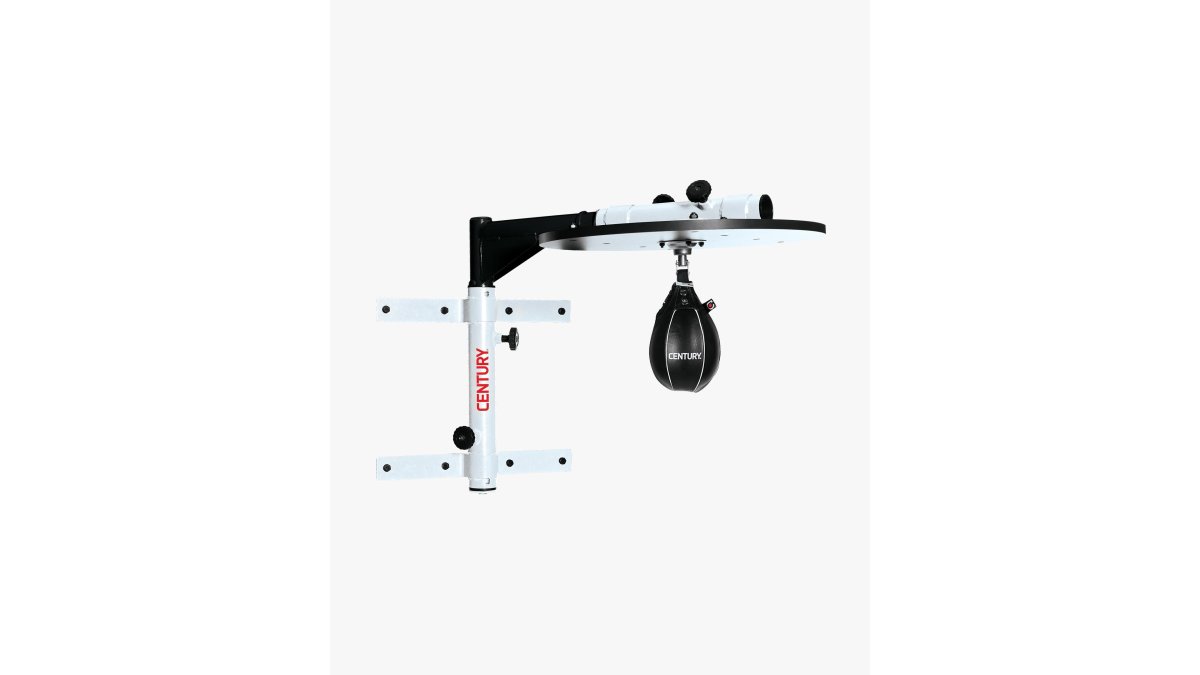
**2. The Fold Away Speed Bag Platform folds flush to the wall when done, which matters in a small space.
3. Kick speed intervals. Throw 10 fast kicks per leg, rest 30 seconds, repeat 5 times.
4. Footwork ladders. Use tape on the floor or a speed and agility ladder.
Want more solo work? Our kick drills for home training add variety to this rotation.
Watch out: Do not add speed work on top of a hard conditioning session the same day.
How to Punch Faster: Mechanics Before Muscle
Punch speed comes from mechanics, not arm strength. A tight, well-timed punch beats a strong, sloppy one every time.
Three mechanics decide how fast your punch lands:
- Relaxation. A tense arm moves slowly. Keep your shoulders loose until the moment of impact.
- Rotation. Power and speed both come from hips and torso, not the arm alone.
- Return. The fastest punchers snap the hand back as fast as they send it out.
A common mistake is tensing the whole arm from the start. That kills speed before the punch even launches.
To practice mechanics, use a heavy bag and focus on form, not force. The Panama 45D Heavy Punching Bag gives you a stable target that holds up to repeated speed work, with reinforced D rings and belt seams built for daily use.

The Punching Power and Speed Trade-Off
Here is the trade-off nobody tells you about. Training for maximum power can slow you down. Heavy, grinding bag work builds force but teaches slow, loaded movement.
Speed work and power work need separate sessions. Keep your speed rounds light and fast. Keep your power rounds heavy and deliberate. Mixing them in one set gives you the worst of both.
Martial Arts Reaction Time Exercises You Can Do Alone
Reaction time is the fastest quality to improve and the easiest to neglect. You can train it without a partner using simple cues.
Try these three drills:
- Number callouts. Have a training app or recording call out random numbers. Each number maps to a strike. React as fast as you can.
- Light drills. Set a timer to flash at random intervals. Throw your fastest strike the instant it flashes.
- Drop and catch. Drop a small ball and catch it before it bounces twice. It sounds simple. It trains hand-eye speed directly.
Do these for 5 to 10 minutes at the end of a session, while fresh but not fatigued. Reaction training works best when your nervous system is sharp.
Martial Arts Conditioning at Home: The Supporting Work
Speed needs a base. Conditioning builds that base, and it is where most home athletes cut corners.
The supporting work covers four areas:
- Strength: bodyweight squats, push-ups, and core work build the frame that speed travels through
- Cardiovascular endurance: roadwork or jump rope keeps your output high across rounds
- Flexibility and mobility: tight hips and shoulders slow every technique
The Trigon Sports Speed And Agility Kit covers the ladder and cone work that supports faster movement.

A 2015 study on martial arts training and cognitive performance noted that aerobic and resistance exercise can sharpen cognitive performance right after a session. That matters for reaction time.
Measuring Progress and Staying Safe Without a Partner
You cannot improve what you do not measure. Without a coach watching, you need simple tests to track progress and clear rules to keep speed work safe. This is where solo athletes either plateau or get hurt.
Build a Baseline First
Before Week 1 of the speed block, run every test below once and write down the numbers. That is your baseline. Retest every four weeks, on the same day, at the same time, after the same warm-up. Retesting under consistent conditions makes changes in timing easier to spot, and that same attention to controlled movement can carry into nunchaku practice with BlackBeltShop.
| Test | How to Run It | What It Tells You |
|---|---|---|
| 10-punch speed | Time 10 fast punches on the bag from guard | Hand speed and return speed |
| 10-kick speed | Time 10 fast kicks per leg from guard | Leg speed and re-chamber speed |
| Reaction drill score | Count clean reactions in 30 seconds using number callouts | Reaction time |
| Shadowbox round | Film one 2-minute round and review it | Technique, transitions, and guard discipline |
| Recovery check | Note how you feel 24 hours after a hard speed session | Nervous-system recovery |
How to Read Your Results
Progress is best judged against your own baseline, measured under identical conditions each time. If times do not move, check three things before adding volume: sleep, rest between speed sessions, and whether you train speed while fatigued.
The film test matters as much as the stopwatch. A faster punch with a dropped guard is not progress in a martial arts context.
Safety Rules for Solo Speed Work
Speed work loads the nervous system hard. Follow these rules to keep it productive:
- Warm up for 8 to 10 minutes before every session. Cold muscles move slowly and tear easily.
- Clear your space before you start. Speed drills involve fast, wide movement, so check for furniture, low ceilings, and anything sharp within reach.
- Stop a set the moment form breaks. Tired muscles lose control, and sloppy fast reps teach bad habits and raise injury risk.
Watch out: Do not train speed through joint pain. Speed drills are high-velocity, and pushing through sharp pain in a shoulder, hip, or knee turns a minor issue into a weeks-long setback. Swap to a pain-free drill and reassess after 48 hours.
Adapting the Plan to Your Space and Ability
Not every home setup allows every drill. If space is limited, replace footwork ladders with tape patterns in a hallway and kick intervals with slow chamber-and-return reps. If returning from injury, start at Week 1 volume and hold it for two weeks before progressing. If you have a partner, add a reaction drill where they call numbers or flash a light, which trains reaction time faster than any solo cue.
Building Your Home Speed Station with Combat Build Supply
A home speed station does not need much space.
Start with the essentials:
- A wall-mounted bag or platform for hand speed work
- A matted area for footwork and shadowboxing
- A clear wall for the fold-away platform if space is tight
Combat Build Supply offers free shipping with every order and a 100% refund for defective or non-functioning items.
Speed is a skill you build session by session. Get the gear right, train the three parts of speed, and measure the results.
The challenge is simple: most home athletes train hard but never train speed directly.
Frequently Asked Questions
How often should I train martial arts speed at home?
Two to three focused speed sessions per week is a workable starting point for most home athletes. Keep them short, around 20 to 30 minutes, and place them on days when you are not already drained from skill work. Speed work depends on a fresh nervous system, so quality reps matter more than volume. If your punch speed or reaction time starts dropping within a session, stop the drill rather than grinding through sloppy reps. Build in at least one full rest day between hard speed sessions.
Can shadowboxing make you faster?
Yes, when it is done with intent. Shadowboxing lets you rehearse clean mechanics, snap your punches back to guard, and chain combinations without the resistance of a bag. To get a speed benefit, treat it as a drill rather than a warm-up: pick two or three combinations, throw them at full speed for 20 to 30 seconds, then rest. Filming a round on your phone helps you spot dropped hands or slow retractions that you cannot feel in the moment.
Does strength training help martial arts speed?
It can, provided the strength work supports your technique instead of replacing it. In practice, keep strength sessions to two per week and prioritize movements that mirror your sport: squats, hinges, pulls, and core work. Heavy lifting leaves you slow and sore for a day or two, so schedule it away from your fastest skill sessions.
What equipment do I need for martial arts training at home?
You can start with almost nothing: floor space, a timer, and a phone to film your rounds. As you progress, a wall-mounted bag adds a target for accuracy and combination work without eating floor space. The Uppercut Fixed Wall Punching Bag, $375.00, uses a heavy-duty steel wall mount and needs no ceiling hooks. A fold-away speed bag platform, $143.99, gives you a compact option for timing and rhythm work, with the speed bag sold separately.


