

How to Choose Durable Martial Arts Gear: 2026 Guide
Table of Contents
- Step 1: Identify the Materials That Define Durable Martial Arts Gear
- Martial Arts Gear Material Comparison: What Holds Up Under Pressure
- Step 2: Inspect Stitching, Padding, and Construction Quality
- Step 3: Match Gear Weight and Fit to Your Training Intensity
- Step 4: Choose the Best Martial Arts Gear for Beginners vs. Advanced Athletes
- How to Maintain Martial Arts Equipment for Long-Term Durability
- Step 5: Set a Realistic Budget Without Sacrificing Durability
- Frequently Asked Questions
Last Updated: September 18, 2026
Step 1: Identify the Materials That Define Durable Martial Arts Gear
Durable martial arts gear resists abrasion, holds its shape under repeated impact, and survives frequent washing. Too many practitioners replace cheap gloves and gis every few months because they skipped this step: choosing durable martial arts gear starts with reading the label, not the price tag.
Cotton vs. Synthetic Blends: What Lasts Through Heavy Training
Cotton gis breathe well but shrink and thin over time; a tight weave slows that wear. Polyester-cotton blends hold their shape longer and dry faster, which matters if you train daily. For high-intensity training, a mid-weight cotton-poly blend outlasts pure cotton by a wide margin, though synthetics can pill and hold odor if you don't wash them promptly.
Martial Arts Gear Material Comparison: What Holds Up Under Pressure
Choosing a material means matching it to your training intensity and wash frequency. Most guides stop at "leather is durable, vinyl is not", useless when a product page says "synthetic leather" without specifying PU, PVC, or bonded microfiber. That difference decides whether a glove lasts two years or two months.
| Material | Abrasion Resistance | Breathability | Sweat Resistance | Care Needs | Best For |
|---|---|---|---|---|---|
| Cotton (tight weave) | Moderate | High | Low (holds odor) | Frequent washing, air dry | Traditional gi training |
| Cotton-poly blend | High | Moderate | Moderate | Machine wash, low heat | Daily heavy training |
| Genuine leather (full-grain) | High | Low | High (with conditioning) | Conditioning, air dry | Boxing gloves, sparring |
| PU (polyurethane) synthetic leather | Moderate | Low | Moderate | Wipe clean, avoid heat | Entry-level gloves, pads |
| PVC (vinyl) | Low | Low | Low | Wipe clean | Occasional light use |
| Heavy-duty nylon (e.g., 1000D Cordura) | High | Moderate | High | Machine wash | Bags, straps, padding covers |
Genuine Leather vs. PU vs. PVC: What the Label Doesn't Tell You
The three materials sold as "leather" behave nothing alike and fail differently.
Heavy-Duty Nylon and Denier: The Structural Workhorse
Nylon doesn't absorb impact, but it's the best abrasion shield for the foam underneath. The spec that matters is denier, the linear mass density of the yarn. A 210D nylon bag cover scuffs through on a rough floor, while 1000D nylon (Cordura-style) resists tearing and shrugs off sweat and mat contact. For gear that gets dragged and stepped on, look for 600D-1000D denier on bag covers, straps, and padding shells.
Matching Material to Contact Surface
When weighing how to choose durable martial arts gear for striking, the rule is simple: put the material that recovers from impact on the contact surface and the abrasion-resistant material on structural parts. Genuine leather on the knuckle and striking face, heavy-duty nylon on straps, bag shells, and pad covers. PU is acceptable on shin guards and low-contact pads; PVC belongs on nothing you hit hard.
Step 2: Inspect Stitching, Padding, and Construction Quality
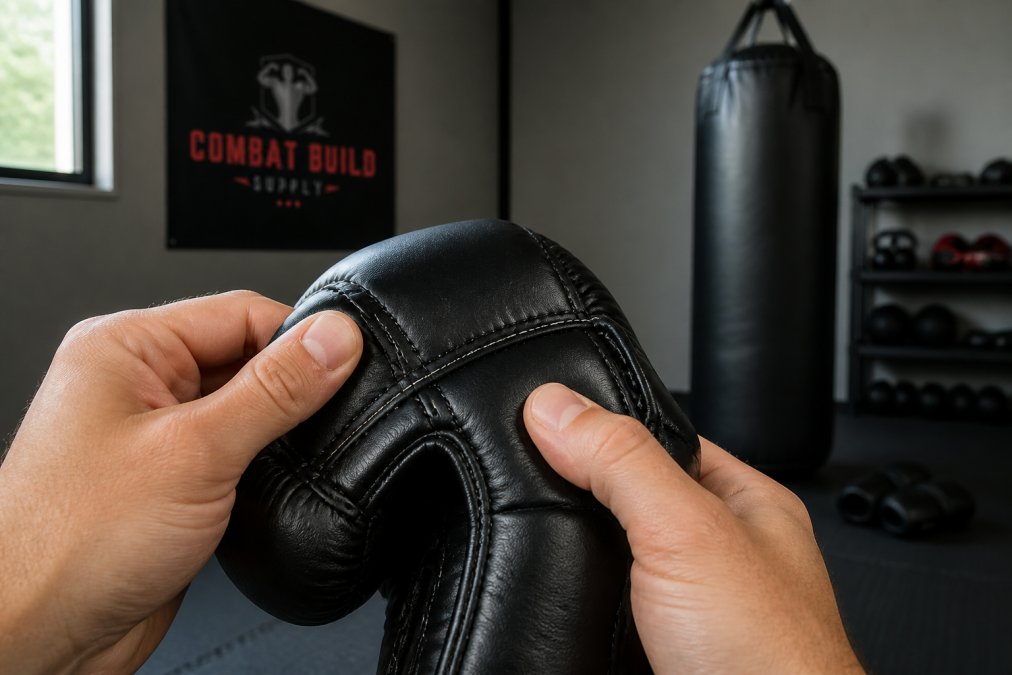
Reinforced stitching is the single best predictor of how long gear lasts. Run your thumb along every seam: double-stitched or bar-tacked seams at stress points hold up, single stitching pulls apart. Check the wrist closure, thumb attachment, and strap anchors, which take the most force.
Step 3: Match Gear Weight and Fit to Your Training Intensity
Uniform weight and padding thickness should track your training intensity, not your ego. A heavier gi (measured in oz rating) lasts longer under daily grappling but slows you down and traps heat; lightweight gis suit hot gyms and beginners but wear faster at the knees and shoulders.
Step 4: Choose the Best Martial Arts Gear for Beginners vs. Advanced Athletes
The best martial arts gear for beginners prioritizes fit, easy care, and moderate weight, you don't need competition-grade leather to learn footwork. Start with a cotton-poly gi, mid-weight gloves, and basic hand wraps, then upgrade once you know your discipline and train consistently.
How to Maintain Martial Arts Equipment for Long-Term Durability
How to maintain martial arts equipment comes down to controlling three things that destroy gear: moisture, heat, and time. Every habit below targets one of them.
Why Sweat Is the Real Enemy
Sweat isn't just water, it carries salts, urea, and lactic acid, and it's slightly acidic. On fabric it feeds bacteria that produce odor compounds you can't wash out once they've set. On leather it draws out natural oils, leaving fibers stiff and prone to cracking. Inside a glove it soaks into the foam and breaks down the cell structure, which is why a glove can look fine outside while the padding has gone flat.
Wash Protocols That Don't Shorten Lifespan
Heat kills fabric gear, not water. Hot wash cycles and machine drying break down elastic waistbands, shrink cotton, and degrade synthetic fibers. The protocol that preserves durability:
- Cold water only (below 86°F / 30°C). Warm or hot water accelerates shrinkage and elastic fatigue.
- Gentle or delicate cycle to reduce mechanical abrasion on seams and patches.
- Mild detergent, no bleach, no fabric softener. Softener coats fibers and traps odor; bleach weakens cotton and nylon.
- Air dry, flat or hanging. Never tumble dry. If you must use a dryer on a low-heat setting for a gi, expect measurable shrinkage on the first few cycles.
- Turn gis inside out before washing so the outer weave takes less abrasion.
Leather Conditioning: Frequency and Method
Condition leather once a month under normal training, and more often in dry climates or with daily training. Use a leather-specific conditioner or neutral balm, not petroleum jelly, which clogs pores and traps dirt. Apply a thin layer with a cloth, let it absorb a few minutes, then buff off the excess. Over-conditioning softens leather until it stretches out of shape, so a little regularly beats a lot occasionally.
Storage That Prevents Rot and Mold
Store gear in a ventilated spot, a mesh bag, open shelf, or hook, never a sealed plastic bin or zipped gym bag, since trapped moisture starts mold on fabric and rots stitching. In humid climates, add a small silica gel pack to the gear bag, and keep leather out of direct sunlight, which dries and fades it.
Signs of Wear and Tear: When Gear Is No Longer Safe
Durability also means knowing when a piece has crossed from worn to dangerous. Replace gear when you see any of these:
-
Foam that no longer springs back. Squeeze the padding; if it stays compressed or feels crunchy, it has lost its impact absorption. This is the most common hidden failure in gloves and headgear.
-
Cracked or split leather at flex points (thumb crease, wrist cuff). Once the surface splits, the padding is exposed and the glove is done.
-
Delaminating PU, coating peeling away from the fabric backing.
-
Frayed or pulled stitching at stress points: wrist closure, thumb attachment, strap anchors.
-
Hook-and-loop straps that no longer hold after the hook side loses its grip. A strap that slips mid-round is a safety issue, not a cosmetic one.
-
Compressed or crumbling foam in headgear, shin guards, or chest protectors, visible as flat spots or a powdery residue.
-
Frayed bag straps or mounting hardware showing cracks or rust at the weld points.
-
Wipe down leather gloves and pads after every session
-
Condition leather once a month
-
Wash fabric gear in cold water, air dry only
-
Inspect seams and straps weekly for early wear
-
Squeeze-test foam padding monthly for compression
-
Store gear in a ventilated spot, never a sealed bag
Step 5: Set a Realistic Budget Without Sacrificing Durability
Spending more doesn't guarantee durability, but spending less almost always costs more over time. Cheap vinyl gloves get replaced two or three times a year; a well-made leather pair lasts years with basic care. Spend on the pieces that take the most abuse (gloves, bag, straps) and save on the ones that don't (basic wraps, light apparel).
Frequently Asked Questions
What are the signs of low-quality martial arts equipment?
Watch for single-stitched seams that unravel after a few sessions, padding that compresses flat within weeks, and synthetic materials that crack or peel. Low-quality gear often uses thin vinyl instead of genuine leather, lacks reinforced stitching at stress points, and has inconsistent padding density. If a product listing does not mention material specs or construction details, that is a red flag. Durable martial arts gear always names its materials and explains how it is built.
How often should you replace your martial arts sparring gear?
Replacement depends on training frequency and gear type. Gloves used four to five times weekly typically last 12 to 18 months before foam breaks down. Shin guards and headgear may last two to three years with proper care. Check for cracked leather, exposed foam, loose stitching, or flattened padding. Once impact absorption drops, the gear no longer protects you properly. Rotating between two pairs of gloves and storing them in a ventilated bag extends usable life significantly.
Does the weight of a gi affect its durability?
Yes. Heavier gi weaves, typically 14 oz to 16 oz for adults, use denser cotton that resists tearing better than lighter 8 oz to 10 oz options. The trade-off is breathability and drying time. A 16 oz gi absorbs more sweat and takes longer to dry, but it holds up to grip-heavy disciplines like judo and Brazilian jiu-jitsu. Lighter gi suit hot climates or competition where speed matters. Match the oz rating to your discipline and training intensity, not just personal preference.
What should beginners look for when buying their first set of gear?
Start with mid-weight options that balance cost and durability. For gi-based arts, a 12 oz to 14 oz cotton gi works for most beginners. For striking, choose 12 oz to 16 oz gloves with genuine leather or quality synthetic shells and hook and loop closure for easy on-and-off. Prioritize reinforced stitching and moisture-wicking liners. Avoid the cheapest options, which often fail within months, and skip top-tier competition gear until your training habits stabilize.


