

Is Commercial Grade Home Gym Equipment Worth It?
Table of Contents
- Commercial Grade Home Gym Equipment: The Core Difference
- Commercial vs Residential Gym Equipment: What Separates Them
- Long-Term Cost Analysis: Upfront Investment vs. Equipment Longevity
- Space Requirements and Footprint Considerations
- Home Gym Equipment Maintenance Tips and Durability Reality
- Used Commercial Gym Equipment for Sale: Sourcing and Value
- Is the Investment Worth It for Your Training Goals?
- Frequently Asked Questions
Last Updated: September 3, 2026
Commercial Grade Home Gym Equipment: The Core Difference
When you're deciding whether to invest in commercial grade home gym equipment, you're really asking whether the extra durability, warranty coverage, and structural integrity justify the upfront cost. The distinction between commercial-grade and residential-grade equipment runs deeper than marketing labels. Commercial equipment is engineered for high-frequency use, think 8+ hours daily in a gym setting, while residential gear assumes 1-2 hours of use per day in a home environment (issa.org).
The difference matters because commercial machines use heavier gauge steel, sealed bearing systems, and industrial-grade cables designed to withstand thousands of repetitions without calibration drift or cable fraying. Residential equipment, by contrast, uses lighter materials and simplified mechanisms that perform fine for casual users but can show wear after intense, consistent training.
At Combat Build Supply, we work with serious athletes and fitness enthusiasts who need equipment that won't fail during critical training sessions. The question isn't just about durability, it's about whether you're building a training asset that holds value or buying something you'll replace in 3-5 years.
Commercial vs Residential Gym Equipment: What Separates Them
The separation between commercial and residential equipment comes down to four technical factors: frame construction, weight stack design, cable systems, and warranty depth. Commercial machines feature 11-gauge or heavier steel tubing, while residential versions often use 14-gauge or thinner. That difference in material thickness translates to dramatically different structural integrity under load.
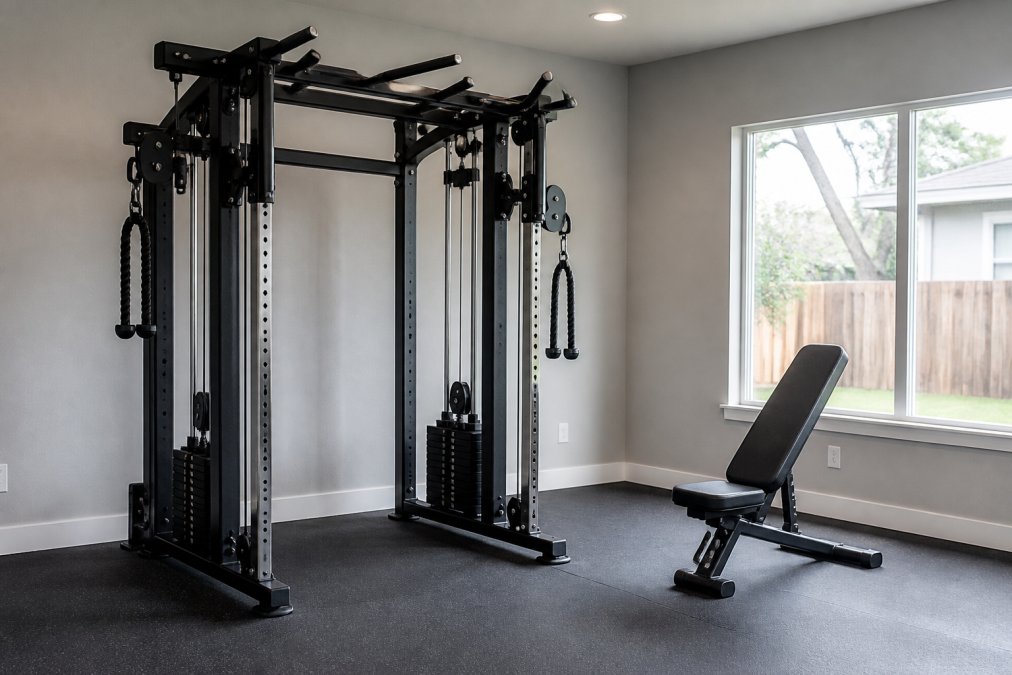
Weight stacks in commercial equipment use precision-machined plates with sealed bearing systems. This means the resistance stays consistent across thousands of reps, no grinding, no resistance drift. Residential stacks use simpler designs where the plates may shift slightly over time, affecting the smoothness of each rep.
Cable systems tell a similar story. Commercial cables are aircraft-grade steel with industrial-grade nylon sleeves, rated for 50,000+ cycles before replacement (astm.org). Home-grade cables use standard vinyl coating that degrades faster under high-intensity use. A serious strength athlete doing heavy compound movements can wear through residential cables in 18-24 months.
Warranty coverage reflects this reality. Commercial equipment typically carries lifetime warranties on frames and 3-10 year warranties on components (the FTC). Residential warranties usually max out at 1-3 years on the frame and 1 year on cables and upholstery. The warranty difference isn't just a marketing point, it's the manufacturer's confidence statement about how long the equipment will actually last.
The Body Solid GDCC250B Cable Crossover Machine exemplifies this distinction. With its 11-gauge steel frame, dual independent carriages, and 19 height adjustments, it's built for the kind of training intensity that would break down lighter residential equipment. The lifetime frame warranty and 3-year component coverage reflect commercial-grade engineering at a price point that's accessible for serious home gyms.

Long-Term Cost Analysis: Upfront Investment vs. Equipment Longevity
The real math on commercial grade home gym equipment starts with understanding total cost of ownership, not just the sticker price. A commercial-grade cable crossover runs 2,770 to 4,950 depending on the model. A basic residential equivalent might cost 800 to 1,200. That's a difference of roughly 2,000 to 3,750 upfront.

But here's where the calculation changes: equipment longevity. Commercial gear holds up for 10-15 years of heavy use. Residential equipment typically lasts 4-6 years before major components start failing, cables snap, pulleys wear, uprights develop wobble. Once repairs become necessary, you're looking at 200 to 600 per component replacement, and by year 5-6, you're often better off buying new than fixing old.
Let's work through the actual numbers. If you buy a 1,000 residential cable machine and it lasts 5 years, that's 200 per year in equipment cost. Add in cable replacement at year 3 (roughly 300) and pulley bearing replacement at year 4 (roughly 250), and your real annual cost climbs to roughly 270 per year over that 5-year window.
A commercial machine at 3,000 that lasts 12 years costs 250 per year in equipment expense. Add one cable replacement at year 7 (300) and you're still at roughly 275 per year. The upfront premium gets absorbed when you factor in the years the equipment actually remains functional.
This doesn't account for the intangible cost of downtime. If your home gym equipment breaks mid-training cycle, you lose training consistency. For competitive athletes or serious practitioners, that consistency gap can cost months of progress. Commercial equipment's reliability means you're training, not troubleshooting.
The used equipment market also favors commercial gear. A 5-year-old commercial cable crossover still has 8-10 years of useful life remaining and typically resells for 50-60% of original cost. Residential equipment of the same age has questionable resale value because the next buyer inherits the same durability concerns.
Space Requirements and Footprint Considerations
Commercial cable crossover machines occupy significant floor space, typically 12-16 feet wide and 7-8 feet tall. That's a major footprint consideration for home gym setups. Many people assume this makes commercial equipment impractical for residential spaces, but the space-efficiency calculation is more nuanced.
A commercial machine handles 50+ different exercises in a single footprint. A residential setup that delivers comparable training versatility often requires 3-4 separate pieces of equipment. You might need a cable station, a dumbbell rack, an adjustable bench, and a pull-up bar. That distributed equipment footprint often exceeds the space required for one comprehensive commercial machine.
The Body Solid GFT100 Functional Trainer illustrates this principle. At roughly 45 inches wide and 64 inches deep, it's compact for commercial equipment. It delivers upper body pressing, pulling, rotational, and lower body exercises, movements that would otherwise require separate machines. For a small dedicated training space (8x10 feet), a single functional trainer often makes more sense than scattered residential equipment.
Ceiling height matters. Commercial equipment typically requires 8-9 feet of clearance for full range of motion on overhead movements. Basement or garage spaces with 7-foot ceilings create constraints. However, cable machines allow you to modify range of motion by adjusting pin positions, so you can still train effectively in tighter spaces, you're just limiting your movement slightly.
Weight and floor loading is another practical consideration. Commercial machines weigh 500-800 pounds. Residential concrete basement floors handle this fine. Upper-floor setups require structural assessment. Most residential upper floors can support concentrated loads of 500+ pounds, but you should verify with a structural engineer if you're unsure. The equipment's footprint also matters, weight distributed across a larger base applies less pressure per square foot than a smaller, lighter machine.
Home Gym Equipment Maintenance Tips and Durability Reality
Commercial equipment requires more maintenance than residential gear, but that maintenance is straightforward and inexpensive when you stay on schedule. The maintenance difference is one reason people sometimes choose residential equipment, but it's also why commercial gear lasts longer.
Cable machines need quarterly cable inspection. Look for fraying, kinks, or visible wear. Commercial cables last 5-7 years under heavy use; residential cables typically last 2-3 years. Replacement cables cost 150 to 400 depending on the machine. That's manageable if you're prepared for it, shocking if you're not.
Pulley bearings need annual lubrication with light machine oil. Spend 15 minutes applying oil to bearing points, and your pulleys stay smooth and quiet for years. Skip this, and you'll hear grinding and notice resistance inconsistency within 18 months. This is the single most important maintenance task, and it costs nothing.
Weight stack plates and guide rods need monthly cleaning. Dust accumulation causes friction and can damage the guide rod finish. A dry cloth and occasional light machine oil keep everything running smoothly. This is especially important in basement environments where humidity is higher.
Frame inspection should happen quarterly. Look for cracks in welds, rust development on unpainted steel, or loose bolts. Commercial equipment uses powder-coat finishes that resist rust better than residential paint, but they're not immune. If you spot rust, sand the area lightly and touch up with metal paint.
The durability reality is this: commercial equipment actually requires LESS total maintenance than residential equipment because its components are more strong. A commercial cable might need lubrication and inspection, but it won't fray. A residential cable will fray regardless of maintenance, and you'll replace it sooner.
Most commercial machines come with detailed maintenance schedules in their owner's manuals. The Body Solid GDCC250B, for example, includes a comprehensive maintenance guide specifying lubrication intervals and inspection points. Follow the schedule, and you're looking at roughly 30-45 minutes of maintenance per month, most of it just cleaning and light oiling.
Used Commercial Gym Equipment for Sale: Sourcing and Value
The used commercial equipment market is where the cost-benefit analysis of commercial gear becomes most obvious. Used commercial machines typically cost 40-60% of new retail price and still have 8-12 years of useful life remaining. That's a compelling value proposition for home gym builders with budget constraints.
Where to source used equipment matters. Liquidation sales from closing gyms offer the best prices but require transportation and immediate purchase decisions. Facebook Marketplace and Craigslist listings from gym closures or relocations are common. Equipment rental companies sometimes sell off machines after 5-7 years of commercial use, these machines are typically well-maintained because rental operations depend on equipment reliability.
Inspection protocol is critical when buying used commercial equipment. Check for cable fraying, pulley noise, and frame cracks. Test the weight stack movement, it should be smooth and consistent across the full range. Look at the upholstery condition; replacement padding costs 200-400 per machine. Ask for maintenance records if available; equipment that's been properly maintained is worth more than cheap machines that were neglected.
The resale value advantage of commercial equipment shows up clearly here. A 7-year-old commercial cable crossover that originally cost 3,500 typically sells for 1,800-2,200 on the used market. That same machine still has 5-8 years of useful life. A 7-year-old residential machine that originally cost 1,200 might only fetch 200-400 used because buyers know they're buying a machine near the end of its lifespan.
Used equipment sourcing also gives you access to premium brands. A used BodyKore or TKO machine, which might cost 4,000-6,000 new, often appears on the used market at 2,000-3,000. That's commercial-grade equipment at mid-tier pricing. This is particularly valuable if you're building a complete home gym, mixing new and used commercial pieces lets you create a comprehensive training space within a realistic budget.

Is the Investment Worth It for Your Training Goals?
Whether commercial grade home gym equipment is worth the investment depends on four specific factors: training intensity, training frequency, equipment longevity goals, and available space.
If you're training 5-6 days per week with heavy compound movements, commercial equipment is worth the investment. Your training volume will wear out residential equipment in 3-4 years. Commercial equipment handles this load for 10-15 years. The cost difference pays for itself.
If you're training 2-3 days per week with moderate intensity, residential equipment might be sufficient. Your lower training volume means residential gear will likely last 6-8 years before major failures. The upfront cost savings might justify accepting earlier replacement cycles.
If you're a competitive athlete or serious martial artist using the home gym for supplemental strength training, commercial equipment is essential. Your training intensity and consistency demand equipment that won't fail during critical sessions. The psychological confidence that your equipment will perform matters more than the dollar difference.
If you have limited space and need equipment to deliver multiple training modalities, commercial machines are the clear choice. One commercial cable crossover or functional trainer replaces 3-4 residential pieces. The space efficiency alone justifies the investment for small home gyms.
The Body Solid Pro Clubline SCC1200G Cable Crossover Machine exemplifies the commercial investment case. At 4,275, it's a significant purchase. But with its 180-degree pivoting pulleys, 12 horizontal positions, and lifetime frame warranty, it delivers 12+ years of versatile training capacity. For serious athletes building a permanent home training space, this machine becomes an asset, not an expense.
For most serious practitioners, the answer is yes, commercial grade home gym equipment is worth the investment. You're not just buying durability; you're buying training consistency, equipment reliability, and the confidence that your setup will support your goals for a decade or more. That's worth the upfront premium.
Building a home gym that actually supports your long-term training goals requires equipment that won't compromise your sessions when you need it most. Combat Build Supply specializes in commercial-grade machines like the Body Solid GDCC250B Cable Crossover and the TKO Strength Leg Press that deliver the durability and performance serious athletes demand. Our equipment comes with comprehensive warranties, responsive customer support, and free shipping on every order. Whether you're setting up your first home gym or upgrading from residential equipment, we help you choose machines built to last. Sign Up Now to explore our full selection of commercial-grade equipment and get expert guidance on building your training space.
Frequently Asked Questions
How long does commercial-grade equipment last compared to residential models?
Commercial-grade equipment typically lasts 10-15+ years with proper maintenance, while residential models often fail after 3-5 years of heavy use. The difference comes down to structural integrity: commercial frames use heavier gauge steel (11-gauge or thicker), sealed bearings, and components rated for thousands of repetitions. A cable crossover machine like the Body Solid GDCC250B features a lifetime warranty on frame and welds, with 3-year coverage on pulleys and bearings, protection you won't find on consumer-grade alternatives. Residential equipment uses thinner materials and lower-grade components designed for occasional use, not daily training intensity.
What is the cost-benefit of buying used commercial gym equipment for sale?
Used commercial gym equipment for sale typically costs 40-60% less than new, making it attractive for budget-conscious home gym builders. The trade-off: you lose warranty coverage and can't verify maintenance history. Reputable sellers often provide equipment that's been refurbished and tested. For serious athletes, the savings justify the risk if you inspect the unit in person and confirm all cables, pulleys, and joints operate smoothly. New equipment like the Body Solid GFT100 ($2,315) offers full warranty protection and known performance, while a used equivalent might cost $900-1,200 but with no guarantee of remaining lifespan.
Does commercial-grade equipment increase home property value?
Commercial-grade gym equipment has minimal direct impact on home resale value, most buyers don't factor fitness equipment into appraisals. However, a well-designed home gym can appeal to fitness-focused buyers and may justify a modest premium (1-3%) if the space is finished professionally. The real value lies in personal use: commercial-grade machines support consistent training, reduce injury risk through better biomechanics, and last long enough that you won't replace them before selling. Think of it as an asset for your training goals, not a home improvement investment.
Is commercial-grade home gym equipment worth it for casual fitness users?
For casual users exercising 2-3 times per week, commercial-grade equipment is likely overkill. Residential-grade machines handle moderate use well and cost significantly less upfront. Commercial-grade makes sense if you train 5+ days per week, perform high-intensity work, or need equipment to last 10+ years without degradation. Athletes, martial artists, and serious strength trainers benefit most because commercial construction withstands the repetitive stress and heavy loads that destroy consumer equipment. If you're unsure about long-term commitment, start with mid-range equipment and upgrade later.
This article was written using GrandRanker


