

How to Choose Home Gym Equipment Size
Table of Contents
- Measure Your Space First
- Understand Home Gym Clearance Requirements
- Define Your Home Gym Equipment Footprint
- Select Best Home Gym Gear for Small Apartments
- Plan Your Layout and Movement Zones
- Check Structural Load-Bearing Capacity
- Choose Flooring and Safety Surfaces
- Conclusion
Last Updated: August 30, 2026
Measure Your Space First
Choosing the right home gym equipment size starts with understanding your actual available space. Many people buy equipment first and measure later, only to discover it doesn't fit through doorways or leaves no room to move. This backward approach wastes money and creates frustration.

Start by measuring your room's dimensions in three directions: length, width, and height. Write these down. Then measure your doorway width and height, equipment won't help if you can't get it inside. Note any obstacles: radiators, windows, light fixtures, or structural columns that take up floor space.
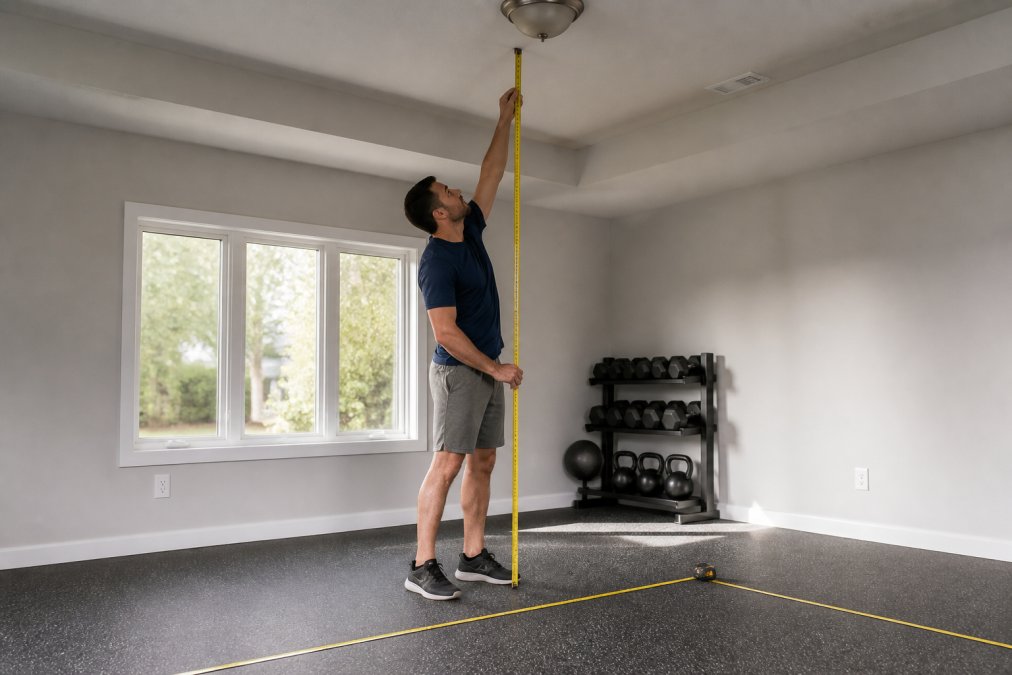
Calculate your total floor area by multiplying length by width. This number determines what size home gym equipment will actually fit. A room that's 12 feet by 10 feet gives you 120 square feet of total space, but you won't use all of it for equipment. Account for doorways and obstacles by subtracting their footprint from your usable area.
Ceiling height matters more than most people realize. Standard residential ceilings are 8 feet, but some basements or older homes have lower clearance. This measurement becomes critical when you plan overhead movements like pull-ups or landmine exercises. If your ceiling is 7 feet 6 inches, you cannot safely perform exercises that require full vertical clearance.
Understand Home Gym Clearance Requirements
Clearance space is the area around and above equipment needed for safe, effective training. This isn't just about fitting the equipment in the room, it's about having enough space to move safely without hitting walls, ceilings, or other objects during exercises.
Minimum clearance around equipment typically requires 2-3 feet on all sides (acefitness.org). A power rack, for example, needs space for loading and unloading weight plates, stepping back for squats, and moving laterally. If you place a rack directly against a wall with no side clearance, you've just made the equipment unusable for half the movements it's designed for.
Vertical clearance for overhead movements is non-negotiable. Exercises like overhead presses, pull-ups, and landmine work demand clear space above your head. Many people underestimate this requirement. If you're 6 feet tall and perform an overhead press with a barbell, you need approximately 8 feet 6 inches of vertical clearance to safely complete the movement. Standard 8-foot ceilings don't provide enough margin for error.
Dynamic movement space is the floor area needed for exercises that involve moving through space. Deadlifts, kettlebell swings, and medicine ball throws require room to move without restriction. A 6-foot-by-6-foot zone is minimal for these movements. Anything smaller forces you to modify exercises in ways that reduce their effectiveness or increase injury risk.
Define Your Home Gym Equipment Footprint
The footprint of equipment is the floor space it occupies when set up and ready to use. Understanding footprints helps you match equipment to your room size and plan your layout efficiently.
Small gym setup (under 100 sq ft) works for apartments, spare bedrooms, or corner spaces. In this footprint, you need multi-functional equipment that doesn't demand excessive clearance. A folding power rack like the Major Fitness F35 All-In-One Home Gym Wall-Mount Folding Power Rack ($949.99) occupies roughly 4 feet by 4 feet when deployed, then folds flat against the wall when training is finished. This design solves the footprint problem for small spaces. Pair it with adjustable dumbbells and a simple weight bench, and you've created a functional strength training environment in minimal space.
Resistance bands, suspension trainers, and cable systems also fit small footprints. They require vertical space more than floor space. A cable machine mounted to a wall uses perhaps 2 feet by 2 feet of floor area while providing dozens of exercise variations.
Medium gym setup (100-200 sq ft) allows for dedicated zones. You can have a strength training area with a power rack or squat stand, a separate cardio zone with a treadmill or rowing machine, and storage for accessories. This size works well for finished basements, dedicated spare rooms, or garage sections. Equipment like the Roc Foldable 4 Post Cage - Prebuilt ($1,099.99) fits here, occupying roughly 7 feet by 4 feet. You have room to add a weight bench, barbell storage, and still maintain clear movement paths.

Large gym setup (200+ sq ft) gives you freedom to build a comprehensive training environment. Full power racks, multiple benches, cardio equipment, and dedicated storage areas all coexist. This is where Combat Build Supply customers often invest in professional-grade equipment because they have the space to use it effectively. Ceiling height becomes less restrictive, and you can accommodate taller individuals comfortably.
Select Best Home Gym Gear for Small Apartments
Small apartments demand creative equipment choices. The goal is maximizing training effectiveness while respecting spatial constraints.
Folding and wall-mount equipment solves the storage problem. When you're not training, the equipment disappears. Wall-mounted pull-up bars take no floor space. Folding benches collapse to a few inches thick. Resistance bands hang on hooks. This approach lets you maintain a livable apartment that also functions as a training space.
Multi-functional strength equipment does multiple jobs in one footprint. A cable machine with adjustable pulleys replaces dozens of single-purpose machines. An adjustable dumbbell set replaces a rack full of fixed weights. A landmine attachment transforms a single barbell into a tool for dozens of movements. Combat Build Supply's approach to equipment selection emphasizes this principle, choosing gear that earns its floor space through versatility.
Vertical training maximizes small spaces. Pull-up bars, suspension trainers, and cable systems work in tight quarters because they use height instead of floor area. A 4-foot-by-4-foot corner with 8-foot ceilings becomes a complete training zone when you add a pull-up bar and suspension trainer.
Plan Your Layout and Movement Zones
Effective layout separates different training purposes into distinct zones. This organization makes your home gym more functional and safer.
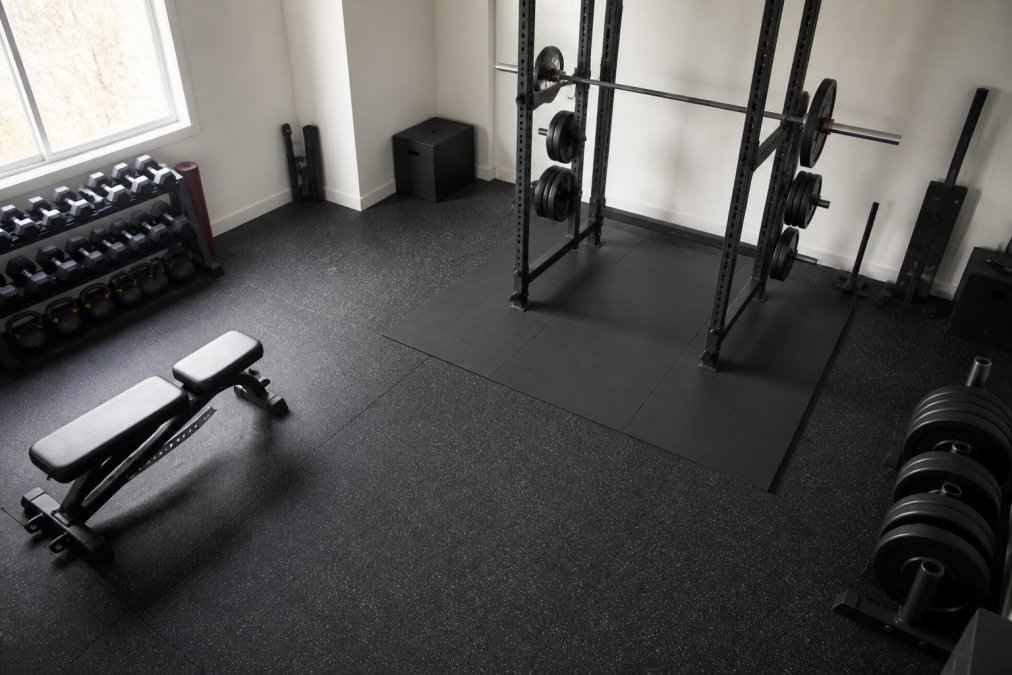
The strength training zone centers on your primary equipment, typically a power rack, squat stand, or bench. This zone needs 2-3 feet of clearance on all sides and adequate ceiling height for your tallest movement. Position this zone away from traffic paths and obstacles. If possible, place it where you can load and unload weight plates without moving equipment.
Cardio and dynamic movement space requires open floor area. Treadmills, rowing machines, kettlebell swings, and medicine ball work all demand space to move through. This zone should be separate from your strength training area to prevent equipment collisions and allow different types of training simultaneously if you have training partners.
Storage and accessibility matter more than people expect. Equipment you can't easily access gets neglected. Store smaller items at eye level and frequently used items within arm's reach. Use wall-mounted racks for barbells, wall hooks for resistance bands, and shelving for weight plates. Good storage keeps your training space organized and prevents tripping hazards.
Traffic flow through your home gym should be intuitive. Don't force yourself to climb over equipment or squeeze past a bench to reach something you need. Plan pathways that let you move naturally through the space. This becomes especially important if other household members use the space or pass through it.
Check Structural Load-Bearing Capacity
This is the step most people skip, and it's the one that matters most for safety.
Standard residential floors in finished rooms are typically rated for 40 pounds per square foot of distributed load. A power rack distributes its weight across four points over several square feet. A heavy barbell loaded with 300 pounds creates concentrated stress at the rack's feet. Multiply that by the weight of the rack itself, and you're asking the floor to support significant force in a small area.
Basement concrete floors handle concentrated loads better than wooden upper-floor joists. If you're building a home gym in an upper bedroom or living area, you need to understand your floor's load capacity. A structural engineer can assess this, but many people consult their home's original blueprints or contact their builder.
Wall-mounted equipment like pull-up bars and cable systems require different considerations. These attach directly to wall studs, which are designed to handle vertical and lateral loads. Mounting equipment to drywall alone will fail, it must anchor to solid wood studs. If you're unsure where studs are located, use a stud finder before installing any wall-mounted equipment.
Ceiling-mounted equipment has its own requirements. Pull-up bars, suspension trainers, and heavy bags all create downward force on ceiling joists. Residential ceilings aren't designed for the repeated dynamic stress of intense training. Have any ceiling-mounted equipment professionally installed if you're uncertain about your ceiling's capacity.
Choose Flooring and Safety Surfaces
Flooring protects both your equipment and your floor. It also affects training safety and noise levels.
Rubber gym flooring absorbs impact from dropped weights and reduces noise transmission to lower levels. The Major Fitness Rubber Flooring Gym Mats 0.31" Thickness ($316.99) provides 100% rubber construction that handles the demands of serious training. At 0.31 inches thick, these mats offer substantial shock absorption while remaining stable under heavy equipment. They grip your floor and prevent equipment from shifting during intense movements.

Interlocking foam tiles work for lighter training environments. They're affordable, easy to install, and comfortable for ground-based exercises like stretching or bodyweight work. However, they don't provide the durability or shock absorption that serious strength training requires. Heavy barbells and power racks will compress foam over time, creating uneven surfaces.
Bare concrete or hardwood floors are inadequate for serious home gym training. Concrete is unforgiving on joints and creates excessive noise. Hardwood gets damaged by dropped weights and equipment feet. Both surfaces make training uncomfortable and potentially unsafe.
The flooring you choose communicates something about your commitment to the space. Proper flooring also signals to yourself that this is a serious training space, not a casual experiment.
Choosing the right home gym equipment size comes down to honest assessment of three things: your actual available space, your training goals, and your commitment to the setup. Many people underestimate how much space effective training requires. Others overestimate their available space and end up with equipment that doesn't fit or doesn't work safely.
At Combat Build Supply, we help you navigate these decisions by offering equipment designed for real home gym environments. Our folding racks, rubber flooring, and multi-functional gear solve the space problem without sacrificing training quality. When you're ready to build your home gym, sign up now and connect with our customer support team. They'll help you plan a layout that works for your specific space and answer technical questions about installation, clearance, and structural requirements. Your training space should support your goals, not limit them.
Frequently Asked Questions
Q: What is the ideal size for a home gym?
A: The ideal home gym size depends on your training goals and equipment. A small gym works in 80-100 square feet with folding equipment. A medium gym (100-200 sq ft) accommodates a power rack, bench, and cardio equipment. Larger gyms (200+ sq ft) allow full strength training zones, cardio areas, and dynamic movement space. Most serious lifters benefit from at least 100-150 square feet to move safely and use multiple pieces without overcrowding.
Q: How much clearance do you need around gym equipment?
A: Plan for at least 3 feet of clearance on all sides of major equipment like power racks and cable machines. Overhead movements require 7-8 feet of vertical clearance minimum. For dynamic movements like deadlifts and landmine exercises, create a dedicated zone with 6-8 feet of open floor space. Barbell exercises need clearance for plate loading and unloading. Proper clearance space prevents injury and lets you train with full range of motion.
Q: What space-saving equipment works best for small apartments?
A: Folding power racks, wall-mount cable systems, and multi-functional trainers maximize small spaces. The Major Fitness F35 All-In-One Folding Power Rack folds flat against the wall and provides squat, bench, cable, and landmine capabilities in minimal footprint. Adjustable dumbbells replace entire dumbbell racks. Resistance bands and suspension trainers require almost no space. Foldable benches store vertically. Pair compact equipment with rubber flooring like Major Fitness Rubber Flooring Gym Mats to protect floors and create a defined training zone in tight quarters.
Q: Do I need to worry about floor load capacity?
A: Yes, especially in apartments or older homes. Most residential floors handle 40-50 pounds per square foot safely. A power rack with weights can exceed this in a small area. Check your home's structural specifications or consult a contractor. Distribute weight across the floor using rubber flooring mats, which spread load and protect your surface. If you're stacking heavy equipment in one spot, reinforce the area or choose lighter, multi-functional equipment that distributes weight across a larger footprint.
This article was written using GrandRanker


