

How to Clean Fabric Shin Guards: A Complete Guide
Table of Contents
- What You'll Need Before You Start
- Hand-Washing Fabric Shin Guards: Step-by-Step
- How to Dry Fabric Shin Guards Quickly Without Damage
- Best Natural Deodorizers for Combat Sports Equipment
- How to Remove Sweat Smell From Sports Gear
- What to Avoid When Cleaning Fabric Shin Guards
- Daily Maintenance to Keep Shin Guards Fresh
- Frequently Asked Questions
Last Updated: October 3, 2026
What You'll Need Before You Start
Cleaning fabric shin guards properly starts with gathering the right supplies. You don't need much, but having everything ready prevents mid-wash scrambling.
Here's what to gather before you begin:
- Mild soap or sports-specific detergent
- Warm water (not hot)
- A basin or sink large enough to submerge your guards
- Soft brush or cloth
- Towels for drying
- Vinegar or baking soda for odor control
- Optional: hydrogen peroxide for disinfecting
The key is using mild soap. Harsh detergents damage textile lining and break down the synthetic foam that protects your shins. We recommend checking your guards' care label first, some manufacturers have specific instructions worth following.
Keep your cleaning supplies in one spot. This makes your post-training routine faster and more consistent. When gear maintenance becomes automatic, you're more likely to do it regularly.
Hand-Washing Fabric Shin Guards: Step-by-Step
Hand-washing is the safest way to clean fabric shin guards and extends their lifespan significantly. Machine washing risks damaging the textile lining and weakening the shell integrity.
Preparing Your Shin Guards for Washing
Start by inspecting your guards for loose debris. Tap them together gently to release dried sweat and dust. Check the velcro straps for lint buildup and pick off any visible debris.
Remove any detachable padding if your guards have that feature. This allows thorough cleaning of both the shell and the lining separately.
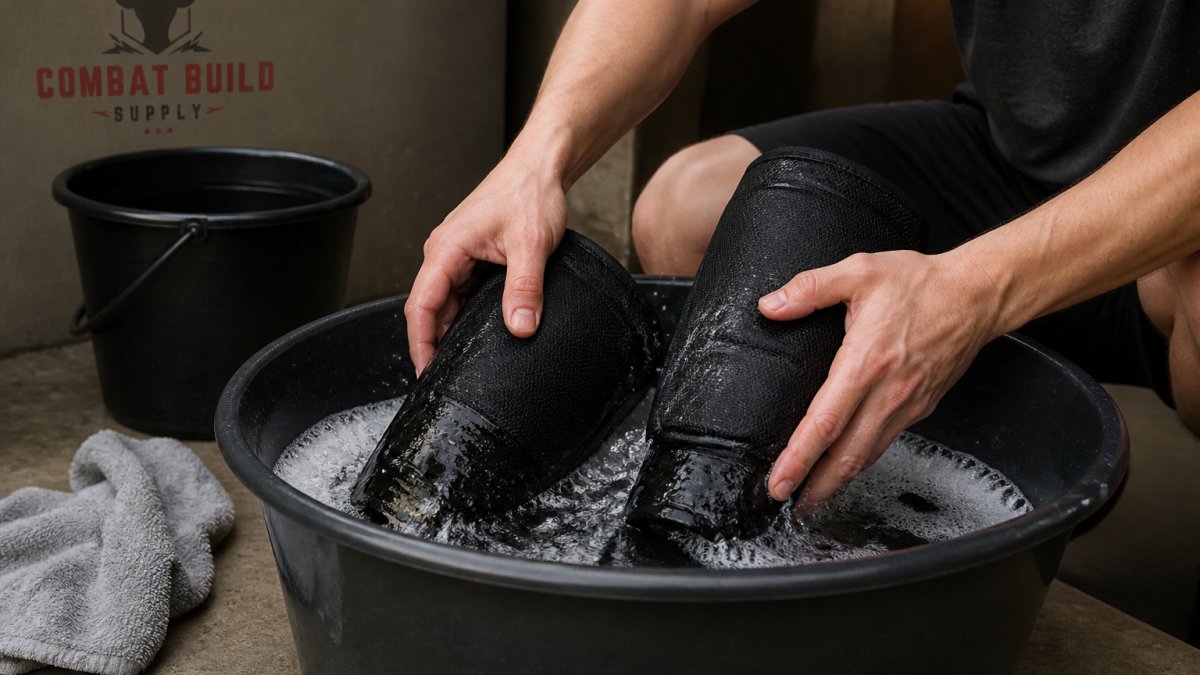
Rinse your guards under lukewarm running water. Focus on areas where sweat accumulates most, the inside of the calf area and the ankle section.
Creating the Right Cleaning Solution
Fill a basin with warm water. Add one tablespoon of mild soap per gallon of water. Stir until the soap dissolves completely.
The vinegar solution works well for odor neutralization. Mix one part white vinegar with three parts water. This ratio balances cleaning power with material safety. Vinegar is a natural disinfectant that kills bacteria without harsh chemicals. Such acidic treatments also prove effective when cleaning vintage sports fabrics that require a gentle touch to preserve their structural integrity.
Never use bleach or strong chemical disinfectants. These damage synthetic foam and degrade textile lining permanently. The material degradation happens quickly, sometimes after just one wash.
Soaking and Scrubbing
Submerge your shin guards in the soapy water for 10-15 minutes. This soaking loosens stubborn sweat and allows the soap to penetrate the fabric.
After soaking, use a soft brush or cloth to scrub gently:
- Scrub the inside textile lining with circular motions
- Pay special attention to the ankle and calf areas
- Gently brush the outer shell to remove any buildup
- Don't scrub aggressively, the goal is cleaning, not scouring
Rinse thoroughly under running water. Make sure all soap residue is gone. Soap left behind can leave stains and attract bacteria.
For stubborn odors, soak for an additional 5 minutes in the vinegar solution. This targets bacterial growth that causes persistent sweat smell. Rinse again after the vinegar soak.
How to Dry Fabric Shin Guards Quickly Without Damage
Proper drying prevents mildew and maintains the structural integrity of your guards. Rushing this step leads to moisture trapped inside, which breeds bacteria and causes odor.
Initial Moisture Removal
After washing, gently squeeze water out of the textile lining. Don't wring or twist, this damages the fabric and strains the seams.
Use a clean towel to absorb excess moisture. Press the towel against the guards, holding pressure for 30 seconds on each section. This removes surface water without aggressive handling.
If your guards have removable padding, squeeze that separately. Padding holds water longer than the shell, so extra attention here saves drying time.
Air Drying Best Practices
Place your guards in a well-ventilated area. Proper ventilation is essential for preventing mildew. Air circulation speeds drying and reduces odor development.
Position the guards upright or at an angle. Avoid laying them flat, this traps moisture between the shell and lining.
Never use direct heat sources. Keep guards away from:
- Hair dryers or heat guns
- Radiators or heaters
- Direct sunlight (extended exposure fades colors)
- Washing machine dryers
Heat causes permanent damage to synthetic foam and can warp the shell. The material degradation is irreversible.
Drying typically takes 24-48 hours depending on humidity and air circulation. In humid climates, allow extra time. Rushing the process by adding heat creates more problems than it solves.
Best Natural Deodorizers for Combat Sports Equipment
Combat sports gear absorbs sweat like few other items. Natural deodorizers eliminate odor at the source by targeting bacterial growth rather than just masking smell.
Vinegar and Baking Soda Solutions
Vinegar works as both a cleaner and deodorizer. The acetic acid kills odor-causing bacteria. Mix one part white vinegar with four parts water for a spray solution.
Spray this mixture on the inside of your shin guards after training. Let it air dry completely. The vinegar smell fades as it dries, taking the sweat odor with it.
Baking soda is a powerful odor absorber. Sprinkle it inside your guards and let it sit overnight. The baking soda absorbs moisture and neutralizes odors.
Combine both methods for stubborn odors. Spray with vinegar solution, let dry, then apply baking soda overnight. This two-step approach addresses both bacterial growth and moisture.
Hydrogen Peroxide for Disinfecting
Hydrogen peroxide is a mild disinfectant that kills bacteria without harsh chemicals. Use a 3% solution (standard drugstore strength).
Mix equal parts hydrogen peroxide and water. Soak your guards for 15 minutes in this solution once weekly if odor is persistent. This targets bacterial growth at a deeper level than surface cleaning.
Rinse thoroughly after soaking. Hydrogen peroxide breaks down into water and oxygen, leaving no harmful residue. The textile lining and synthetic foam handle this treatment well.
Never use full-strength hydrogen peroxide. Dilution is essential to prevent material damage.
How to Remove Sweat Smell From Sports Gear
Sweat smell in fabric shin guards comes from bacterial growth and accumulated moisture. Addressing both factors eliminates the odor permanently.
Addressing Bacterial Growth and Mildew
Bacteria thrive in warm, moist environments. Your shin guards create exactly these conditions during training. The textile lining and synthetic foam trap moisture, providing ideal conditions for bacterial colonies.
Mildew develops when moisture sits too long. Prevention is easier than removal. Dry your guards completely after every training session.
Anti-microbial treatment helps prevent bacterial growth. Some manufacturers add anti-microbial properties to their gear. Our equipment is designed for durability through proper maintenance rather than relying on chemical coatings alone.
Weekly vinegar soaks prevent mildew from developing. This routine keeps bacterial populations under control without harsh chemicals.
Post-Training Routine for Odor Prevention
Your daily maintenance routine matters more than occasional deep cleaning. Consistency prevents odor buildup.
After each training session:
- Remove your shin guards immediately
- Spray the inside with a vinegar-water solution
- Set them in a ventilated area to air dry
- Never store damp guards in a bag or locker
This 5-minute routine prevents sweat accumulation that causes persistent odor. Many athletes skip this step and struggle with stubborn smells later. The simple routine is far more effective than aggressive cleaning after weeks of neglect.
Store your guards in a breathable mesh bag, not a sealed plastic container. Airflow during storage prevents moisture from being trapped.
What to Avoid When Cleaning Fabric Shin Guards
Common mistakes damage shin guards faster than hard training does. Understanding what not to do protects your investment.
Heat Damage and Material Degradation
Heat is the enemy of synthetic foam and textile lining. Even moderate heat causes permanent damage.
Never put shin guards in a clothes dryer. The heat shrinks the synthetic foam and weakens the shell. Velcro straps melt. The textile lining becomes brittle.
Avoid hot water. Warm water (around 100-110°F) is the maximum safe temperature. Anything hotter degrades the materials.
Don't use hair dryers or heat guns to speed drying. This is one of the most common mistakes. The concentrated heat damages the synthetic foam irreversibly.
Sun exposure should be limited. Indirect sunlight during air drying is fine. Direct, extended sun exposure fades colors and weakens the materials.
Harsh Chemicals and Hardware Care
Bleach and strong chemical disinfectants destroy textile lining. They also damage the synthetic foam. Never use these products on fabric shin guards.
Avoid fabric softeners. These coat the textile and trap moisture, making odor worse.
Be gentle with velcro straps and hardware. When scrubbing, avoid the velcro. Aggressive brushing damages the velcro's grip. Clean around hardware rather than scrubbing over it.
Check metal buckles or hinges for rust. If you notice rust developing, dry the area thoroughly after cleaning. Rust spreads quickly if left damp.
Daily Maintenance to Keep Shin Guards Fresh
Your daily routine is more important than monthly deep cleaning. Small, consistent actions prevent major problems.
Immediately after training, remove your guards from your gym bag.
Spray the inside with diluted vinegar or water. This initial rinse removes fresh sweat before it dries and hardens.
Place your guards in a well-ventilated area.
Once weekly, do a deeper inspection:
- Check for any visible mold or discoloration
- Inspect velcro straps for lint buildup
- Feel inside for any damp areas
- Smell the guards, if odor is developing, do a vinegar soak
This weekly check catches problems early. Addressing a small issue takes minutes.
Every two weeks, wash your guards following the hand-washing steps outlined above. This schedule keeps them fresh without over-cleaning.
Store your guards in a breathable location. Mesh bags allow airflow.
Keeping your fabric shin guards clean and fresh extends their lifespan and maintains hygiene during intense training.
At Combat Build Supply, we understand that quality gear deserves proper care. Start with the daily routine today, and you'll notice fresher, longer-lasting gear from your very next training session. The American Academy of Sports Medicine recommends regular gear maintenance as part of a comprehensive athletic hygiene protocol.
Frequently Asked Questions
How often should you clean fabric shin guards?
Clean your shin guards after every training session if you sweat heavily or train intensely. For lighter use, washing them weekly prevents bacterial growth and odor accumulation. Daily wiping with a damp cloth between washes extends the time between full cleanings and maintains hygiene. Regular cleaning prevents mildew and fabric degradation, so consistent maintenance is better than occasional deep cleaning.
Can you put fabric shin guards in the dryer?
No, machine drying causes heat damage to synthetic foam padding and textile lining. High heat shrinks fabrics, warps velcro straps, and degrades the shell integrity of the guards. Always air dry your shin guards in a well-ventilated area away from direct sunlight or heat sources. This protects your investment and ensures the protective padding maintains its shape and effectiveness for future training sessions.
What is the best way to remove sweat smell from sports gear?
Soak shin guards in a vinegar solution (1 part white vinegar to 3 parts water) for 30 minutes to neutralize odors caused by sweat accumulation and bacterial growth. For stubborn smells, use hydrogen peroxide as a disinfectant soak. After soaking, rinse thoroughly and air dry with good ventilation. Baking soda sprinkled inside while drying adds extra odor neutralization. Establishing a post-training routine of wiping down and airing out gear immediately after use prevents odors from setting in.
Are fabric shin guards washable?
Yes, fabric shin guards are washable and should be cleaned regularly. Hand-washing is the safest method to preserve the textile lining, synthetic foam, and shell integrity. Use mild soap and lukewarm water, avoiding bleach and harsh chemicals. Some shin guards with minimal padding may tolerate gentle machine washing on a delicate cycle, but hand-washing is always the preferred approach to extend gear lifespan and maintain protective qualities.


